

Russia Issues Military Warning Over Western Troop Movements in Greenland
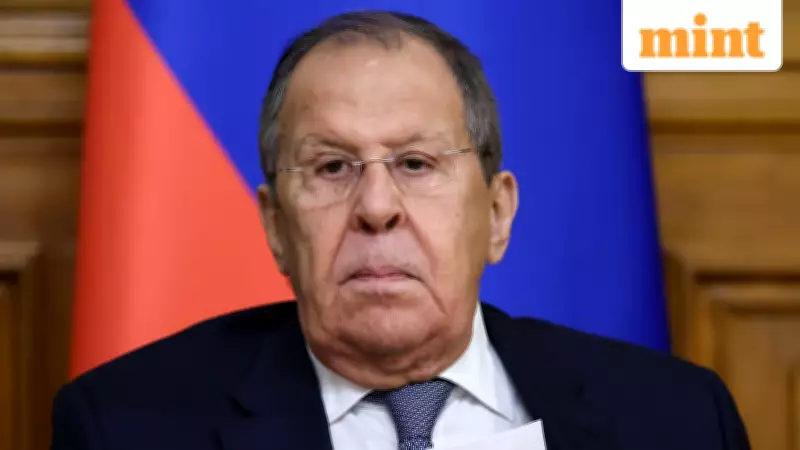
In a significant escalation of tensions over Arctic security, Russia's Foreign Minister Sergey Lavrov has explicitly threatened military countermeasures if Western countries persist in bolstering their military footprint in Greenland. Speaking to Russian lawmakers on Wednesday, Lavrov delivered a stark ultimatum regarding the strategic Arctic island.
Lavrov's Direct Threat to Western Powers
"Of course, in the event of the militarisation of Greenland and the creation of military capabilities aimed at Russia, we will take adequate countermeasures, including military-technical ones," Lavrov declared during his address to the Russian parliament. This statement represents Moscow's most direct warning yet concerning Western activities in the region that Russia views as potentially hostile.
The Russian foreign minister further intensified diplomatic pressure by accusing Denmark of treating Greenlanders as "second-class citizens" and suggesting that the United States, Greenland, and Denmark should resolve these issues among themselves. Greenland, with its population of approximately 57,000 people, has maintained autonomous territory status under Denmark for decades.

Trump's Annexation Ambitions Spark European Response
The current crisis traces its origins to January 2026, when former US President Donald Trump announced plans to annex Greenland, claiming Washington had established a "framework" agreement with NATO chief Mark Rutte to enhance American influence in the Arctic. Although Trump later retreated from these threats, his repeated assertions triggered alarm across European capitals.
Trump consistently argued that if the United States didn't annex Greenland, Russia or China would inevitably move to control the strategically positioned island. "Right now, Greenland is covered with Russian and Chinese ships all over the place. We need Greenland from the standpoint of national security," Trump told reporters aboard Air Force One in January 2026, according to CNBC reports.
The former president further claimed Greenland's geographical location between the US, Russia, and China would make it essential for a proposed missile defense system called "Golden Dome." During his speech at the World Economic Forum in Davos, Trump stated, "I don't want to use force. I won't use force. All the US is asking for is a place called Greenland. You can say yes, and we will be very appreciative. Or you can say no, and we will remember."
European Military Deployment in Greenland
Following Trump's annexation rhetoric, European nations initiated precautionary military deployments to Greenland. According to BBC reports, a small French military contingent arrived in Nuuk, Greenland's capital, soon after Trump's statements. This deployment expanded to include military personnel from:
- Germany
- Sweden
- Norway
- Finland
- The Netherlands
- The United Kingdom
The European NATO deployment, consisting of just a few dozen personnel including 15 from France, participated in Danish-led joint exercises known as "Operation Arctic Endurance." While relatively small in scale, these deployments have drawn Moscow's intense scrutiny and prompted Lavrov's warning.
European Leaders Unite Against Annexation Plans
In January 2026, a powerful coalition of European leaders issued a joint statement on Greenland that included French President Emmanuel Macron, German Chancellor Friedrich Merz, Italian Prime Minister Giorgia Meloni, Polish Prime Minister Donald Tusk, Spanish Prime Minister Pedro Sánchez, UK Prime Minister Keir Starmer, and Danish Prime Minister Mette Frederiksen.
The statement emphasized: "Arctic security remains a key priority for Europe, and it is critical for international and transatlantic security. NATO has made clear that the Arctic region is a priority, and European Allies are stepping up. We and many other Allies have increased our presence, activities, and investments, to keep the Arctic safe and to deter adversaries."

The leaders collectively affirmed that "The Kingdom of Denmark – including Greenland – is part of NATO" and stressed that Arctic security must be achieved collectively with all NATO allies, including the United States. This unified European position represents a significant pushback against unilateral actions in the strategically vital Arctic region.
The escalating tensions over Greenland highlight the growing geopolitical importance of the Arctic, where melting ice has opened new shipping routes and access to valuable resources. Russia's explicit military threat, combined with European troop deployments and historical annexation rhetoric from the United States, creates a volatile security situation that continues to evolve.





