Viasat President Declares Satellite Communications 'Dual Use Oxygen' at DefSat Conference
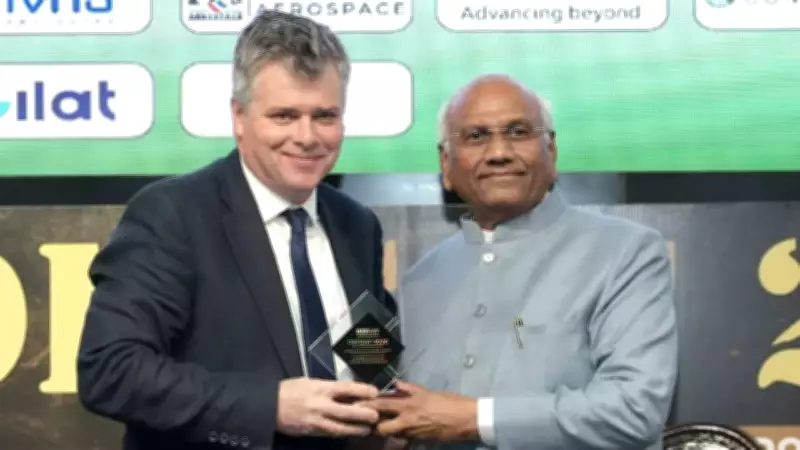
Global communications leader Viasat delivered a powerful message at the DefSat 2026 conference in New Delhi, asserting that modern societies would cease to function without reliable access to space-based systems. Ben Palmer, President of Viasat Commercial, described satellite communications as the "dual use oxygen" that simultaneously supports civilian missions like weather forecasting and critical military applications including early warning systems.
Without Resilient SatCom, We Would All Be in the Dark
Addressing the opening plenary session at New Delhi's Manekshaw Centre, Palmer delivered a stark warning: "Without assured, resilient global SatCom, we would all be in the dark." He emphasized that strategic spectrum access and robust satellite communications infrastructure have become fundamental pillars for both national security frameworks and economic stability worldwide.
The Viasat executive highlighted the necessity of developing connectivity solutions across multiple orbits and diverse radio frequency bands. "We're looking at ways to ensure governments have access to assured connectivity via alternate orbits and alternate radio frequency spectrum," Palmer explained. "We are innovating to deliver cyber and electronic warfare resilience, access to different spectrum, and new methods to deliver these key enabling capabilities."

Compact Terminals and Uncrewed Systems Revolution
Palmer pointed to recent military developments in Ukraine as evidence of how space-enabled platforms can achieve significant battlefield effects without risking personnel. He revealed that Viasat is actively developing remarkably compact terminals—some no larger than a standard coffee cup—designed to provide beyond line-of-sight communications for tactical uncrewed platforms.
The three-day DefSat dialogue, which convened military leadership, policymakers, and industry partners from around the globe, focused extensively on the future of space-enabled security. Discussions prominently addressed the rapidly increasing deployment of uncrewed systems in contemporary conflict scenarios and their dependence on resilient space infrastructure.
India's Strategic Space Sovereignty Approach Praised
Regarding India's strategic positioning in the global space arena, Palmer offered substantial praise for the government's approach to space sovereignty, describing it as "long term, strategic and wise." He noted that India's resistance to market dominance by other nations in international forums helps maintain essential freedom of choice for all spacefaring nations.
"The grand strategic approach which the Government of India is adopting to assure its space sovereignty is impressive," Palmer stated. "This isn't just about 'Make in India' and assuring freedom of operation—it's also about the responsible, pragmatic approach that India has adopted." Viasat, which recently completed its integration of Inmarsat, continues to partner with local institutions including BSNL to build domestic capabilities within India's growing space sector.
DefSat 2026 Draws Global Participation
Building on the success of its first three editions, which collectively attracted over 500 participants from more than 20 countries, 80-plus speakers, and representation from 60-plus organizations, DefSat 2026 (February 24–26) featured an expansive agenda spanning operational doctrine, industrial collaboration, technology resilience, and geopolitical partnerships.
The conference included exhibitions by defense and space startups alongside panel discussions featuring eminent military, defense, space, and cyberspace experts. Subba Rao Pavuluri, President of SIA-India, highlighted the conference's significance: "The DefSat 2026 conference underscores a critical strategic reality: an estimated 70–80% of modern military operations today rely on space-based capabilities, underscoring the rising centrality of space in India's national security architecture."

Day One of the conference demonstrated strong engagement with 600 registered participants including military leadership, government officials, diplomats, global industry representatives, startups, academia, and strategic experts—reflecting the growing importance of space security discussions in the contemporary geopolitical landscape.