

Pakistan's Security Paradox: Mineral Riches Amidst Rising Violence
The devastating suicide bombing at a Shia mosque on the outskirts of Islamabad on Friday, which claimed over thirty lives, represents more than just a horrific act of mass murder. This tragic event serves as a stark reminder of the fundamental limitations of power within a nation whose military leadership frequently speaks with confidence about security, mineral wealth, and strategic international partnerships, even as the very ground beneath them grows increasingly unstable.
Urban Vulnerability and a Deepening Security Crisis
The attack, claimed by the Islamic State, has profoundly shaken Pakistan's capital. Interior Minister Mohsin Naqvi confirmed that a bomber opened fire before detonating an explosive vest, and announced the arrest of four suspects, including an alleged mastermind, following raids in Peshawar and Nowshera. "Yesterday's suicide attack has rattled us," Naqvi stated at a press conference. This incident, the second suicide attack in Islamabad within three months, underscores a critical failure of the state: its inability to guarantee security even at the heart of its own power.
This urban vulnerability exists alongside a deteriorating security environment on multiple fronts, creating a complex national crisis.

The Mineral Promise and the Harsh Reality on the Ground
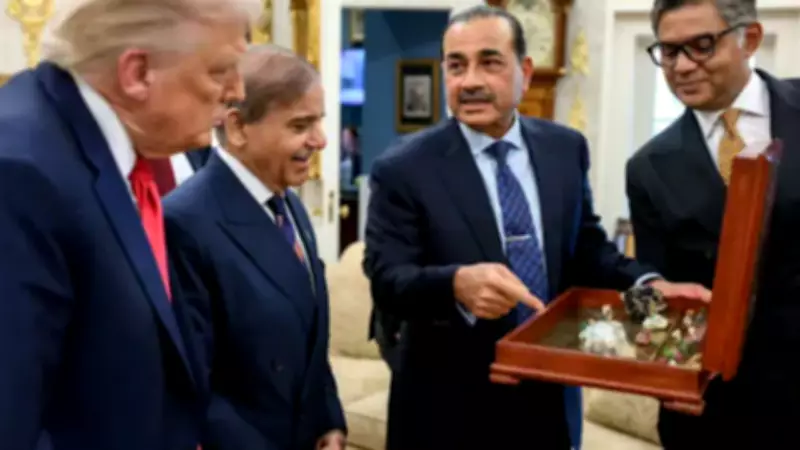
Pakistan has presented Washington with a glittering proposition: access to some of the world's richest untapped deposits of critical minerals, including copper, lithium, and cobalt. This offer comes at a pivotal moment when the United States is urgently seeking to diversify global supply chains and reduce dependence on China. Field Marshal Asim Munir carried this promise directly to the Oval Office.
In December, the US Export-Import Bank approved $1.25 billion in financing for the development of the Reko Diq project in southwestern Balochistan. Canadian miner Barrick Gold, which holds a 50% stake in the joint venture, describes Reko Diq as the world's largest undeveloped copper-gold deposit. Pakistani officials have touted potential mineral reserves worth up to $8 trillion.
However, this transformative economic opportunity is colliding with a brutal and escalating reality. An insurgency in Balochistan and the western borderlands is growing stronger, better coordinated, and, in a profound paradox, increasingly equipped with weapons originally supplied by the United States during the war in Afghanistan.
America's Weapons Fueling Pakistan's War
A CNN investigation has revealed that militants operating along the Afghanistan border and across Balochistan's mineral belt are now using US-made rifles, night-vision equipment, and other advanced capabilities left behind after the chaotic 2021 withdrawal from Kabul. Security analysts report that US-made firearms like M-16s and M-4 carbines have become routine in clashes.
The human cost of this technological shift is devastating. Colonel Bilal Saeed, a military surgeon in Peshawar, told CNN that medical teams are now treating more patients with long-range gunshot wounds and sniper hits, often arriving at night due to insurgents' use of night-vision devices. For soldiers like 30-year-old Allah Uddin, who lost both legs in an ambush near the Muhammad Khel copper mine, the enemy's superior weaponry has had life-altering consequences.
Corporate Caution and Official Confidence
The deteriorating security situation is prompting serious corporate reassessment. According to a Reuters report, Barrick Gold's board is "reviewing all aspects" of the Reko Diq project, including security arrangements and capital commitment, following a sharp rise in militant violence in Balochistan.
In contrast, Pakistani military officials publicly project unwavering confidence. Army spokesperson Lt General Ahmed Sharif Choudhry insists that Islamabad will secure mining areas and develop world-class infrastructure, stating bluntly, "We will resolve it. We have no other option."

The Balochistan Conundrum
The security challenge extends beyond the Pakistan Taliban (TTP). US-made weapons have also been found with the Balochistan Liberation Army (BLA), which has fought for decades for greater autonomy and resource rights. Michael Kugelman of the Atlantic Council notes that Balochistan is both "ground zero for critical mineral opportunities, but it's also ground zero when it comes to militant threats."
2025 was Balochistan's deadliest year on record, with over 250 attacks and 400 deaths. Pakistan responded with "Operation Radd-ul-Fitna-1," claiming significant militant casualties but also acknowledging civilian and security force deaths.
Geopolitical Stakes and Strategic Dilemmas
The stakes are global. With China processing over 90% of the world's refined rare earths, the United States views secure alternative sources as a strategic priority. Copper demand is projected to surge from 30 million tons to 50 million tons by 2050. Dr. Gracelin Baskaran of the Center for Strategic and International Studies emphasizes that "Copper will fuel every part of our modern economy, and we're at a structural shortage."
Pakistan's deposits, therefore, represent a significant geopolitical prize. Yet they lie in territory plagued by decades of insurgency, now intensified by the unintended consequences of America's own war. This complicates Washington's mineral strategy, playing out against the backdrop of US-China rivalry, as Beijing maintains its "all-weather" partnership with Islamabad.
The Path Forward: Security, Dialogue, and Development
Field Marshal Munir now faces three simultaneous and formidable tests:
- Combating a better-equipped insurgency using American-made weapons along Pakistan's western frontier.
- Persuading skeptical Baloch communities that mining projects will deliver genuine local benefits, not just serve Islamabad, Beijing, or Washington.
- Balancing Pakistan's deep ties with China against a new, Trump-driven courtship from the United States, all while maintaining national stability for investors.
So far, Islamabad's response has emphasized military solutions: internet shutdowns, sweeping operations, and high-profile offensives. However, analysts warn that without a parallel strategy incorporating political dialogue, equitable development, and genuine power-sharing in Balochistan, the very minerals that could transform Pakistan's economy and serve US strategic interests may remain buried—not due to inaccessibility, but because the nation cannot safely secure them.
The tragic mosque bombing in Islamabad is a symptom of this deeper crisis. Munir may possess the mineral riches that global powers desire, but he does not yet fully control the perilous ground upon which they lie.





