

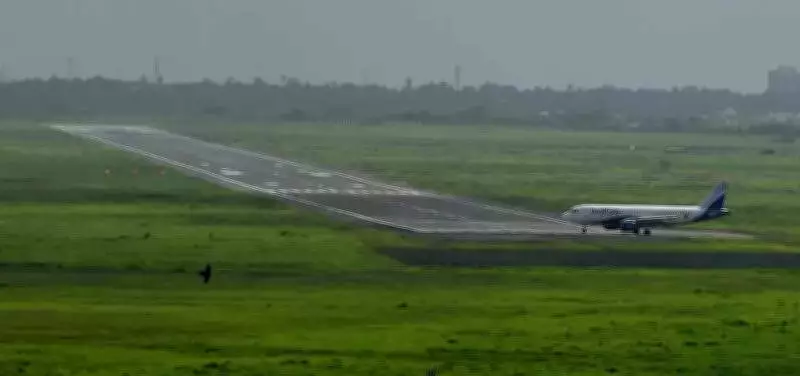
Surat Airport Night Parking Crisis: All Bays Occupied by Private Operators
In a startling revelation that has raised serious questions about infrastructure planning and public fund utilization, an RTI reply has disclosed that all 10 night-parking bays designated for Code-C aircraft at Surat International Airport have been exclusively allotted to non-scheduled operators. This development comes at a time when demand for early morning departures and late-night arrivals is steadily increasing, putting scheduled airlines in a difficult position.
Infrastructure Investment Versus Operational Reality
Surat International Airport recently underwent a comprehensive modernization project valued at Rs 353 crore, with Rs 150 crore specifically allocated for expanding aircraft infrastructure. This ambitious upgrade included the construction of 18 new parking bays and a parallel taxi track, all aimed at enhancing flight operations and aircraft movement efficiency. However, despite this significant investment, the current parking allocation reveals a troubling disconnect between infrastructure development and operational needs.
Documents obtained through the Right to Information Act provide detailed insight into the airport's parking capacity:

- Total parking bays: 17
- Code-C compatible bays: 13 (for aircraft like A321 and B739)
- Smaller aircraft bays: 4
- Night-parking bays: 10 (all currently allotted to non-scheduled operators)
Internal Airports Authority of India records confirm that these 10 night-parking bays, specifically earmarked for overnight use, have been completely allocated to non-scheduled operators. This leaves no available space for scheduled carriers including IndiGo, Air India Express, and Star Air, despite at least one scheduled airline having formally requested two night-parking bays.
Allocation Details and Industry Concerns
The specific allocation of these 10 night-parking bays reveals a pattern of distribution among various private operators:
- Ventura Airconnect: 3 bays
- Shreeji Aviation: 1 bay
- Rajhans Infracon: 1 bay
- Ishwer Dholakia: 1 bay
- Steamhouse: 1 bay
- KPAI Afrotech: 1 bay
- Global Vectra Helicorp: 1 bay
- Dharma Nandan Diamond: 1 bay
These operators primarily originate from Surat, Ahmedabad, and Mumbai, raising questions about regional allocation priorities versus national airline requirements.
Rajesh Modi, a veteran airport development tracker, expressed serious concerns about this situation: "This reflects serious mismanagement at multiple levels. There is absolutely no space available for scheduled airlines that are primarily responsible for driving passenger traffic and enhancing regional connectivity. The airport now operates on a permanent 24×7 basis, yet scheduled carriers are being asked to wait indefinitely. This fundamentally defeats the purpose of enabling night and early morning operations and raises legitimate concerns about how capacity planning is being executed."
Airport Authority Response and Future Prospects
Airport authorities have responded to these concerns by stating that night-parking facilities will be made available once early morning and late-night flights begin regular operations. An airport official explained: "According to established regulations, night parking is available to any operator—whether scheduled or non-scheduled—between 10 pm and 6 am. However, we consistently prioritize scheduled flights in our operational planning. We have plans to relocate Ventura aircraft to their designated hangars, which will immediately free up three bays. Additionally, five more parking bays for larger aircraft are in the final phase of operationalization and will soon become available."
The official further noted that among the 18 newly constructed parking bays, five remain non-operational at present, representing additional capacity that could potentially alleviate the current shortage once brought online.
This situation highlights the complex challenges facing India's regional aviation infrastructure development, where substantial financial investments must be matched with strategic operational planning to ensure that public resources effectively serve both commercial aviation needs and broader regional connectivity goals.






