

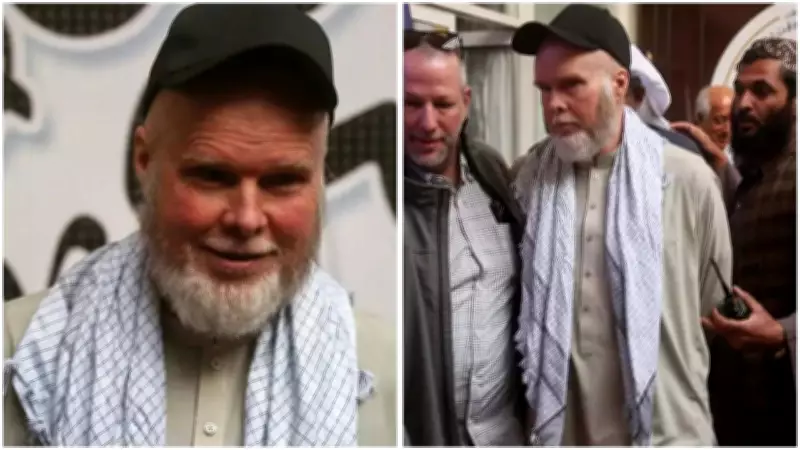
Taliban Authorities Release American Academic After Over a Year in Detention
In a significant diplomatic development, Afghanistan's Taliban government announced the release of American academic Dennis Coyle on Tuesday. The 64-year-old researcher from Colorado had been held for more than a year in what his family described as "near-solitary conditions" without formal charges.
Release Linked to Eid al-Fitr and Judicial Review
Afghanistan's foreign ministry stated that Coyle was freed in Kabul "on the occasion of Eid al-Fitr" following an appeal from his family. The ministry emphasized that the Supreme Court had "considered his previous imprisonment sufficient" and described the release as an act of "humanitarian sympathy and goodwill."
According to official statements, Coyle—who had worked in Afghanistan for over two decades researching languages—was detained in January 2025 for allegedly violating Afghan laws, though authorities never publicly specified which laws he had broken.

US Welcomes Release but Demands More Action
US Secretary of State Marco Rubio welcomed Coyle's release while making clear that Washington expects the Taliban to return other Americans still believed to be in Afghanistan. In a post on X, Rubio wrote: "Today, Dennis is on his way home. We thank the UAE and Qatar for their support. The release is a positive step towards ending the practice of hostage diplomacy."
Rubio added that while this represents "a positive step by the Taliban, more work needs to be done," specifically mentioning the cases of Mahmood Habibi, Paul Overby, and "all other unjustly detained Americans."
Taliban Leader Personally Ordered Release
The New York Times reported that Taliban leader Sheikh Hibatullah Akhundzada personally ordered Coyle's release after receiving a family appeal seeking a pardon for Eid al-Fitr. The foreign ministry expressed hope that such gestures could "further strengthen the atmosphere of trust between countries" and that remaining issues could be resolved through "understanding and constructive dialogue."
Regional Mediation and Diplomatic Context
Both US and Afghan officials acknowledged the crucial role of regional mediation in securing Coyle's freedom. Rubio and Afghan Foreign Minister Amir Khan Muttaqi specifically thanked the United Arab Emirates for helping broker the release, with Qatar also playing a supporting role.
The release comes against the backdrop of severely strained US-Taliban relations since the Taliban returned to power in 2021. Earlier this month, the US State Department had designated Afghanistan as a sponsor of wrongful detention, accusing it of engaging in "hostage diplomacy"—a charge Kabul strongly rejected.
Focus Shifts to Other Missing Americans
Washington maintains that other Americans remain unaccounted for in Afghanistan. The State Department believes the Taliban is holding at least four US nationals, including Coyle and Mahmood Habibi, an Afghan-American businessman whose family says was taken by Taliban forces in 2022.
Habibi's brother Ahmad welcomed Coyle's release but added: "We hope that our family will soon have the same feeling of relief, when Mahmood is returned home to us."
Possible Prisoner Exchange Discussions
The release occurs amid ongoing discussions about potential prisoner exchanges. Earlier this year, an Afghan government spokesperson suggested Kabul was ready to release two US citizens in exchange for Muhammad Rahim, an Afghan detainee held at Guantanamo Bay whom the US accuses of being an al-Qaida member.
Rahim's lawyer James G. Connell III stated: "Rahim is a 60-year-old man who has been imprisoned for 18 years without ever being charged with a crime. He is no threat to anyone, and should be released from Guantánamo."
Broader Implications for US-Afghan Relations
While Coyle's release may temporarily ease tensions, Washington's continued demands and the unresolved cases of other Americans suggest detentions will remain a central flashpoint in US-Afghanistan relations. The Taliban's return to power following the chaotic US withdrawal in 2021 has created a complex diplomatic landscape where humanitarian gestures coexist with accusations of hostage diplomacy.

The foreign ministry's statement that such releases could build trust between nations indicates potential openings for dialogue, even as fundamental disagreements persist about the treatment of foreign nationals in Afghanistan.





