

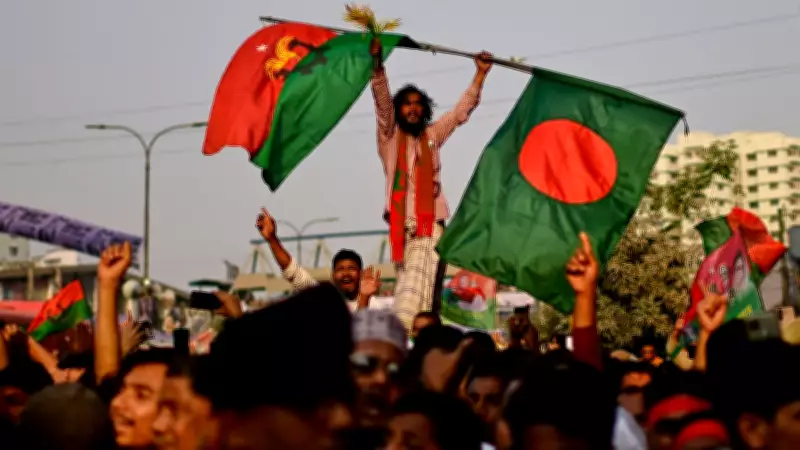
The Battle for Bangladesh: Tarique Rahman's BNP Faces Radical Ideology Challenge
In a recent statement, Bangladesh Nationalist Party (BNP) supremo Tarique Rahman firmly rejected an offer for a unity government with the Jamaat-e-Islami, highlighting a deep political divide. When questioned about the proposal, Rahman responded, "How can I form a government with my political opponents, and then who would be in the opposition?" This response underscores the BNP's commitment to democratic principles and electoral politics, setting it apart from more radical factions.
Diverging Visions on Political Unity
The Jamaat-e-Islami's offer of unity reveals its discomfort with conventional electoral processes, whereas Rahman and the BNP take democratic forms seriously. Rahman emphasized his hope to have the Jamaat as a good opposition, reinforcing the importance of a functioning political system. Even regarding the Awami League, Rahman has stated that decisions should be left to the ballot, not backroom deals.
As elections approach in Bangladesh, the manifestos of the main competitors show few significant differences. Both parties promise development and solutions for various societal issues, from brick-kiln workers to bankers. On sensitive topics like relations with India, their pledges are similarly unremarkable. However, the unserious nature of these promises is exemplified by the Jamaat's commitment to minority and women representation, despite fielding only one Hindu candidate and no women at all.

The Clash of Old and New Politics
The political landscape in Bangladesh is increasingly defined by a division between Old and New Politics. Advocates of New Politics, including student revolutionaries and extremists, promise a Bangladesh free from corruption, extortion, fascism, and nepotism. The Jamaat's supremo has even pledged that elected representatives would forego parliamentary privileges and live ordinary lives, "If necessary, we will ride rickshaws," he said, aiming to eradicate political immorality.
While these promises might seem idealistic, the real concern is their potential consequences. History shows that movements driven by pious ideologies, from Russia to Iran, have often led to political disasters. The Jamaat, as an unrepentant party of piety, disavows the possibility of causing evil, yet its track record suggests otherwise. In contrast, the BNP represents ordinary troubles, grappling with issues like racketeering, political violence, infighting, and nepotism.
Tarique Rahman's Leadership and the BNP's Future
Tarique Rahman has matured as a leader during his exile in the United Kingdom, presenting a different image from the corruption allegations of the past. However, it remains unclear whether he can steer the BNP away from its old habits. The party's challenges place it firmly in Old Bangladesh, with familiar troubles that contrast sharply with the radical promises of the Jamaat.
In the current political juncture, the BNP might appear as a status quoist party, but this is a false binary. The real divide is between radicalized conservatives posing as disruptors and grounded moderates who oppose the creation of a risk society. As Bangladesh heads to the polls, this clash will shape the nation's trajectory, with Rahman's BNP standing as a bulwark against radical ideology.
This analysis, based on insights from experts like Kuriakose Mathew and Arjun Ramachandran, highlights the critical stakes in Bangladesh's political future. The battle is not just about policies but about the very nature of democracy and governance in the region.






