

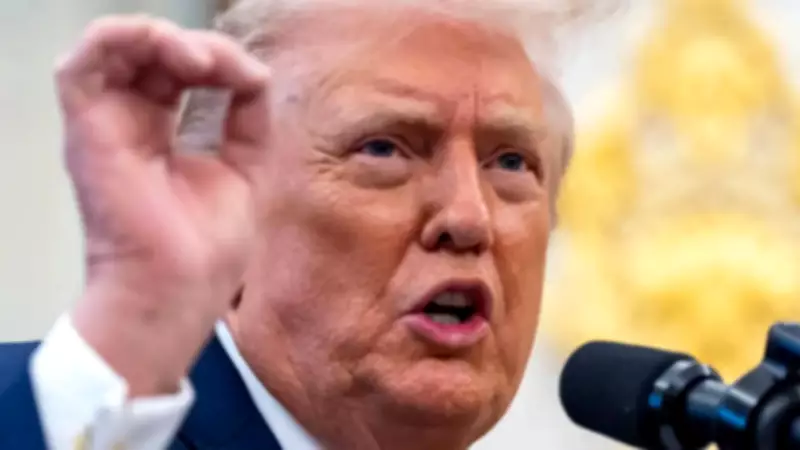
Trump Pushes for Quick Resolution in Iran Conflict, Claims Tehran Secretly Wants Deal
US President Donald Trump has reportedly informed his close advisers that he aims to avoid a protracted military engagement with Iran and hopes to bring the ongoing conflict to a conclusion in the coming weeks. According to a detailed report by the Wall Street Journal, Trump has privately indicated his belief that the hostilities are entering their final stages, signaling a potential de-escalation.
Trump's Timeline and Public Statements
President Trump has urged officials to adhere to a publicly outlined timeline of four to six weeks, which could see the conflict wrapped up before a critical mid-May summit with Chinese President Xi Jinping. This strategic timing suggests a desire to clear the diplomatic slate ahead of high-stakes international engagements.
Speaking at the NRCC Annual Fundraising Dinner on Thursday, Trump made bold claims about US foreign policy achievements. "We settled eight wars. We are winning another one. Nobody has seen anything like what we are doing in the Middle East with Iran," he declared. Trump added a provocative analysis of Iranian leadership, stating, "They are negotiating, by the way. They want to make a deal so badly, but they are afraid to say it because they figure they will be killed by their own people. They are also afraid they will be killed by us. There has never been a head of a country who wanted that job less than being the head of Iran."

White House Confirms Diplomatic Overtures
White House Press Secretary Karoline Leavitt provided official confirmation of these developments, emphasizing Trump's preference for peaceful resolutions. "President Trump’s preference is always peace. However, following his powerful threat on Saturday evening, it was made clear that Iran wanted to talk," she stated.
Leavitt elaborated that the United States has been engaged in productive conversations with Iranian representatives over the last three days. These discussions prompted Trump to instruct the Department of War to postpone planned strikes on Iranian power plants and energy infrastructure, a move seen as a goodwill gesture to facilitate negotiations.
Strong Warnings from the White House
Despite the diplomatic overtures, Leavitt issued a stern warning to Iran, underscoring the consequences of miscalculation. "Let me be clear, Iran should not miscalculate again. Their last miscalculation cost them their senior leadership, their navy, their air force, and their air defence system. President Trump does not bluff, and he is prepared to unleash hell if they refuse to accept the reality that they have been defeated," she asserted, highlighting the administration's readiness to resume military action if talks falter.
Iran's Defiant Response
Meanwhile, Iran has responded with defiance, asserting that any cessation of hostilities will occur strictly on its own terms. Tehran has emphasized that it will stop fighting "when it decides to do so and when its own conditions are met." The Iranian government vowed to continue defending itself and to inflict "heavy blows" on the enemy until its demands are fully satisfied, indicating a firm stance in the face of US pressure.
This complex interplay of diplomatic signals, military posturing, and public rhetoric underscores the volatile nature of the US-Iran conflict. As both sides navigate these tense negotiations, the international community watches closely, hoping for a peaceful resolution that averts further escalation in the already turbulent Middle East region.






