Trump Prolongs Ceasefire with Iran, Upholds Strait of Hormuz Blockade
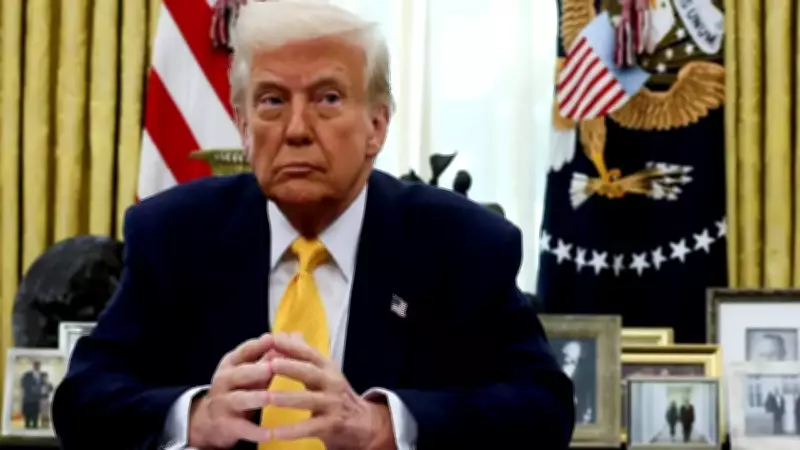
US President Donald Trump has officially extended the ceasefire with Iran while maintaining a stringent blockade around the critical Strait of Hormuz. In a recent statement, Trump emphasized that Tehran is incurring substantial financial losses due to the closure of this vital shipping route and must present a cohesive negotiating position before any further diplomatic discussions can proceed.
Trump's Social Media Announcement Details Financial Pressure
In a post on Truth Social, President Trump elaborated on the economic impact of the blockade, asserting that Iran is losing approximately $500 million daily in oil revenue because the Strait of Hormuz remains closed. He wrote, "Iran doesn’t want the Strait of Hormuz closed, they want it open so they can make $500 Million Dollars a day (which is, therefore, what they are losing if it is closed!). They only say they want it closed because I have it totally BLOCKADED (CLOSED!), so they merely want to 'save face.'" Trump further mentioned that individuals approached him four days ago, indicating Iran's desire to reopen the strait immediately, but he countered that such a move would preclude any potential deal unless more aggressive measures were taken.
Ceasefire Extension Prompted by Pakistani Request
Earlier, Trump announced the ceasefire extension, attributing it to a request from Pakistan's military chief, Field Marshal Asim Munir, and Prime Minister Shehbaz Sharif. He stated that US forces would remain on high alert while the blockade continues until Iran's leadership formulates a common negotiating stance. Trump explained, "Based on the fact that the Government of Iran is seriously fractured, not unexpectedly so and, upon the request of Field Marshal Asim Munir, and Prime Minister Shehbaz Sharif, of Pakistan, we have been asked to hold our Attack on the Country of Iran until such time as their leaders and representatives can come up with a unified proposal. I have therefore directed our Military to continue the Blockade and, in all other respects, remain ready and able, and will therefore extend the Ceasefire until such time as their proposal is submitted, and discussions are concluded, one way or the other."

Iran's Swift Rejection and Pakistan's Mediation Role
Iran promptly rejected Trump's move, with Mahdi Mohammadi declaring that Washington lacks the authority to impose conditions following setbacks in the conflict. Mohammadi posted on X, "Trump's extension of the ceasefire means nothing. The losing side cannot set the terms. Continuing the siege is no different from bombing and must be responded to militarily. Meanwhile, Trump's extension of the ceasefire certainly means buying time for a surprise strike. It is time for Iran to take the initiative."
In contrast, Pakistan welcomed the extension and positioned itself as a mediator in the conflict. Prime Minister Shehbaz Sharif expressed gratitude to Trump for accepting Islamabad's request and expressed hope for a lasting agreement during a second round of talks scheduled in Islamabad. Sharif stated in a post on X, "I sincerely hope that both sides will continue to observe the ceasefire and be able to conclude a comprehensive 'Peace Deal' during the second round of talks scheduled at Islamabad for a permanent end to the conflict."
Background on Diplomatic Efforts
This latest extension follows the collapse of an earlier diplomatic initiative, where 21 hours of negotiations in Islamabad failed to yield a breakthrough. The ongoing tensions highlight the complex dynamics between the US and Iran, with Pakistan emerging as a key intermediary in efforts to de-escalate the situation.