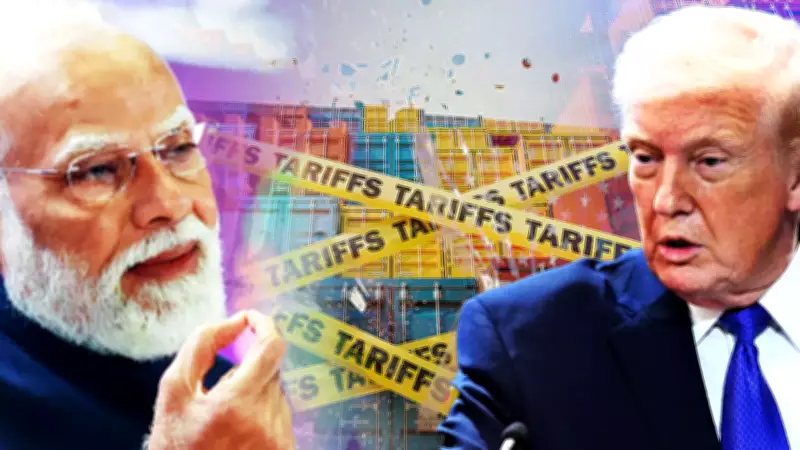
Trump Stands Firm on India Trade Agreement Despite Judicial Setback
In a significant development, the United States Supreme Court has declared President Donald Trump's comprehensive tariff policy illegal, marking one of the most substantial judicial defeats of his second term. However, Trump has immediately responded by asserting that the specific trade agreement with India remains completely unaffected and will proceed as planned.
"They Pay, Not Us": Trump's Clear Stance on Tariff Arrangement
Addressing reporters directly, Trump emphasized the core principle of the arrangement: "The deal with India is intact and will remain so. Under this agreement, India will be paying tariffs while the United States will not." He framed this structure as a necessary correction to what he described as decades of unfair trade practices that previously disadvantaged American interests.
Trump elaborated that this rebalancing was essential for creating what he called "fair and reciprocal" economic relations between the two nations. The Supreme Court's ruling, while targeting his broader tariff framework, does not invalidate bilateral agreements like the one with India, according to Trump's interpretation.

Praise for Modi and Broader Geopolitical Claims
During his remarks, Trump offered strong praise for Indian Prime Minister Narendra Modi, reinforcing the personal diplomatic relationship between the two leaders. He went further to reiterate a controversial claim that the tariff policies had contributed to reducing tensions between India and Pakistan, suggesting economic measures had indirect geopolitical benefits.
"Prime Minister Modi and I have always maintained excellent relations, and this agreement strengthens both our nations," Trump stated, dismissing any suggestions that the judicial ruling would impact the bilateral partnership.
Legal and Financial Implications of the Supreme Court Decision
The Supreme Court's ruling represents a major legal challenge to Trump's trade agenda, with potentially far-reaching consequences:
- The decision opens the door to numerous legal disputes regarding tariff refunds that could amount to billions of dollars
- It establishes significant precedent regarding presidential authority over trade policy
- Legal experts anticipate prolonged litigation over the implementation and enforcement of the ruling
Despite this substantial judicial setback, Trump signaled unwavering commitment to his broader trade agenda. He made clear that agreements like the India pact would move forward regardless of the court's decision on his general tariff policy framework.
Looking Ahead: Trade Policy in Trump's Second Term
The confrontation between the executive and judicial branches highlights ongoing tensions in U.S. trade policy formulation. Trump's insistence on maintaining the India agreement despite the Supreme Court ruling suggests several key points:
- The administration views bilateral agreements as distinct from broader tariff policies
- There is determination to continue implementing negotiated trade deals regardless of legal challenges
- The India-US relationship remains a priority in Trump's foreign economic policy
As legal battles over tariff refunds begin to unfold, the durability of Trump's trade agreements with key partners like India will face continued scrutiny. The administration's ability to navigate these judicial challenges while maintaining international economic relationships will be closely watched by global observers and trading partners alike.