

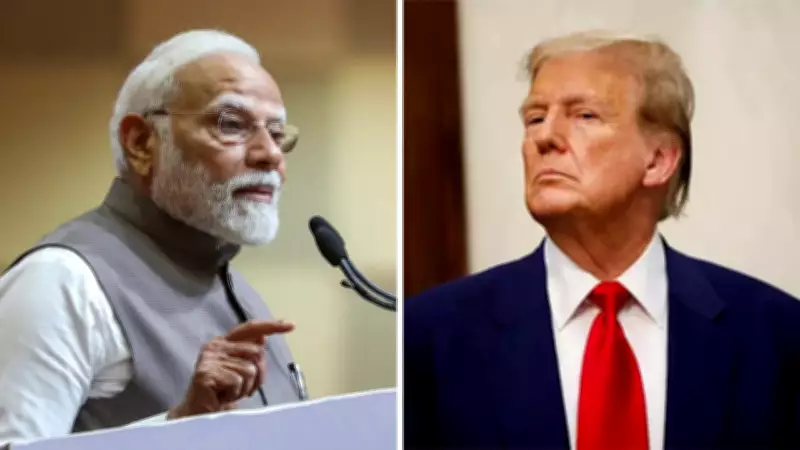
Trump and Modi Hold Crucial Talks on West Asia Crisis, Focus on Strait of Hormuz Security
In a significant diplomatic development, US President Donald Trump spoke with Indian Prime Minister Narendra Modi on Tuesday, addressing the escalating situation in West Asia. The conversation centered on the urgent need to secure the vital energy waterway, the Strait of Hormuz, which remains under an Iranian blockade, threatening global oil supplies and economic stability.
Modi Advocates for Peace and De-escalation
Prime Minister Modi reiterated India's firm support for de-escalation and the restoration of peace at the earliest opportunity. He emphasized that ensuring the Strait of Hormuz remains open, secure, and accessible is essential not only for regional stability but for the entire world. Modi highlighted that safe passage of ships through this strategic chokepoint is critical for global peace, stability, and economic well-being.
In a post on social media platform X, Modi stated, "Received a call from President Trump and had a useful exchange of views on the situation in West Asia. India supports de-escalation and restoration of peace at the earliest. Ensuring that the Strait of Hormuz remains open, secure and accessible is essential for the whole world." He added that both leaders agreed to stay in touch regarding ongoing efforts towards peace and stability in the region.

Timing and Context of the Trump-Modi Dialogue
The call between Trump and Modi occurred at a pivotal moment, just one day after President Trump announced a postponement of military strikes on Iranian energy installations for five days. This delay has raised hopes for an early cessation of military hostilities. Additionally, reports indicate that Washington is considering sending Vice President JD Vance to Pakistan for potential talks with Iranian officials, signaling a diplomatic push to resolve the conflict.
This conversation marked the first interaction between the two leaders since early February, following which Trump announced an agreement for a trade deal and reduced tariffs on Indian goods from 50% to 18%. The discussion underscores the strengthening bilateral ties amid global crises.
Diplomatic Engagements and Regional Dynamics
External Affairs Minister S. Jaishankar had previously spoken with his US counterpart, Marco Rubio, on Monday, discussing the conflict's likely impact on the international economy and India's energy security concerns. The news of Trump's call to Modi was initially shared on social media by US Ambassador Sergio Gor, who noted that the president was keeping Modi "in the loop" regarding developments.
Interestingly, the Trump-Modi call coincided with President Trump seemingly endorsing Pakistan's efforts to mediate in the conflict. While Pakistani Prime Minister Shehbaz Sharif publicly offered to host talks between the US and Iran for a comprehensive settlement, Trump shared a screenshot of Sharif's post on his Truth Social platform, indicating potential openness to Pakistani facilitation.
India's Diplomatic Outreach and Concerns
Despite Iran allowing several Indian ships to sail through the Strait of Hormuz in the past two weeks, many Indian vessels remain stranded at the chokepoint. Government sources confirmed that India is actively engaged in diplomatic efforts with Tehran to facilitate the movement of these ships. In a related development, External Affairs Minister Jaishankar met with Iran's Ambassador to India, Mohammad Fathali, on Tuesday, conveying India's concerns about the situation while thanking Iran for its support to Indian nationals in the country.
Prime Minister Modi also spoke with Sri Lankan President Anura Kumara Dissanayake on Tuesday, discussing the evolving situation in West Asia with a particular focus on disruptions affecting global energy security. Modi noted, "We reviewed progress on key initiatives aimed at strengthening India-Sri Lanka energy cooperation and enhancing regional security. As close and trusted partners, we reaffirmed our commitment to work closely together in addressing shared challenges."

India's Stance on US-Led Naval Coalition
India has not officially responded to Trump's decision to delay military action on Iranian energy installations. The Ministry of External Affairs (MEA) stated that the government is closely monitoring developments related to the conflict. Spokesperson Randhir Jaiswal emphasized on Tuesday that both Modi and Jaishankar are stressing in their engagements that peace can only be restored through dialogue and diplomacy.
Notably, like many of the US's European allies, India has shown little interest in joining a US-led naval coalition aimed at keeping the Strait of Hormuz open. This stance reflects India's preference for diplomatic solutions and its strategic autonomy in foreign policy matters.
The ongoing crisis, which began on February 28, continues to pose significant challenges to global energy markets and regional stability, with oil prices experiencing volatility amid the fluid situation.





