

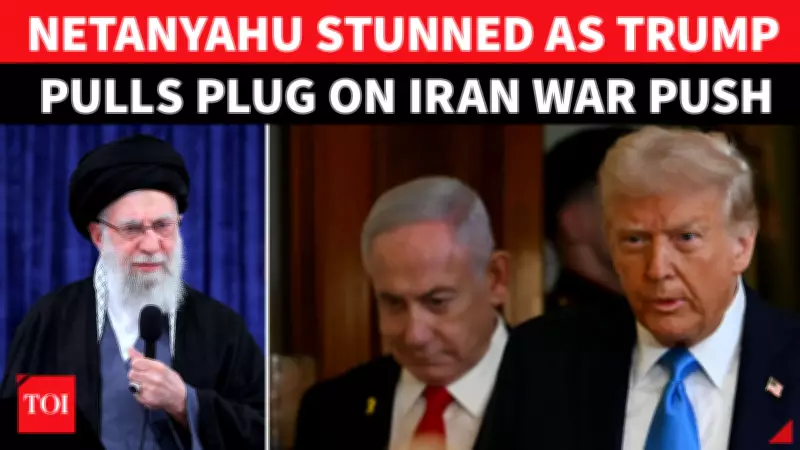
Trump Snubs Netanyahu's Call for Military Action Against Iran, Opts for Diplomacy
In a dramatic shift that underscores deep strategic divisions, former US President Donald Trump has firmly rejected Israeli Prime Minister Benjamin Netanyahu's urgent push for military strikes against Iran. The rebuff came during a tense, three-hour meeting at the White House, where Trump made it unequivocally clear that his administration prefers negotiations with Tehran over immediate military escalation.
A High-Stakes Meeting with Clear Outcomes
The high-level discussion, held against a backdrop of intensifying US military movements in the Persian Gulf, saw Trump pouring cold water on Israeli demands for a forceful response to Iran's nuclear ambitions. Netanyahu stressed Israel's acute security concerns, highlighting the perceived threat from Iran's advancing nuclear program. However, Trump stood firm, signaling a diplomatic-first approach that prioritizes talks over confrontation.
Following the meeting, Trump took to his Truth Social platform to elaborate on his stance. He reiterated his commitment to diplomacy while issuing a stern warning to Iran: consequences will follow if negotiations fail. This dual message reflects a calibrated strategy aimed at de-escalating tensions without appearing weak.

Regional Dynamics at a Tense Crossroads
The US–Israel rift emerges as the Middle East faces a critical juncture. Key developments include:
- US–Iran talks resuming in Oman, indicating a potential diplomatic pathway despite the saber-rattling.
- A visible US military buildup in the Gulf, with warships moving into strategic positions, showcasing readiness while talks proceed.
- Netanyahu's persistent emphasis on Israel's right to self-defense, underscoring the unresolved nature of the nuclear threat.
This confluence of diplomacy and military posturing places the region on a knife-edge, balancing between peaceful resolution and the risk of escalation. The divergent approaches of Washington and Jerusalem reveal fundamental disagreements on how to manage Iran's nuclear ambitions, with Trump favoring patient negotiation and Netanyahu advocating for more immediate, decisive action.
Implications for Global Security and Alliances
The Trump–Netanyahu discord has significant ramifications beyond bilateral relations. It highlights:
- The fragility of US–Israel coordination on Iran policy, potentially straining one of the world's most enduring alliances.
- The complexity of managing nuclear non-proliferation in a volatile region, where miscalculations could lead to broader conflict.
- The role of diplomacy in an era marked by heightened military preparedness, as seen in the Gulf deployments.
As talks continue and military assets remain on standby, the international community watches closely. The outcome of this diplomatic push, coupled with Iran's responses, will likely shape Middle Eastern stability for years to come. For now, Trump's rejection of Netanyahu's strike push marks a pivotal moment in the ongoing saga of Iran's nuclear program and the global efforts to contain it.






