

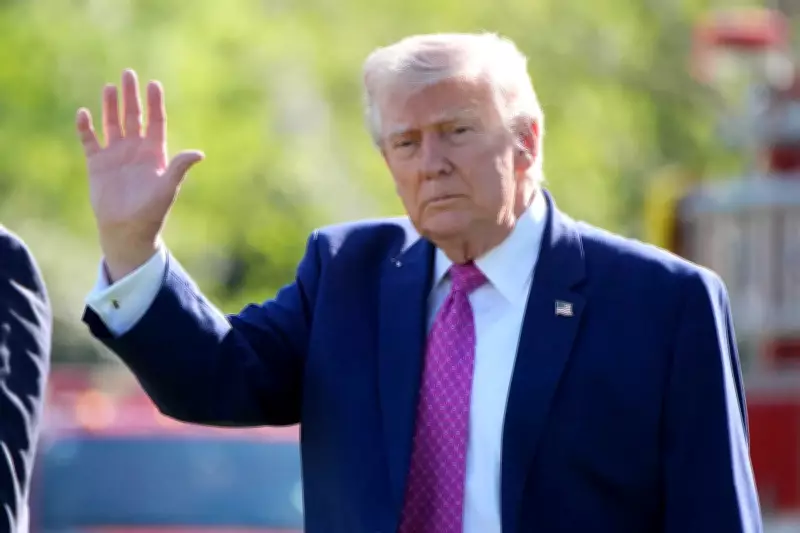
Trump Asserts US Will Secure Strait of Hormuz Amidst Iran Tensions
US President Donald Trump made a bold declaration on Friday, stating that the Strait of Hormuz "will open with or without Iran," as he prepared for crucial ceasefire negotiations with Tehran scheduled in Islamabad. Speaking to reporters ahead of the talks in Pakistan's capital, Trump emphasized his administration's resolve to ensure the vital maritime passage remains accessible, regardless of Iranian opposition.
Military Dismissal and Strategic Stance
Trump downplayed Iran's military strength, asserting, "They (Iran) are militarily defeated, and now we are going to open up the Gulf, with or without them." He added, "If it doesn't, we are going to finish it off, one way or the other. The Navy and Airforce (of Iran) is gone, along with all the anti-aircraft systems, the leaders and the whole place." The President predicted that the strait would "open up automatically" and be operational "fairly soon," highlighting his confidence in US capabilities.
Opposition to Transit Charges and International Waters
In a firm stance, Trump rejected any potential Iranian attempts to impose transit charges on ships navigating the Strait of Hormuz. "No, we are not going to allow that, it's international waters. If they are doing that, we are not going to let that happen," he stated. This comment comes in response to Tehran's virtual blockade of the strait, a critical corridor between the Persian Gulf and the Gulf of Oman, which Iran initiated in retaliation for US-Israeli strikes on February 28 that sparked the ongoing Middle East conflict.

The Strait of Hormuz is of immense global significance, with approximately 20% of the world's crude oil supply passing through it, underscoring its strategic importance for international trade and energy security.
Ceasefire Talks and Delegation Details
The upcoming talks in Islamabad involve high-level delegations from both nations. The American team is led by Vice President JD Vance, who has reportedly expressed opposition to military action against Iran. He is accompanied by special envoy Steve Witkoff and Jared Kushner, Trump's son-in-law. On the Iranian side, the delegation is headed by Foreign Minister Abbas Araghchi and Parliamentary Speaker MD Ghalibaf.
Trump extended well-wishes to Vance, saying, "I wish him luck," but reiterated his skepticism about prolonged negotiations, noting, "They (Iran) have been talking for 47 years with other Presidents — and we're not doing much talking."
Backup Plan Dismissed and Regional Context
When questioned about contingency measures if the ceasefire discussions fail, Trump dismissed the need for a backup plan. "I have to see what happens tomorrow. We don't need a backup plan. Their military is defeated, they have very few missiles, very little manufacturing capability. We have hit them hard. Our military has done an amazing job," he affirmed.
This statement is made against a backdrop of a fragile 14-day truce, which is already under strain due to Israel's continued attacks in Lebanon despite the ceasefire agreement. Hezbollah, the Iran-backed Lebanese group, entered the conflict following the death of Iran's then-Supreme Leader Ayatollah Ali Khamenei on the first day of hostilities. Israel maintains that the truce pact does not extend to Lebanon, adding complexity to the regional dynamics.
The developments highlight escalating tensions in the Middle East, with Trump's remarks signaling a firm US position on maritime security and Iran's role in the ongoing conflict.






