

Trump Attributes Swiss Tariff Increase to Contentious Phone Call
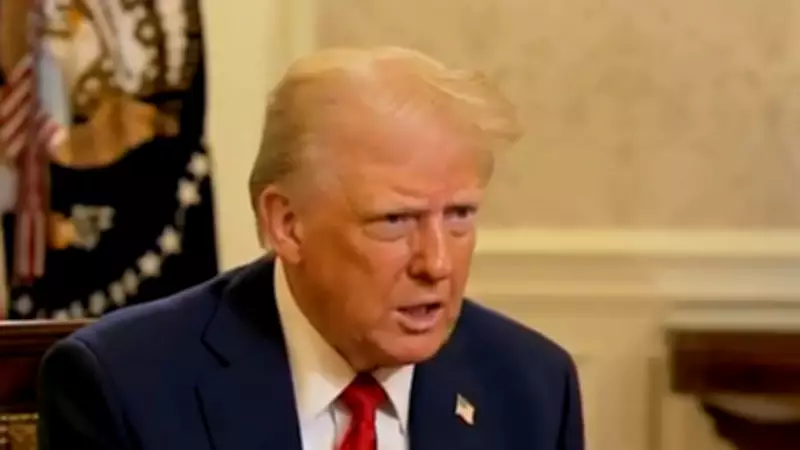
Former United States President Donald Trump has publicly disclosed the specific incident that triggered his decision to escalate tariffs on Swiss imports, pointing directly to a phone conversation with Swiss official Karin Keller-Sutter. In a revealing interview with Fox Business News, Trump detailed how this exchange fundamentally altered his approach to trade negotiations with Switzerland.
"Very Aggressive, But Nice" Phone Exchange
Trump described Keller-Sutter, whom he mistakenly identified as Switzerland's Prime Minister, as presenting a contradictory demeanor during their conversation. "She was very aggressive, but nice, but very aggressive," Trump recounted, emphasizing her persistent arguments about Switzerland's economic limitations. According to Trump, Keller-Sutter repeatedly stressed that her nation was "too small to absorb steep tariffs" and pleaded, "Sir, we are a small country. We can't do this. We can't do this."
The former president expressed dissatisfaction with the tone of the discussion, stating, "I didn't really like the way she talked to us." This perceived confrontational approach reportedly backfired, prompting Trump to increase rather than reduce the tariff burden. "So instead of giving her a reduction, I raised it to 39 percent," he revealed during the interview.

Background of US-Swiss Trade Relations
Trump framed the tariff decision within the broader context of what he characterized as imbalanced trade relations between the United States and Switzerland. He asserted that Bern had historically benefited from minimal duties while Washington accumulated substantial trade deficits. "They were paying no tariffs, sending stuff over here, as nobody could believe," Trump claimed. "And we had a $42 billion deficit. And we weren't taking anything."
The former president explained his initial approach to addressing this imbalance, stating, "I said, well, we have to do something because we have to even that up a little bit. I didn't have to get everything at one time." This reasoning led him to first impose a 30 percent tariff, which he described as "very low" but still effective in roughly halving the trade deficit.
Subsequent Developments and Broader Implications
Following the tariff increase to 39 percent, Trump reported receiving extensive follow-up communications from Swiss officials and business representatives. This persistent outreach eventually contributed to his decision to later reduce the tariff rate to 15 percent, though he maintained a conditional stance. "I reduced it because I don't want to hurt people. Doesn't mean it's not going up," he cautioned during remarks at the Davos Summit earlier in January.
Trump expanded his critique beyond Switzerland alone, suggesting similar dynamics existed with numerous other trading partners. "They're only that way because we allow them to rip us off and make all this money," he stated, describing Switzerland as "ultra-chic, ultra-perfect" before adding, "I could say the same thing with another 40 countries. Some are much more egregious."
Persistent Trade Policy Philosophy
The former president's comments reflect his enduring approach to international trade negotiations, characterized by:
- Direct personal diplomacy where individual interactions significantly influence policy decisions
- Focus on bilateral trade deficits as primary metrics for evaluating economic relationships
- Conditional tariff adjustments that remain subject to change based on ongoing negotiations
- Aggressive bargaining tactics intended to secure more favorable terms for American interests
Trump's revelation provides unusual transparency into how personal dynamics between leaders can shape international economic policy, particularly regarding tariff implementation and adjustment. The episode underscores the complex interplay between diplomatic communication, national economic interests, and individual leadership styles in global trade relations.






