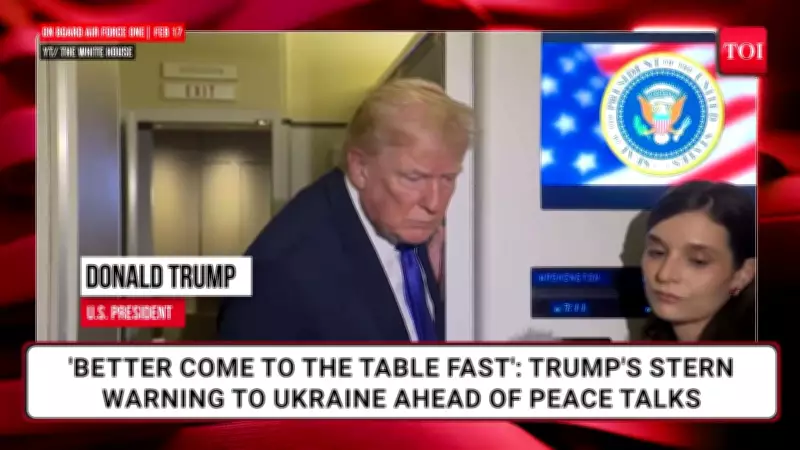
Trump Presses Ukraine for Swift Negotiations with Russia
In a significant development ahead of crucial diplomatic talks, U.S. President Donald Trump has issued a direct public appeal to Ukrainian leadership, urging them to expedite negotiations with Russia. The call comes just days before senior officials from both nations are scheduled to meet in Geneva for the second round of peace discussions.
'Better Come to the Table Fast'
While engaging with reporters, President Trump delivered a pointed message to Kyiv, stating they should "better come to the table fast." This public pressure underscores the urgency Washington perceives in resolving the protracted conflict, which approaches its fourth anniversary since Russia's full-scale invasion began in February 2022.
The upcoming two-day meeting in Switzerland's diplomatic hub is expected to follow a similar format to previous negotiations held in Abu Dhabi. These talks represent a continued effort by the United States to broker a peaceful resolution to the devastating war that has reshaped European security dynamics.

Geneva Talks: A Critical Juncture
The Geneva negotiations mark a pivotal moment in international diplomacy, with both Ukrainian and Russian delegations preparing to engage under Washington's mediation framework. The timing is particularly symbolic, occurring as the conflict nears its fourth-year milestone, a period that has witnessed unprecedented humanitarian crises and geopolitical realignments.
Analysts suggest the Trump administration's public pressure reflects growing concerns about prolonged conflict fatigue among Western allies and the economic strains of sustained military support. The President's remarks signal a potential shift in U.S. diplomatic strategy, emphasizing accelerated negotiation timelines over prolonged military engagement.
Broader Implications for European Security
This development occurs against a backdrop of evolving transatlantic relations, with recent statements from NATO leadership warning that "U.S. support won't last forever" as American foreign policy priorities potentially shift. The Geneva talks could therefore represent not just a bilateral negotiation, but a test case for future conflict resolution mechanisms in an increasingly multipolar world.
The international community will be closely monitoring whether this public pressure from Washington translates to substantive progress at the negotiating table, or if it instead deepens existing diplomatic divisions regarding the appropriate path toward Ukrainian sovereignty and regional stability.