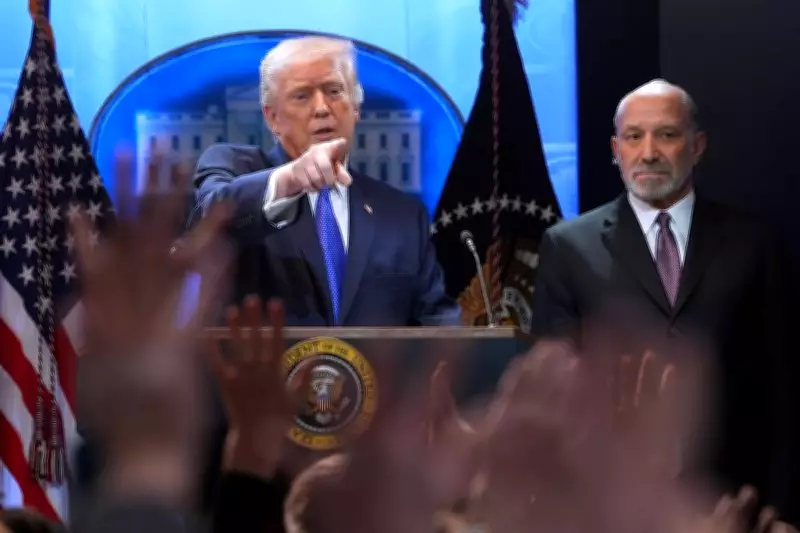
Trump Asserts Tariff Stance on India Unchanged by Supreme Court Decision
In a stark declaration that has reverberated across diplomatic and economic circles, former United States President Donald Trump has emphatically stated that India will remain subject to tariffs if he returns to office, brushing aside a recent ruling by the US Supreme Court. The statement, made in the wake of the court's decision, underscores Trump's unwavering commitment to his "America First" trade agenda, signaling potential turbulence ahead for Indo-US relations.
Supreme Court Ruling Fails to Sway Trump's Trade Policy
The US Supreme Court recently issued a ruling that could have implications for executive authority in trade matters, but Trump has dismissed its relevance to his plans. He asserted, "Nothing changes—India will be paying tariffs, we won't," highlighting his intent to maintain a hardline approach. This stance suggests that, despite legal developments, Trump's administration would prioritize protective measures aimed at bolstering American industries, even if it means imposing financial burdens on trading partners like India.
Historical Context and Economic Implications
During his previous term, Trump implemented several tariffs on Indian goods, citing trade imbalances and intellectual property concerns. These measures led to tensions and negotiations between the two nations. If Trump secures another presidency, experts warn that renewed tariffs could disrupt bilateral trade, which currently exceeds $100 billion annually. Key sectors such as information technology, pharmaceuticals, and agriculture might face increased costs and reduced market access, potentially impacting global supply chains.

Reactions from Indian and International Observers
The announcement has sparked concern among Indian policymakers and business leaders, who fear a return to trade wars that could hinder economic growth. International analysts note that Trump's comments reflect a broader trend of protectionism in global politics, which may complicate efforts to foster cooperative trade agreements. As the world watches, the potential for escalated trade disputes looms, with implications for diplomatic relations and economic stability in the Asia-Pacific region.