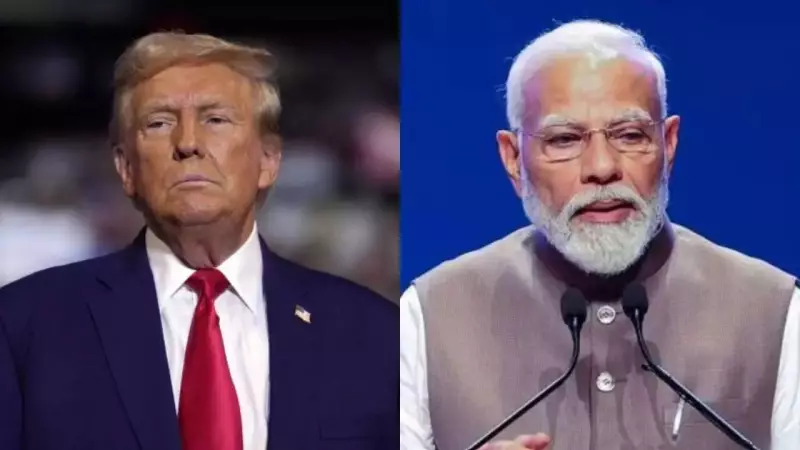
Former US President Donald Trump made a striking claim this week, asserting that India had ordered 68 Apache attack helicopters from the United States and that Prime Minister Narendra Modi had to deferentially request a meeting to address major delivery delays. However, a thorough review of official records and sources reveals a significant discrepancy between the claim and the factual timeline of India's Apache acquisitions.
The Real Numbers: Two Deals, 28 Helicopters
Contrary to the figure of 68 cited by Trump, India's total order for Boeing AH-64E Apache Guardian helicopters stands at 28 units. This procurement happened in two separate phases, not one bulk order. The first contract was finalized in September 2015 under the Obama administration, with India agreeing to purchase 22 Apaches for the Indian Air Force (IAF) in a deal worth approximately $2.2 billion. These helicopters were delivered as planned, with the final units arriving by 2020.
The second agreement was signed during President Trump's visit to India in February 2020. This follow-on contract, valued between $600 million and $800 million, was for six Apache helicopters destined for the Indian Army Aviation Corps. It is this second, smaller order that encountered significant logistical hurdles and delays.

Understanding the Delays and Exaggerations
While the IAF's Apaches arrived on schedule, the Army's six helicopters faced a protracted delay. Initial deliveries were slated for early 2024 but began only in July 2025, with the final batch touching down in December 2025—nearly two years behind schedule. Multiple factors contributed to this holdup:
- Post-pandemic supply chain issues at Boeing's Arizona production line, affecting engines and specialized components.
- India's relatively lower priority in the US defence allocation system in 2024.
- Global safety pauses for electrical system checks.
- A final logistical snag in November 2025 when Turkey denied overflight clearance to the transport aircraft, forcing it to turn back mid-route.
These genuine delays likely formed the basis of discussions, including when PM Modi raised the issue during his White House visit in February 2025. However, Trump's recollection inflates both the scale and the narrative. There is no record of India ordering 68 Apaches from the US Department of Defense or India's Ministry of Defence. Analysts suggest Trump may have conflated the Apache order with India's purchase of 15 CH-47F Chinook helicopters, but even combined, they total only 43.
Strategic Shift: India's Move Towards Self-Reliance
This episode of delays and exaggerated claims underscores a broader strategic recalibration in New Delhi. Frustrated by unreliable foreign supply chains and geopolitical unpredictability, India is aggressively pursuing indigenous defence solutions under its 'Make in India' initiative.
The focus is now shifting to the domestically developed HAL Prachand Light Combat Helicopter (LCH). Optimized for high-altitude operations like those required in Siachen, the Prachand fills a niche where heavier Apaches are less effective. India plans to induct 156 Prachand helicopters across its Army and Air Force, signaling a long-term plan to reduce dependency on foreign attack helicopters.
The emerging doctrine is clear: while the formidable Apache will remain India's heavy-hitter in plains and desert sectors, the future of its rotary-wing combat power is increasingly homegrown. Trump's inflated claim, while factually inaccurate, has inadvertently highlighted the very reasons driving India's push for defence autonomy.