

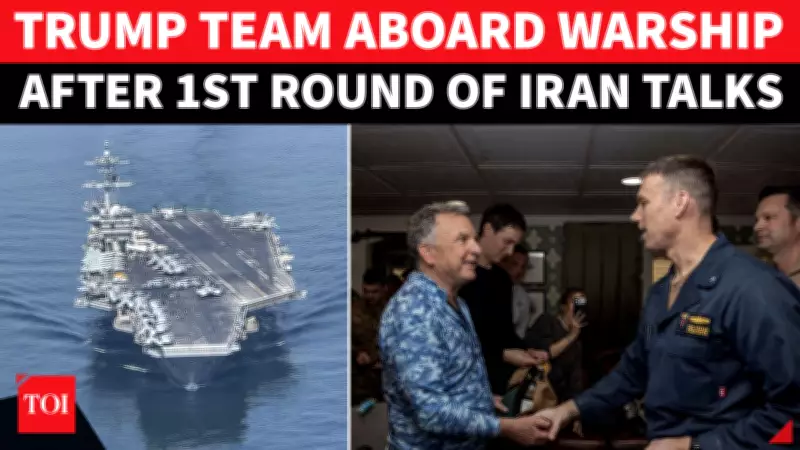
Trump Administration's Dual-Track Iran Strategy Unfolds in Arabian Sea
The USS Abraham Lincoln has emerged as a pivotal platform in the United States' high-stakes strategy toward Iran, as senior envoys from the Trump administration conducted a high-profile visit to the aircraft carrier in the Arabian Sea. This military demonstration occurred merely days after indirect nuclear negotiations between American and Iranian officials took place in Oman, underscoring a calculated dual-track approach that blends diplomatic engagement with overt displays of military power.
A Signal of Deterrence Amid Diplomatic Uncertainty
U.S. officials have explicitly characterized the carrier's prominent presence in the region as a clear signal of deterrence, aimed at reinforcing Washington's position while the outcome of the Oman talks remains precarious and uncertain. The timing of the envoys' visit aboard the USS Abraham Lincoln is interpreted by analysts as a deliberate message to Iranian leadership, including Supreme Leader Ayatollah Ali Khamenei, emphasizing that American military capabilities are on standby should diplomatic efforts falter.
This maneuver highlights the fragile balance the Trump administration is attempting to maintain between applying maximum pressure and keeping channels for dialogue open. With regional allies monitoring the situation with heightened anxiety, there is a palpable fear that any breakdown in negotiations could rapidly escalate into a broader conflict, destabilizing an already volatile Middle East.

Regional and Global Implications
The strategic calculus is further complicated by the scheduled engagement between Israeli leadership and Washington in the coming days. Israel's stance on Iran's nuclear program is unequivocally hawkish, and its input is expected to influence the U.S. approach, potentially tilting the scale toward more assertive measures. The presence of the USS Abraham Lincoln serves not only as a deterrent to Iran but also as a reassurance to allies like Israel and Gulf states, affirming America's commitment to regional security.
However, this show of force also risks provoking miscalculations. Iranian officials have previously issued stark warnings about the consequences of military provocations, suggesting that any misstep could ignite a region-wide conflagration. The dual-track strategy, while intended to project strength and flexibility, inherently carries the peril of misinterpretation, where diplomatic overtures might be overshadowed by the looming shadow of naval power.
The Broader Geopolitical Context
This development occurs against a backdrop of escalating global tensions, as evidenced by related headlines involving Russia's actions in Ukraine and other international flashpoints. The Trump administration's Iran strategy is thus part of a larger tapestry of geopolitical maneuvering, where military assets like the USS Abraham Lincoln are deployed as tools of statecraft, signaling resolve to adversaries while navigating complex diplomatic landscapes.
As negotiators shuttle between Oman and the decks of aircraft carriers, the world watches closely, aware that the interplay between dialogue and deterrence will shape not only U.S.-Iran relations but also the stability of the entire Middle East. The coming weeks will be critical in determining whether this dual-track approach can sustain a precarious peace or if it will inadvertently hasten the very conflict it seeks to avert.






