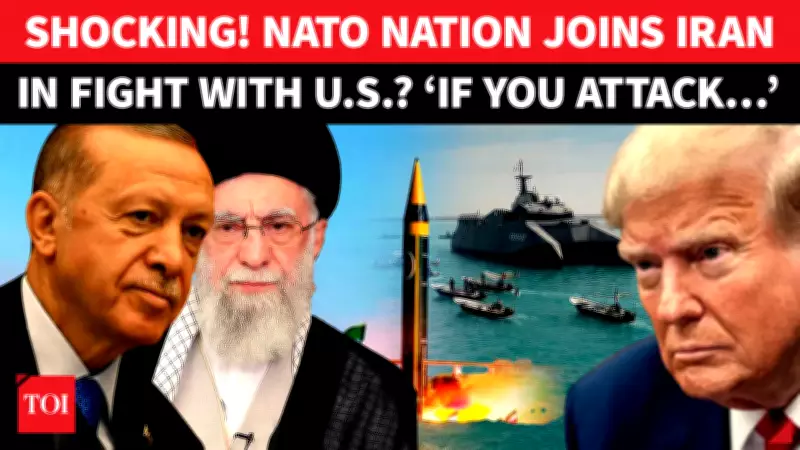
NATO Nation Turkey Firmly Enters Iran-US Conflict, Reveals Call Details with Trump
In a significant diplomatic development, Turkish President Recep Tayyip Erdogan has firmly opposed any potential military strike on Iran, warning that such an action would destabilize the entire region and benefit no one involved. This strong stance comes as Turkey positions itself as a crucial diplomatic bridge between the conflicting parties.
High-Level Talks and Anti-Intervention Stance
Speaking after conducting high-level talks with both Iranian President Ebrahim Raisi and U.S. President Donald Trump, Erdogan revealed that Turkey has clearly conveyed its anti-intervention position to all relevant parties. The Turkish leader emphasized that Ankara is actively working to prevent escalation in an already fragile regional climate.
"We have made our position crystal clear to both Washington and Tehran," Erdogan stated. "A new war in this region would create chaos that would spread far beyond current borders. We are urging all sides to choose dialogue over military confrontation."

Regional Tensions and Military Buildup
Erdogan's comments come at a particularly tense moment as Washington has deployed what President Trump described as an "armada" of naval forces to the Gulf region. Simultaneously, Iran has been signaling its readiness through increased military activity and exercises of its own.
The situation has created what analysts describe as a potentially explosive standoff in the strategically vital Sea of Oman and Strait of Hormuz, through which a significant portion of global oil shipments passes.
Turkey's Diplomatic Positioning
As the only NATO member nation sharing borders with both Iran and conflict zones in the Middle East, Turkey finds itself in a uniquely influential position. Ankara appears to be leveraging this geographic and political advantage to position itself as:
- A mediator between Washington and Tehran
- A voice for regional stability
- A bridge between Western alliances and Middle Eastern powers
"Turkey understands the complexities of this region better than most," noted a regional affairs expert. "Erdogan's intervention reflects both genuine concern about regional stability and Turkey's aspirations to play a larger role in Middle Eastern diplomacy."
Broader Regional Implications
The Turkish president's warning about regional destabilization carries particular weight given recent developments. Multiple reports indicate that Russian warships have joined Iranian military forces in the Sea of Oman, creating what some observers describe as a "huge showdown" with U.S. naval assets.
Furthermore, China's navy has reportedly joined Iranian and Russian warships in the Strait of Hormuz, while U.S. military forces watch from the Gulf. This multi-power naval presence represents one of the most significant military buildups in the region in recent years.
Call for Restraint and Dialogue
Erdogan's message to all parties has been unequivocal: "Do not attack. Choose dialogue." The Turkish leader emphasized that military solutions would only exacerbate existing problems and create new humanitarian crises in a region already struggling with multiple conflicts.
"We have seen what happens when diplomacy fails in this region," Erdogan reminded international observers. "The suffering extends for generations. We must learn from history rather than repeat its mistakes."
As tensions continue to sharpen between Iran and the United States, Turkey's diplomatic intervention represents a significant development in international efforts to prevent another major conflict in the Middle East. The coming days will reveal whether Ankara's bridge-building efforts can succeed where traditional diplomacy has thus far struggled.