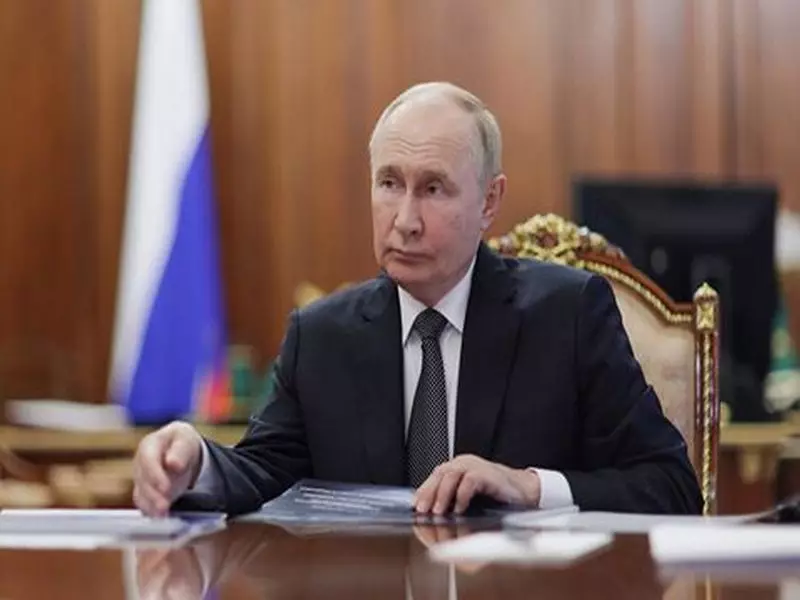
The United Arab Emirates (UAE) has issued a firm and unequivocal condemnation following a reported attempt to target the official residence of Russian President Vladimir Putin using an unmanned aerial vehicle, commonly known as a drone. The Gulf nation labeled the incident a dangerous violation of international law.
Official Condemnation from the UAE Foreign Ministry
In an official statement released on a recent Wednesday, the UAE's Ministry of Foreign Affairs expressed its strong denunciation of what it termed a "serious violation of international law." The ministry emphasized the fundamental principles of national sovereignty and the critical importance of non-interference in the internal affairs of other states. The statement underscored the UAE's firm position against all forms of violence and terrorism that aim to destabilize security and contravene established human values.
The foreign ministry further called for de-escalation and the adoption of diplomatic dialogue and political solutions as the only viable path to resolve conflicts and differences between nations. This stance aligns with the UAE's consistent foreign policy approach, which advocates for stability and peaceful conflict resolution in the international arena.

Details of the Security Incident
The incident that prompted this strong reaction from the UAE involved an attempted strike on the Kremlin, the official residence and workplace of the Russian President in Moscow. Russian authorities reported that they had successfully intercepted and neutralized two drones targeting the complex. While no casualties were reported from the attack, the event sent shockwaves through diplomatic circles, being perceived as a direct and symbolic assault on the heart of Russian power.
The UAE's prompt response highlights its growing role as a significant diplomatic player on the global stage. By taking a clear stand, the Emirates reinforces its commitment to international norms and the stability of the global order. The condemnation also reflects the complex geopolitical landscape, where Middle Eastern nations are navigating relationships with major powers like Russia while upholding principles of sovereignty and non-aggression.
Broader Implications and International Reaction
This incident and the UAE's subsequent condemnation occur against the backdrop of the ongoing conflict in Ukraine. The war has placed many nations, including those in the Gulf, in a delicate position as they balance historical ties and economic partnerships with the need to uphold international law. The UAE's statement, while not explicitly referencing the wider war, implicitly calls for restraint and a return to diplomatic channels to prevent further escalation of violence.
The attempted drone strike on the Kremlin is seen as a significant escalation, raising concerns about the potential for the conflict to spread or intensify in unpredictable ways. The UAE's firm stance serves as a reminder to the international community about the dangers of such actions and the paramount importance of protecting diplomatic premises and national leaders from targeted attacks.
Analysts suggest that the UAE's reaction is also aimed at reinforcing its image as a responsible and neutral mediator in international disputes. The country has previously positioned itself as a facilitator of dialogue between conflicting parties in various regions, and maintaining this role requires a consistent and principled stand against acts that undermine state sovereignty and security.