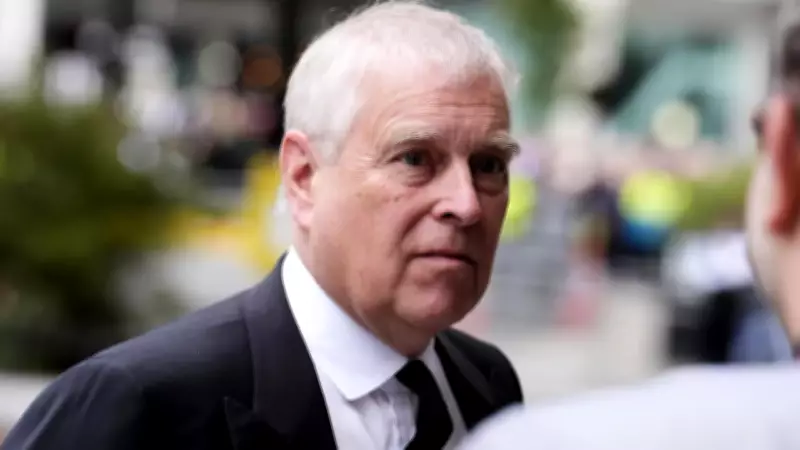
UK Government Considers Legislation to Remove Prince Andrew from Royal Succession Line
The British government is actively considering the introduction of new legislation that would formally remove former Prince Andrew Mountbatten-Windsor from the line of royal succession. This significant constitutional move would effectively bar him from ever ascending to the throne, marking a dramatic shift in his royal status.
Defence Minister Supports the Move
Defence Minister Luke Pollard has publicly endorsed this legislative action, describing it as "the right thing to do" regardless of the outcome of any ongoing police investigation. His comments, as reported by the BBC, highlight the government's firm stance on this matter. Andrew, who is King Charles's younger brother, currently occupies the eighth position in the line of succession. This is despite being stripped of his official titles, including the designation of "prince," in October of last year due to mounting pressure over his associations with the disgraced financier Jeffrey Epstein.
Recent Arrest and Investigation Details
On Thursday evening, Andrew was released under investigation approximately eleven hours after his arrest on suspicion of misconduct in a public office. He has consistently and vehemently denied any allegations of wrongdoing. This arrest was directly precipitated by the release of millions of pages of documents from a comprehensive United States investigation into Jeffrey Epstein, who died in prison in 2019 under controversial circumstances.

Emails cited in various media reports and officially released by the US Justice Department reveal correspondence between Epstein and Andrew's former aide, David Stern. These messages suggest that the former royal may have shared confidential government reports and sensitive investment opportunities during his tenure as the United Kingdom's special representative for international trade and investment, a role he held from 2001 to 2011.
Government Coordination with Buckingham Palace
Minister Pollard confirmed that the government has "absolutely" been collaborating closely with Buckingham Palace on detailed plans to prevent the former prince from being "potentially a heartbeat away from the throne." He expressed hope that the proposed legislation would garner cross-party political support within Parliament. However, he emphasized that the formal process should ideally commence only after the conclusion of the current police investigation to ensure procedural integrity and fairness.
Legislative Process and Historical Context
The proposal to alter the royal succession requires a specific Act of Parliament. This act must secure approval from both the House of Commons and the House of Lords before it can take effect, which would also necessitate royal assent from King Charles III. Furthermore, such a change would require the backing of all fourteen Commonwealth realms where Charles III serves as the head of state, including major nations like:
- Canada
- Australia
- Jamaica
- New Zealand
The last time Parliament modified the line of succession was in 2013 with the Succession to the Crown Act, which removed historical restrictions on individuals who married Catholics. The most recent instance of a person being legislatively removed from the succession occurred in 1936, following the abdication of King Edward VIII, when he and all his descendants were formally excluded from the royal line.