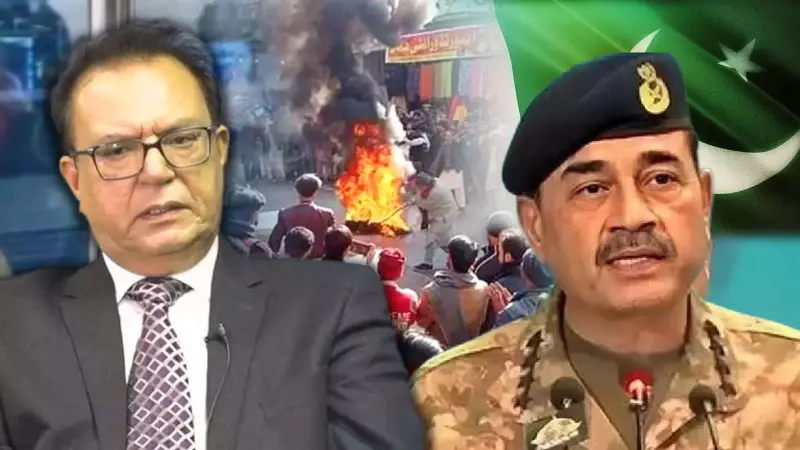
The Chairman of the United Kashmir People's National Party (UKPNP) has issued a stark warning, labeling the situation in Pakistan-occupied Jammu and Kashmir (PoJK) as the "worst kind of discrimination." This declaration, made on January 7, 2026, directly challenges Islamabad's long-standing claims of granting self-governance to the region.
The Stark Reality Behind Islamabad's Claims
For decades, the Pakistani state has maintained that both PoJK and Pakistan-occupied Gilgit-Baltistan (PoGB) function as autonomous, self-governed entities. However, activists and residents from these territories describe a profoundly different and grim reality. According to detailed accounts, the political institutions in these areas operate under the strict and unyielding oversight of authorities in Islamabad.
This external control effectively renders locally elected bodies powerless, stripping them of any genuine authority to govern. The daily lives of people are dominated by extensive surveillance, systematic coercion, and overwhelming military control. Furthermore, citizens are denied full legal and constitutional rights, which prevents them from legally challenging the actions of the state or seeking redress for grievances.

A Deliberate Strategy to Maintain Authority
Political analysts and human rights advocates argue that this is not a case of administrative neglect but a deliberate and calculated strategy. They contend that Pakistan intentionally undermines local governance structures to maintain its complete and unchallenged authority over these disputed regions. This approach ensures that all decision-making power flows from the federal capital, leaving no room for authentic regional political expression or development based on local needs.
The consequence is a rapidly widening chasm. On one side is Pakistan's official narrative of autonomy and normalcy, frequently presented in international forums. On the other is the lived experience of millions in PoJK and PoGB, marked by political disenfranchisement and restricted freedoms. This growing gap is raising urgent and pressing questions about the state of democracy, fundamental rights, and governmental accountability in these territories.
Mounting International Scrutiny and Concern
The vocal criticism from leaders like the UKPNP Chairman is amplifying international concern. The situation is increasingly being viewed through the lens of human rights and international law, drawing attention from global observers and foreign policymakers. The crisis in governance and rights in PoJK and PoGB is no longer seen as an internal matter but as an issue with implications for regional stability and justice.
The testimony from the ground suggests a systemic failure where the promise of self-rule is a mirage. The continued suppression of political voice and the absence of true constitutional protections for the people signal a deepening crisis that demands a transparent and just resolution.