

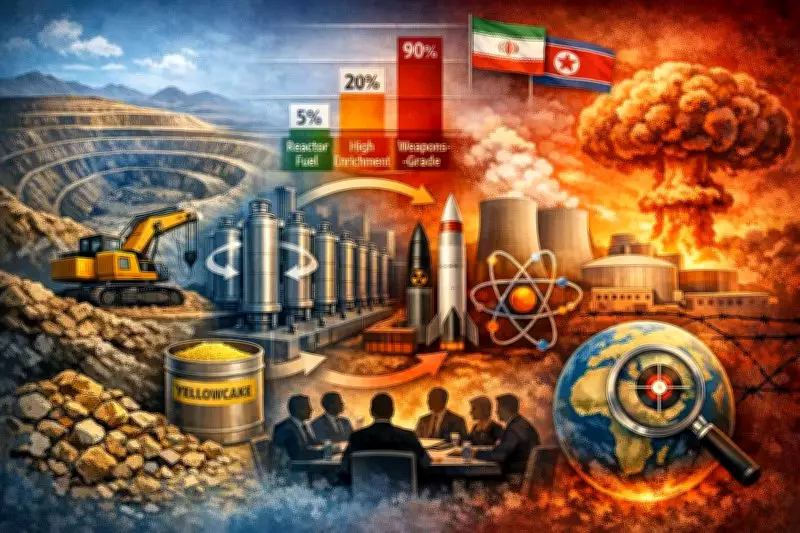
From Rock to Reactor: The Science and Geopolitics of Uranium Enrichment
The journey of uranium from its natural state in rocks to a powerful fuel in nuclear reactors is a complex and highly technical process known as enrichment. This transformation involves increasing the concentration of the fissile isotope uranium-235 (U-235) from its natural level of about 0.7% to levels suitable for various applications, typically 3-5% for civilian nuclear power and over 90% for military purposes. The science behind uranium enrichment is intricate, requiring advanced technologies and significant energy inputs, while its geopolitical implications are profound, shaping international relations, energy security, and non-proliferation efforts.
The Scientific Process of Uranium Enrichment
Uranium enrichment begins with mining uranium ore, which is then processed into yellowcake, a concentrated powder. This yellowcake is converted into uranium hexafluoride (UF6), a gas that can be manipulated for enrichment. The primary methods for enrichment include gaseous diffusion, which uses porous membranes to separate isotopes based on their slight mass differences, and gas centrifugation, the most common modern technique. In gas centrifugation, UF6 gas is spun at high speeds in centrifuges, causing heavier uranium-238 (U-238) isotopes to move outward while lighter U-235 isotopes concentrate at the center. This process is repeated through cascades of centrifuges to achieve the desired enrichment level. Other emerging technologies, such as laser enrichment, offer potential for higher efficiency but are still under development. The enriched uranium is then converted into fuel pellets for use in nuclear reactors, where it undergoes fission to generate heat and electricity.
Geopolitical Dimensions and Global Impact
The geopolitics of uranium enrichment are deeply intertwined with national security, energy independence, and international diplomacy. Countries with enrichment capabilities, such as the United States, Russia, China, and France, wield significant influence in global energy markets and nuclear non-proliferation regimes. Enrichment technology is closely guarded due to its dual-use nature; it can fuel peaceful nuclear energy programs or be diverted for weapons development. This has led to strict international controls under treaties like the Nuclear Non-Proliferation Treaty (NPT) and oversight by the International Atomic Energy Agency (IAEA). Geopolitical tensions often arise over enrichment activities, as seen in disputes involving Iran and North Korea, where concerns about weapons proliferation have triggered sanctions and diplomatic crises. Additionally, access to enriched uranium is a key factor in energy security, with countries seeking to diversify their supplies to reduce dependence on foreign sources.

India's Role and Advancements in Uranium Enrichment
India has made significant strides in uranium enrichment as part of its nuclear energy program, which aims to meet growing electricity demands and reduce carbon emissions. Operating outside the NPT due to its nuclear weapons status, India has developed indigenous enrichment capabilities, including gas centrifuge technology, to support both civilian and strategic needs. The country's enrichment facilities, such as those at the Rare Materials Plant in Ratnahalli, play a crucial role in producing fuel for its nuclear reactors, including those used in power generation and research. India's advancements are bolstered by collaborations with countries like Russia and France for uranium supply and technology transfer, while adhering to international safeguards where applicable. These efforts position India as a key player in the global nuclear landscape, balancing energy goals with geopolitical considerations, such as regional stability and non-proliferation commitments.

Challenges and Future Prospects
The future of uranium enrichment faces several challenges, including technological hurdles, environmental concerns, and evolving geopolitical dynamics. Technologically, improving the efficiency and reducing the energy consumption of enrichment processes, such as through advanced centrifuge designs or laser methods, is a priority. Environmentally, the management of depleted uranium (the byproduct of enrichment) and the carbon footprint of enrichment plants require sustainable solutions. Geopolitically, the spread of enrichment technology raises proliferation risks, necessitating robust international frameworks and cooperation. Looking ahead, innovations in enrichment could enhance the viability of nuclear energy as a clean power source, while diplomatic efforts must address security concerns to ensure peaceful use. For countries like India, continued investment in research and international partnerships will be vital to navigating these complexities and securing a stable energy future.





