U.S. Makes Major Admission on Iran's Rejection of Trump's Diplomatic Red Lines
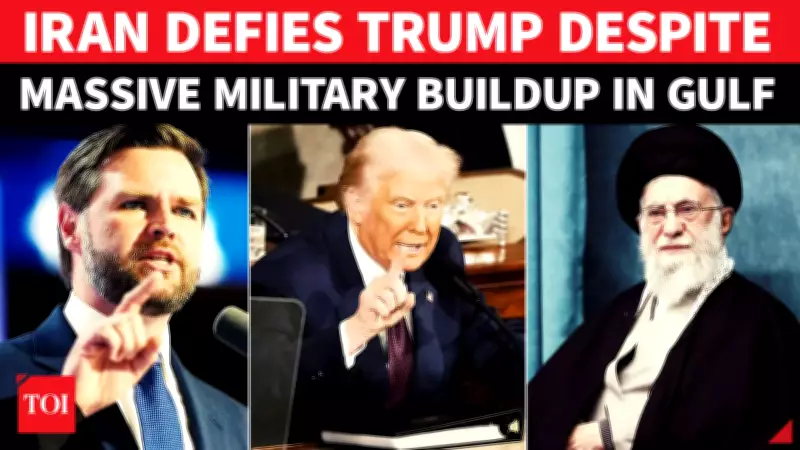
In a significant diplomatic development, the United States has openly acknowledged that Iran is not adhering to the "red lines" established by President Donald Trump for a potential resolution to ongoing tensions. This admission came from U.S. Vice President JD Vance following high-level talks held in Geneva, underscoring the persistent challenges in U.S.-Iran relations.
Vance's Candid Remarks on Fox News Interview
Speaking on "The Story with Martha MacCallum" program on Fox News, Vice President Vance provided a mixed assessment of the Geneva discussions. He noted that while the talks had some positive aspects, such as an agreement to meet again, they also revealed stark disagreements. "In some ways, it went well; they agreed to meet afterwards," Vance stated. However, he emphasized that "in other ways, it was very clear that the president has set some red lines that the Iranians are not yet willing to actually acknowledge and work through."
This statement marks a rare public admission from a senior U.S. official regarding Iran's resistance to Trump's diplomatic demands, which have been a cornerstone of the administration's foreign policy approach. The red lines, though not specified in detail by Vance, are believed to pertain to issues such as nuclear proliferation, regional security, and economic sanctions.

Context of U.S.-Iran Relations and Global Implications
The Geneva talks occur against a backdrop of heightened global tensions, with recent events including U.S. military strikes in the Caribbean and Pacific, as well as joint naval exercises involving Chinese, Iranian, and Russian warships in the Strait of Hormuz. Additionally, Russian support for Iran, highlighted by a top minister's visit, adds complexity to the diplomatic landscape.
Vance's comments suggest that despite efforts to engage diplomatically, fundamental differences remain unresolved. This could have far-reaching implications for international stability, particularly in the Middle East, where Iran's actions are closely monitored by the U.S. and its allies.
Analysis of the Diplomatic Stalemate
The admission by Vance points to a potential stalemate in U.S.-Iran negotiations, with Iran showing reluctance to compromise on key issues outlined by Trump. This situation may lead to increased diplomatic pressure or further escalations, as both nations navigate their strategic interests. The U.S. has previously employed sanctions and military posturing to influence Iranian behavior, but Iran's continued defiance indicates a resilient stance.
Experts suggest that without mutual concessions, the prospects for a breakthrough remain slim. The upcoming meetings, as mentioned by Vance, will be critical in determining whether both sides can bridge their differences or if tensions will persist.
In summary, Vice President JD Vance's frank admission highlights the ongoing diplomatic challenges between the U.S. and Iran, with Trump's red lines serving as a key point of contention. As global dynamics evolve, the outcome of these talks will be closely watched by international observers.