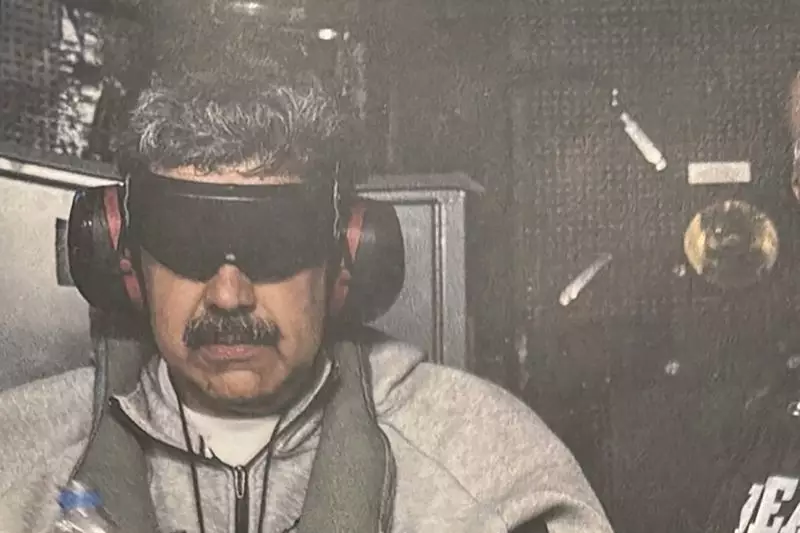
In a dramatic escalation that reverberates through international diplomacy and the global war on drugs, the United States has unsealed explosive criminal charges against the sitting President of Venezuela, Nicolás Maduro Moros, and several key members of his inner circle. The indictment, unveiled by the US Department of Justice, paints a detailed picture of a state-sponsored narcoterrorism conspiracy, alleging that the Venezuelan leadership transformed the country into a hub for cocaine trafficking in partnership with Colombian guerrilla groups.
The Core of the Allegations: A State-Sponsored Drug Enterprise
The charges are centred on what US prosecutors term the "Cartel of the Suns." This is not a traditional cartel but an alleged criminal enterprise run by high-ranking Venezuelan officials and military officers, named after the sun insignia on their uniforms. The indictment accuses these individuals of conspiring with the Revolutionary Armed Forces of Colombia (FARC), specifically its most powerful faction, to flood the United States with cocaine.
The alleged scheme was straightforward in its criminal ambition but complex in its execution. The FARC, controlling vast cocaine production in the jungles of Colombia, would produce and transport multi-ton shipments of the drug into Venezuela. With the protection and direct assistance of the Venezuelan officials, including President Maduro, these shipments were then shipped from Venezuelan ports and airports to destinations including Mexico, Central America, and directly to the United States.

The profits, estimated to be in the hundreds of millions of dollars, were then allegedly funnelled back to the Venezuelan officials and used to solidify the Maduro regime's grip on power. US Attorney Geoffrey S. Berman stated the objective was to "enrich themselves and bolster their regime at the expense of the Venezuelan people and the rule of law." The indictment specifically mentions Maduro and his allies providing the FARC with weapons, security for cocaine labs, and safe passage for drug shipments.
Key Figures and a Stunning Bounty
Alongside President Nicolás Maduro, the US has charged a roster of powerful Venezuelan figures. The most prominent among them is Diosdado Cabello Rondón, the former Vice President and head of the pro-government Constituent Assembly, often considered the second-most-powerful man in Venezuela. He is accused of being a central figure in the trafficking conspiracy.
Other charged individuals include:
- Hugo Carvajal, the former head of military intelligence.
- Clíver Alcalá Cordones, a former general.
- Tareck El Aissami, the current Minister of Industry and National Production and former Vice President.
In an unprecedented move, the US State Department announced substantial rewards for information leading to the arrest and/or conviction of these men. A reward of up to $15 million is offered for Maduro, and $10 million each for Cabello, Carvajal, and Alcalá. This turns the legal indictment into a global manhunt, significantly raising the pressure on the Venezuelan government.
Reactions and Geopolitical Fallout
The Venezuelan government has vehemently denied the charges, dismissing them as a politically motivated fabrication by the Trump administration aimed at overthrowing Maduro. Venezuela's Attorney General labelled the accusations a "vulgar and immoral provocation." The move is seen as a significant tightening of the "maximum pressure" campaign that the US has employed against the Maduro regime for years.
Internationally, the indictment further deepens the rift between nations that recognise Maduro as the legitimate president (like Russia, China, and Iran) and those that back US-backed opposition leader Juan Guaidó. It complicates any potential for diplomatic negotiation and effectively closes the door on US-Venezuela relations for the foreseeable future.

The charges also carry severe potential penalties. Maduro and his co-defendants face multiple counts including narco-terrorism conspiracy, corruption, and drug trafficking. If convicted, they could face mandatory minimum sentences of 50 years in prison and a maximum of life imprisonment. However, the practical challenge of bringing a sitting head of state to trial in a US court remains a monumental legal and political hurdle.
This indictment marks one of the most direct and aggressive legal actions ever taken by the United States against a foreign head of state. It frames the crisis in Venezuela not just as one of political oppression and economic collapse, but as a criminal enterprise at the highest levels of government, with profound implications for regional security and the international fight against narcotics trafficking.