

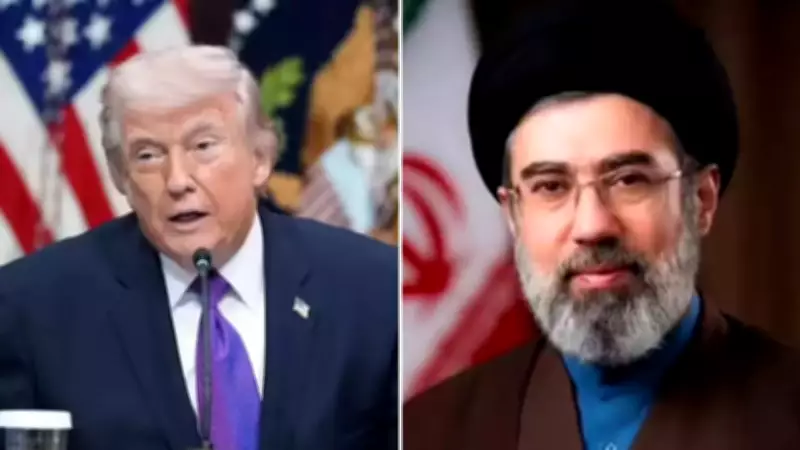
Conflicting Narratives Emerge in US-Iran Standoff
Conflicting narratives have surfaced between Washington and Tehran following US President Donald Trump's announcement of "very good" and "productive" talks with Iran. Iranian authorities have firmly denied any direct negotiations, accusing America of using diplomacy as a cover to "buy time" for military action.
Trump's Claims of Diplomatic Progress
Speaking to reporters before boarding Air Force One, President Trump stated that the United States and Iran were making significant progress toward a deal. "We have major point of agreement; I would say almost all points of agreement," he declared, adding that both nations want to reach an agreement.
Trump revealed that US officials were in contact with "a top person" in Iran, though not the supreme leader, saying he couldn't name the individual to protect their safety. He suggested a potential breakthrough could involve Iran abandoning its nuclear weapons ambitions in exchange for peace, indicating further talks were expected soon via phone.

"They called, I didn't call. They called. They want to make a deal," Trump told reporters, claiming Iran had initiated the contact.
Military Strike Threat Temporarily Paused
Trump's remarks came after he announced a temporary halt to planned US strikes on Iran's energy infrastructure, including power plants, for a five-day window. In a Truth Social post, Trump said Washington and Tehran had held "productive conversations" over two days aimed at "a complete and total resolution" of Middle East hostilities.
Citing these talks, Trump directed the Pentagon to "postpone any and all military strikes against Iranian power plants and energy infrastructure for a five day period, subject to the success of the ongoing meetings." He added that previously undisclosed discussions would continue throughout the week.
This announcement came just ahead of a Monday night ultimatum for Iran to reopen the Strait of Hormuz shipping route or face threats. Earlier on Saturday, Trump had threatened to "obliterate" Iran's power infrastructure if Tehran failed to reopen the strategically vital waterway through which nearly a fifth of global oil supply passes.
Iran's Firm Denial and Accusations
Iran has categorically rejected Trump's claims. According to Iranian state media citing the foreign ministry, the US move to delay strikes was "part of efforts to lower energy prices and buy time for the implementation of his military plans."
Dismissing the idea of negotiations, the ministry stated, "No negotiations have taken place and none are underway." It added that while initiatives from regional countries to reduce tensions had been proposed, Tehran's response remained consistent: "we are not the party that started this war, and all such requests must be referred to Washington."
Iranian outlets portrayed the US position as a retreat under pressure. Tasnim news agency reported that since the war's start, messages had been sent to Tehran by mediators, but Iran's clear response was that it would continue its defense until achieving required deterrence levels.
"With this kind of psychological warfare, neither the Strait of Hormuz will return to prewar conditions nor will calm return to energy markets," the agency added.
Military Actions Continue Despite Diplomatic Signals
Even as diplomatic signals emerged, military action continued on the ground. Shortly after Trump announced the strike pause, the Israeli military said it was carrying out another wave of attacks on targets in Tehran.
Associated Press journalists reported hearing explosions at multiple locations across the Iranian capital on Monday afternoon, though targets weren't immediately clear. Later in the day, more blasts were reported in the city with no confirmed details.
Meanwhile, Iran launched two missiles and 36 drones toward Bahrain over 24 hours, according to the country's Defence Ministry. Tehran has stepped up retaliation to US-Israeli strikes by:

- Disrupting traffic through the Strait of Hormuz
- Targeting energy facilities
- Attacking US embassies across the Gulf
- Striking sites in Israel
Oil Markets Experience Sharp Volatility
The uncertainty triggered dramatic movements in global oil markets. Prices, which had surged above $100 per barrel amid fears of supply disruption through the Strait of Hormuz, fell steeply after Trump's announcement.
Brent crude dropped more than 15%, briefly slipping below $100 before stabilizing later. This volatility reflects the Strait's centrality to global energy flows, with disruptions already raising fears of a prolonged supply shock.
Experts Warn of Global Energy Crisis
Energy experts have cautioned that prolonged disruption could trigger a crisis worse than past oil shocks, given the scale of supply at risk. The International Energy Agency (IEA) had earlier warned that the ongoing conflict has triggered a global energy crisis.
Speaking at the National Press Club in Australia, IEA chief Fatih Birol said, "This crisis as things stand is now two oil crises and one gas crash put all together."
He cautioned that the global economy faces serious risks, adding, "The global economy is facing a major, major threat today, and I very much hope that this issue will be resolved as soon as possible."
Birol further warned that "no country will be immune to the effects of this crisis if it continues to go in this direction," stressing the need for coordinated global action.
The standoff has placed the Strait of Hormuz at the heart of the conflict, with both military escalation and diplomatic maneuvering centered around this critical waterway that carries approximately one-fifth of global crude oil supplies.





