

US Outlines Transactional, Interest-Driven Approach to Strategic Partnership with India
In a significant shift signaling a more pragmatic and interest-driven focus in bilateral ties, the United States has articulated its objective to collaborate with India on ensuring peace and stability in the Indo-Pacific region. This approach, as described by a senior US official, moves away from what he termed "gauzy abstractions" like the rules-based international order, instead grounding cooperation in strength, reason, and hard-nosed collaboration.
Geopolitical Realism Takes Center Stage
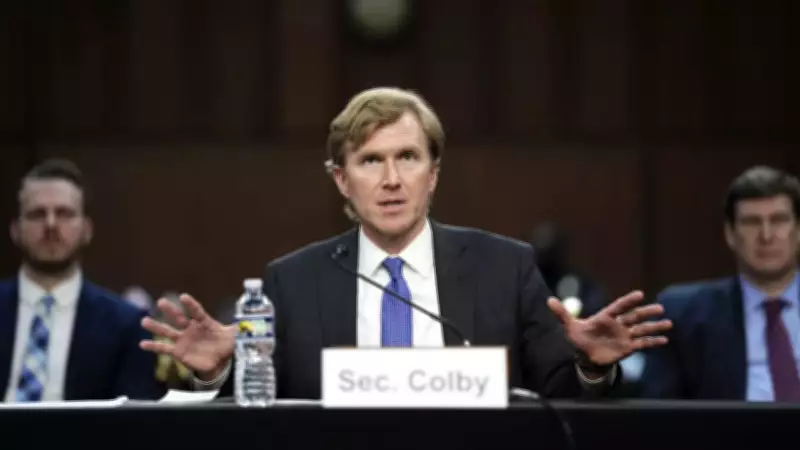
Undersecretary of War for Policy Elbridge Colby, while addressing an event at the Ananta Centre on Tuesday, emphasized that no single country can maintain a stable balance of power in Asia. He asserted that regional stability will depend on the collective contributions of capable states that share an interest in preserving a free and open Indo-Pacific. Colby highlighted India's "indispensable" role in this endeavor, describing the nation as a "waxing power" in contrast to some of Washington's traditional partners, whom he implied are in decline.
"As a result, the United States believes that India will play a central role in ensuring a favorable balance of power in the Indo-Pacific. In this context, a strong, confident India is not only good for the Indian people. It is good for Americans as well," Colby stated during his remarks.

Quad's Salience Diminishes as US Focus Shifts
Notably, Colby's speech made no mention of the Quadrilateral Security Dialogue (Quad), the flagship US Indo-Pacific initiative revived during the first Trump administration. This omission suggests the mechanism may have lost some of its prominence in Washington's strategic calculations following the president's return to the White House. The US focus appears to be shifting from soft power initiatives toward shared security outcomes and burden-sharing among allies and partners.
With uncertainty surrounding whether President Trump will visit India this year for a Quad summit, hopes for a leaders' meeting now rest on the G7 summit in France this June, which may see participation by leaders from all Quad countries.
Partnership Rooted in Practicality, Not Just Shared Values
Colby suggested that the US may no longer be interested in framing the relationship solely on shared democratic values. Instead, he positioned the Indian-American partnership as one rooted in practicality and mutual interests.
"In line with this, the US approach to the strategic partnership is interests-based and realistic, shaped by geopolitics and incentives as opposed to gauzy aspirations or detached idealism," Colby explained. He added that Washington seeks partnerships with vigorous, self-assured states rather than dependencies.
Alignment on Nationalistic Foreign Policy Outlook
The US official expressed support for External Affairs Minister S. Jaishankar's remarks that a nationalistic foreign policy outlook is likely to approach the world with more confidence and greater realism. Colby indicated this approach resonates with the current US administration's perspective.
Emphasizing the importance of "strategic candor" in bilateral relations, Colby noted that strong partnerships benefit from honesty, respect, and strategic clarity. He acknowledged that the US and India do not need to agree on everything to cooperate effectively, as long as their interests and objectives increasingly converge on fundamental issues.
"Differences and even disputes are fully compatible with deepening alignment and cooperation on strategic matters," Colby asserted, suggesting the relationship is showing signs of recovery after recent challenges.
Defense Collaboration as Strategic Imperative
Colby underscored the strategic centrality of military power for maintaining a stable balance in the region and highlighted the significance of defense industrial collaboration between India and the United States. His visit to India includes discussions on implementing the Framework for the US-India Major Defense Partnership, reflecting the practical dimensions of this recalibrated relationship.

This new articulation of US policy toward India represents a clear departure from previous administrations' emphasis on shared values and normative frameworks, instead prioritizing tangible security outcomes and pragmatic cooperation in an increasingly complex geopolitical landscape.





