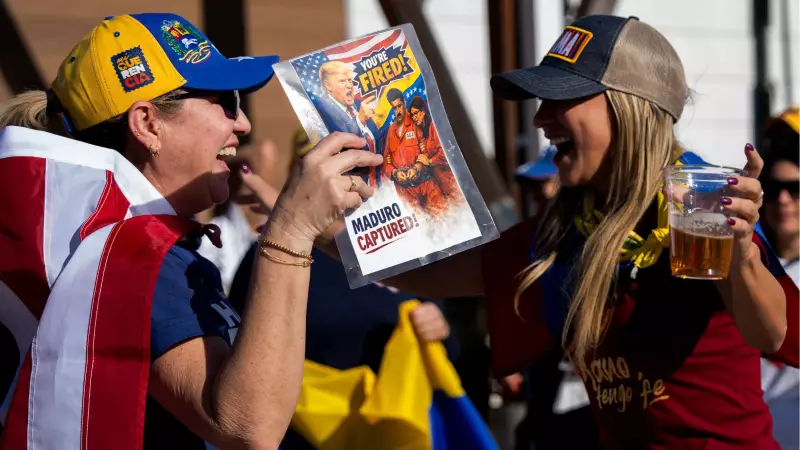
Venezuelans living outside their homeland erupted in celebration this week, declaring a 'Day of Freedom' following the dramatic removal of long-standing President Nicolas Maduro. The news, which spread rapidly through diaspora communities from Miami to Madrid, has ignited hopes for a profound political shift in the crisis-stricken South American nation.
Global Celebrations Mark a Historic Moment
From the streets of Doral in Florida, known as 'Doralzuela,' to public squares in Spain and Colombia, Venezuelan expatriates gathered in large numbers. They waved their national flags, sang the country's anthem, and embraced one another, marking what many described as the most significant moment in over a decade. The catalyst was the official announcement from Venezuela's National Electoral Council (CNE) confirming that President Nicolas Maduro would not remain in power, a move that followed intense diplomatic and political pressure.
The emotional outpouring was not just about the removal of a leader but represented a collective sigh of relief for a diaspora forced to flee economic collapse, hyperinflation, and political repression. Maria Corina Machado, the prominent opposition leader who was barred from running against Maduro, hailed the development as a victory for persistent civic struggle. She emphasized that the change was achieved not through violence but through the unwavering will of the Venezuelan people and strategic political negotiation.

The Path to Political Transition
This pivotal change stems from a hard-fought political agreement. Key to the process was the withdrawal of Maduro's main opponent, Edmundo Gonzalez Urrutia, who stepped aside to unify the opposition behind a single transition plan. The CNE's subsequent ruling formalized the end of Maduro's presidency, setting the stage for a new interim government.
International reaction has been swift and supportive. The United States, which had maintained stringent sanctions on Venezuela's oil and financial sectors, immediately signaled its approval. Other nations in Latin America and Europe, which had grown increasingly critical of Maduro's authoritarian grip and human rights record, also welcomed the move. The focus now shifts to ensuring a free and fair electoral process that will determine the country's future leadership and begin the monumental task of national reconstruction.
Challenges and Hope for the Future
While celebrations continue, the diaspora and political analysts are acutely aware of the enormous challenges ahead. Venezuela's economy is in ruins, with infrastructure crumbling and millions suffering from poverty and lack of basic services. The political landscape, though changed, remains fragile, and the process of rebuilding democratic institutions will be long and complex.
Nevertheless, the dominant sentiment among Venezuelans worldwide is one of cautious optimism and renewed hope. For the first time in years, there is a tangible belief that a return to democracy and stability is possible. The 'Day of Freedom' symbolizes not just the end of an era but the difficult, yet hopeful, beginning of a new chapter for Venezuela and its scattered global community.