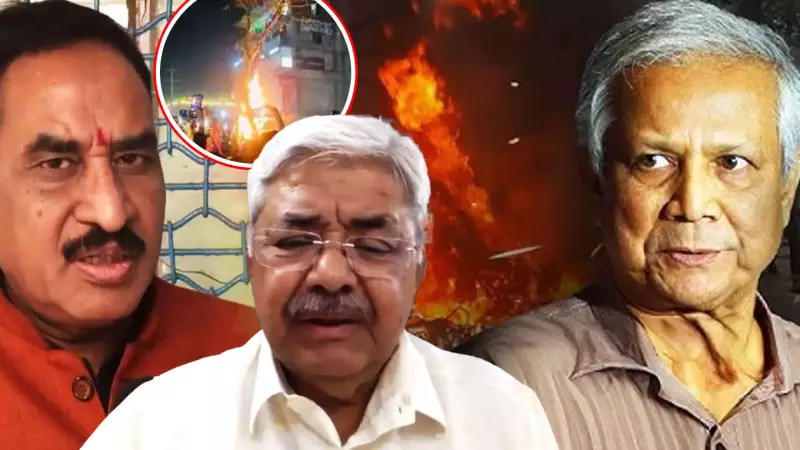
The Vishva Hindu Parishad (VHP) has launched a sharp critique against Bangladesh's Chief Adviser, Muhammad Yunus, following a series of violent incidents targeting the Hindu minority. This comes in the wake of six Hindus being killed in just eighteen days, raising serious questions about the safety and security of minorities under the current interim administration.
VHP Leaders Voice Outrage and Accusations
Senior VHP leaders have expressed deep concern over the escalating violence. They have pointedly questioned how a Nobel Peace Prize laureate like Muhammad Yunus can maintain silence while such attacks persist. Vinod Bansal, a prominent VHP figure, stated that murders, gang rapes, and arson targeting Hindus are becoming alarmingly routine. He issued a stark warning, suggesting that Bangladesh is descending into a state of unchecked unrest due to administrative inaction.
Bansal further alleged that the current administration appears either unwilling or incapable of taking decisive steps to curb the violence and protect its minority citizens. This sentiment underscores a growing frustration with the interim government's response to the crisis.

A Broader Assault on Democratic Values
Alok Kumar, another senior VHP leader, framed the killings as more than isolated crimes. He characterized them as a direct assault on the core principles of democracy and religious freedom. Kumar emphasized that the right to practice one's faith without fear is fundamental, and its violation in Bangladesh demands immediate global scrutiny.
In his statement, Kumar made an urgent appeal for international attention to the deteriorating situation. He also called upon civil society organizations, both within Bangladesh and globally, to raise their voices and intervene before the conditions worsen further, potentially leading to a larger humanitarian and communal crisis.
Mounting Pressure and Regional Implications
The strong statements from the VHP have significantly added to the mounting pressure on Bangladesh's interim leadership. The organization's vocal stance brings the issue into sharper focus on the international stage. Notably, developments in Bangladesh are being closely monitored in neighboring India, which shares a long and porous eastern border with the country.
The Indian government and civil society groups have historically expressed concern about the welfare of minority communities in Bangladesh. This latest wave of violence and the subsequent criticism from a major Indian socio-cultural organization like the VHP is likely to influence diplomatic and public discourse regarding bilateral relations and regional stability.