

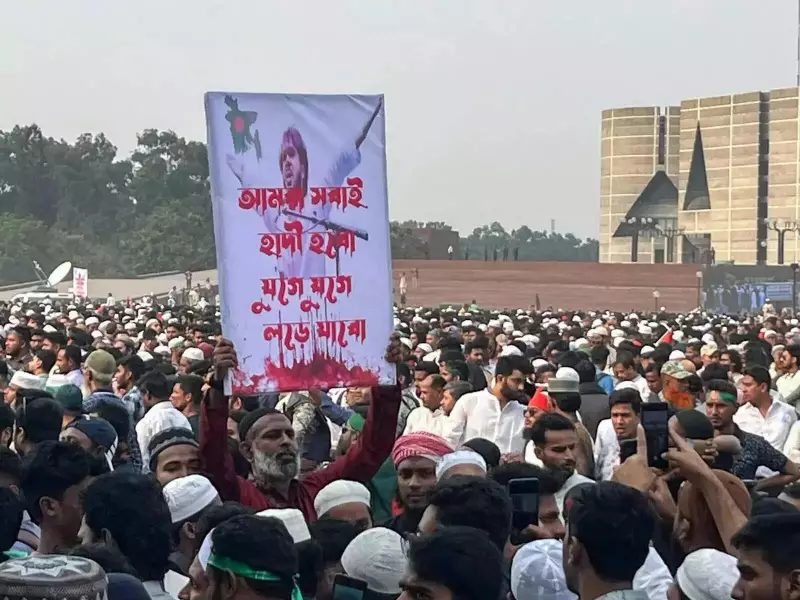
In a move described as diplomatically unusual, several Western missions in Bangladesh, including those of the United States, the European Union, Germany, and France, along with the United Nations, have issued condolence messages for the death of Bangladeshi student leader Sharif Osman Hadi. The development has sparked questions from former Indian foreign secretary Kanwal Sibal, who highlighted Hadi's strong anti-India position and his group's radical ideology.
Unprecedented Diplomatic Condolences Questioned
Sharif Osman Hadi was shot in the head by masked gunmen on December 12 while campaigning in the Bijoynagar area of central Dhaka. He later succumbed to his injuries while undergoing treatment in Singapore. Hadi was a prominent leader of last year's student-led protests that contributed to the ouster of the Sheikh Hasina-led Awami League government and was a candidate for the scheduled February 12 general elections.
The decision by multiple Western diplomatic missions to publicly mourn his death has raised eyebrows. In a series of posts on social media platform X, former Indian diplomat Kanwal Sibal questioned the response, noting that such official statements are typically reserved for individuals with clear international or bilateral significance.

"Diplomatically unusual for the US, EU, German and French missions in BD to give so much political prominence to the murder of a student leader whose importance in the bilateral or international context is not readily apparent," Sibal wrote.
Links to Anti-India Rhetoric and Radical Ideology
Sibal's critique went further, pointing directly to Hadi's political stance. He noted that the student leader and his organisation, Inquilab Mancha, were deeply hostile to India and had repeatedly promoted claims over India's northeast region.
"He was deeply hostile to India, was claiming India’s northeast, and therefore, in the regional context, a particular message is going out to India," Sibal stated. He referenced a post from Hadi's group following his death, which declared: "In the struggle against Indian hegemony, Allah has accepted the great revolutionary Osman Hadi as a martyr." Sibal suggested that the US mission's post in particular indicated a "vested interest" in what he termed an "overtly anti-Indian group."
The former diplomat also questioned the consistency of Western foreign policy, asking whether mourning a figure linked to a group advocating for Sharia law in Bangladesh aligned with stated Western support for democracy and minority rights in the country. He referenced acts by Hadi's followers, including torching buildings associated with Bangladesh's founding father, Sheikh Mujibur Rahman.
Violent Aftermath and Broader Implications
The period following Hadi's death was marked by significant unrest and violence across Bangladesh. Incidents included stone-pelting at the residence of the assistant Indian high commissioner in Chattogram. In a particularly brutal episode in Mymensingh city, a 25-year-old Hindu man, Dipu Chandra Das, was lynched and his body set on fire over allegations of blasphemy.
Adding another layer to the controversy, a community note appended to the UN's condolence post on X labeled Hadi a "radical Islamist" and accused his followers of being involved in anti-minority violence, including lynching and burning civilians alive. The note questioned the UN's focus on Hadi over attacks on civilians.
The confluence of diplomatic gestures, the victim's political ideology, and the subsequent violence has ignited a debate on geopolitical messaging and double standards. It underscores the complex interplay between domestic Bangladeshi politics, regional tensions with India, and the diplomatic calculus of Western nations in South Asia.






