

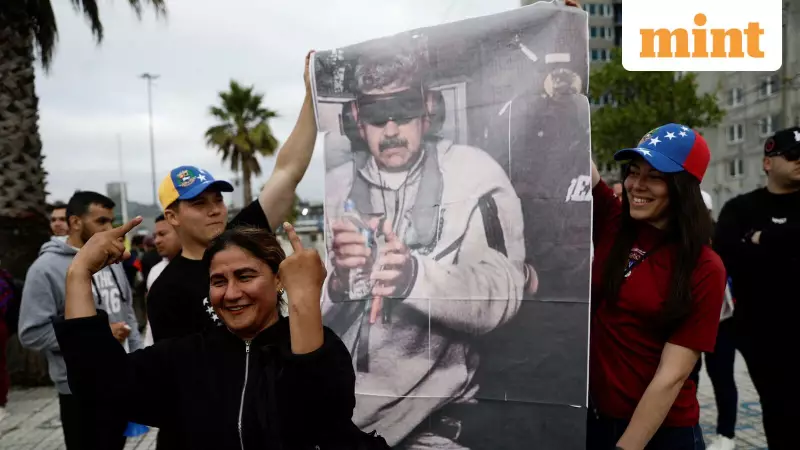
The United States' military action against Venezuela in the early hours of Saturday, citing allegations of drug trafficking, has triggered a wave of reactions from across the globe. The strikes, which have reportedly caused significant casualties, led to a flurry of statements from world leaders on social media and through official channels, revealing a deeply divided international response.
Condemnation from Major Powers
China's Foreign Ministry expressed deep shock and strong condemnation, labeling the US action as a "blatant use of force against a sovereign state." A spokesperson stated that such hegemonic acts seriously violate international law and Venezuela’s sovereignty, threatening peace in Latin America and the Caribbean. China firmly opposes the move and called on the US to abide by the UN Charter.
Russia's Foreign Ministry strongly urged the US to release Venezuelan President Nicolas Maduro and his wife, whom it called the "legitimately elected leaders." In a post on X, Russia emphasized the need to resolve issues through dialogue and create conditions for peaceful resolution between the two nations.

Brazil's President Lula da Silva declared that the bombings and the capture of Venezuela's president crossed "an unacceptable line." He termed it a grave affront to sovereignty and a dangerous precedent for the international community. Lula warned that such attacks pave the way for a world where the law of the strongest prevails over multilateralism.
Support for Transition and Criticism of Maduro
UK Prime Minister Keir Starmer reiterated the UK's long-standing position, stating they regard Maduro as an illegitimate President and "shed no tears about the end of his regime." He expressed support for international law and said the UK government would discuss the situation with US counterparts to seek a safe, peaceful transition to a legitimate government.
France's President Emmanuel Macron said the Venezuelan people are "rid of Nicolás Maduro’s dictatorship." He called for a peaceful, democratic transition respectful of the people's will and expressed support for President Edmundo González Urrutia, elected in 2024, to ensure this shift. Macron confirmed France is vigilant about the safety of its nationals.
Italy's Prime Minister Giorgia Meloni stated that Italy has never recognized Maduro's self-proclaimed electoral victory. While believing external military action is not the path to end totalitarian regimes, she considered legitimate a defensive intervention against state entities fueling narcotrafficking. She highlighted the safety of the Italian community in Venezuela as a priority.
Calls for Restraint and Diplomacy
United Nations Secretary-General António Guterres was "deeply alarmed by escalation in Venezuela" and concerned that international law was not respected. He called for inclusive dialogue, respect for human rights, and the rule of law.
Australia's Prime Minister Anthony Albanese urged all parties to support dialogue and diplomacy to secure regional stability and prevent escalation. Australia reiterated its support for a peaceful, democratic transition reflecting the will of the Venezuelan people and issued consular contact details for Australians in the country.
Spain's Prime Minister Pedro Sánchez took a nuanced stance, stating that while Spain did not recognize the Maduro regime, it also would not recognize an intervention violating international law. He called on all actors to think of the civilian population and articulate a fair, dialogued transition.
Regional and Other Notable Reactions
Mexico's President Claudia Sheinbaum Pardo invoked a historical teaching, posting, "among individuals as among Nations, respect for the rights of others is peace."
South Africa's government noted the developments with grave concern, stating that military invasions yield only instability. It called the action unlawful and a threat to the international order, urging the UN Security Council to convene urgently.

Canada's Prime Minister Mark Carney welcomed the opportunity for freedom and democracy for Venezuela, noting Canada had not recognized Maduro's regime since the 2018 election. Canada called for respect for international law and the sovereign right of the Venezuelan people to build their future.
Kerala Chief Minister Pinarayi Vijayan strongly condemned what he called "blatant imperialist aggression" by the US, describing it as an act of terrorism that threatens tranquillity in Latin America. He called for global unity to resist such imperialist moves.
New York City Mayor Zohran Kwame Mamdani criticized the unilateral attack as an act of war and a violation of law. He expressed concern for the safety of New Yorkers, including tens of thousands of Venezuelans in the city.
Elon Musk, CEO of Tesla and SpaceX, simply stated, "Venezuela can now have the prosperity it deserves."
India's Stance and Advisory
The Indian government has not yet issued an official statement on the US attacks. However, the Ministry of External Affairs issued a travel advisory for Indian nationals. It strongly advised avoiding all non-essential travel to Venezuela and urged Indians currently in the country to exercise extreme caution, restrict movements, and remain in contact with the Embassy of India in Caracas.
The global reaction underscores a significant geopolitical rift, with powerful nations split between condemning the violation of sovereignty and supporting the removal of a regime they consider illegitimate. The situation remains fluid, with calls for UN intervention and emphasis on diplomatic solutions dominating the discourse from neutral quarters.





