

In a significant development concerning citizenship and voting rights, approximately 30,000 residents of Goa have relinquished their Indian passports over the last ten years to obtain foreign nationality, primarily Portuguese. This move has now cast a shadow over the electoral status of their parents, who face potential scrutiny from the Election Commission of India (ECI).
Electoral Scrutiny Under Special Intensive Revision
The Election Commission has initiated a Special Intensive Revision (SIR) of the state's electoral rolls ahead of the assembly elections scheduled for next year. A key focus of this exercise is to identify individuals who may have become ineligible to vote due to acquiring foreign citizenship. Data reveals that 29,831 Goans surrendered their Indian passports since 2014, and this information has been submitted to the ECI for verification.
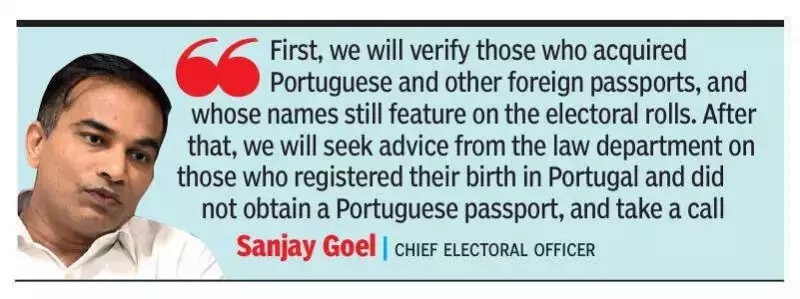
Chief Electoral Officer (CEO) Sanjay Goel explained the process to the Times of India. "First, we will verify those who acquired Portuguese and other foreign passports, and whose names still feature on the electoral rolls. After that, we will seek advice from the law department on those who registered their birth in Portugal and did not obtain a Portuguese passport, and take a call," Goel stated. The data was sourced from the passport office and the home department.

The Portuguese Connection and Dual Citizenship Debate
The issue stems from a unique historical pathway. For a child born after Goa's liberation on December 19, 1961, to claim Portuguese nationality, their parents—born before 1961—must first register their own birth and marriage in Portugal. This allows the child to then register their birth and acquire a Portuguese passport. The Regional Passport Office in Goa confirmed that over 8,000 names of individuals who surrendered Indian passports in the last five years were submitted to the ECI.
This practice has sparked a long-running debate on dual citizenship in Goa. Many, including politicians, police personnel, and bureaucrats, registered their births in Portugal, viewing the Portuguese passport or ID card as a gateway to work in Europe. In 2014, Chief Minister Pramod Sawant highlighted the scale, noting that more than 40,000 Goans had registered their births in Lisbon. He urged the Union government to grant an amnesty, allowing them to cancel their Portuguese documents and retain Indian citizenship.
On-Ground Verification and Hearings Commence
The electoral machinery is now actively verifying the rolls. Electoral Registration Officers (EROs) will check if the names of those who acquired foreign nationality are still listed. If found, they will be issued suo motu notices. However, CEO Goel clarified that notices would not be issued to those who did not fill in enumeration forms and whose names are absent from the draft rolls published on December 16.
Simultaneously, a separate verification drive is targeting 1,82,400 persons who were not mapped during the previous SIR in 2002. EROs and assistant EROs began hearings this week. Unmapped electors whose names appear on the current draft roll must attend these hearings with original documents to ensure their names are retained in the final electoral roll, which is set for publication on February 14.
The situation underscores the complex interplay between historical citizenship claims and modern electoral integrity, placing thousands of families in Goa at the center of a significant administrative and legal review.






