

West Bengal's Electoral Roll Sees Drastic Reduction of 1.22 Crore Voters
The Election Commission of India's final voters' list for West Bengal, released on Saturday, has revealed a significant contraction in the state's electoral roll. The total number of voters now stands at 6.44 crore, marking a substantial decrease of 1.22 crore or 15.9% from the previous count of 7.66 crore before the Summary Revision (SIR).
Massive Deletions and Adjudications Reshape Voter Landscape
According to the detailed breakdown, a staggering 63.7 lakh voters have been struck off the final list. Simultaneously, more than 60 lakh voters have been placed under adjudication, meaning their cases are pending further examination. In contrast, only 1.9 lakh new voters were added during this revision cycle.
At an afternoon press conference, Bengal Chief Electoral Officer Manoj Agarwal initially stated the total voter count was 7.04 crore, which included the 60 lakh under-adjudication voters. However, the poll body issued a clarifying statement in the evening, revising the final count to 6.44 crore after removing those pending cases from the tally.

Districts with Sharpest Declines and Adjudication Hotspots
The electoral districts experiencing the most pronounced drops in voter numbers include North Kolkata, Malda, Murshidabad, and the Matua-dominated belts of North 24 Parganas and Nadia. Murshidabad leads with the highest number of voters under adjudication at 11 lakh, followed closely by Malda with 8.3 lakh. North 24 Parganas, encompassing a significant portion of the Matua heartland, has 5.9 lakh voters on the same pending list.
Over 500 judicial officers are currently scrutinizing these under-adjudication cases. "Once cleared, these names will be added to the final list," CEO Agarwal assured, noting that the electoral roll can be updated until the last date for filing nominations. He elaborated that if elections are conducted in multiple phases, names cleared by judicial officers will be incorporated into the final voters' list and published before the nomination deadlines for respective phases and constituencies.
Breakdown of Deletions and Official Accountability
The 63.7 lakh electors removed from the final list comprise several categories: the 58 lakh ASD (absent, shifted, or dead) voters excluded from the draft SIR list, individuals who failed to submit EC-notified documents during hearings, and deceased voters. Agarwal explained, "Earlier, we had deleted about 58 lakh ASD voters following all procedures. This time, close to 5.5 lakh names were deleted through Form 7."
Acknowledging the scale of the exercise, he added, "Mistakes can always happen in such a massive undertaking. If we discover that any official has intentionally deleted a voter's name, that person will face strong disciplinary action."
Public Reaction and Administrative Challenges
The publication of the revised electoral roll triggered sporadic protests across various districts. In Bankura, where approximately 1.2 lakh deletions occurred, demonstrators blocked roads for several hours. A more intense situation unfolded in Salanpur, West Burdwan, where police had to rescue Booth Level Officer Sanjay Garai from an agitated mob after 134 voters out of 632 in a single booth were marked as either deleted or under adjudication.
Anticipating potential unrest, the Bengal government had preemptively deployed senior police officers to sensitive districts including Malda, Murshidabad, Krishnanagar, and Cooch Behar to supervise law and order. Fortunately, no untoward incidents were reported from these areas.
Access Issues with the Revised Voter List
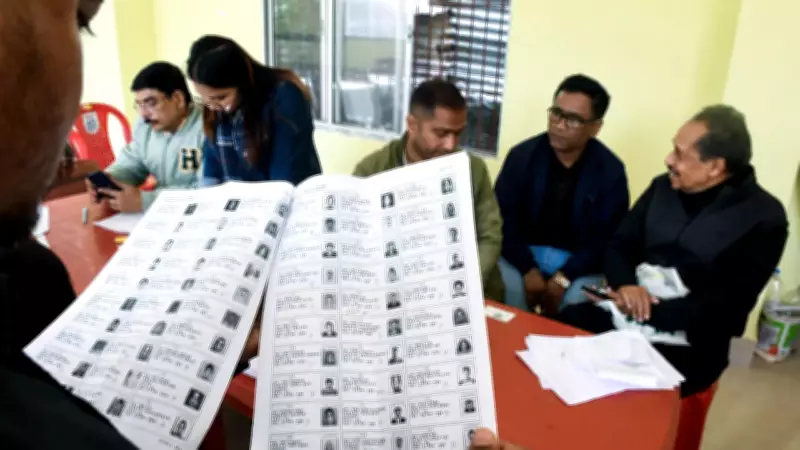
While CEO Agarwal had announced that the electoral roll would be available both online and offline from noon, the online version only went live in the evening. This delay prompted hundreds of voters to queue up at polling booths, Electoral Registration Officer (ERO) offices, and Block Development Officer (BDO) offices where hard copies of the list were displayed since morning.
The comprehensive revision underscores the Election Commission's rigorous efforts to purify the electoral roll, though it has undoubtedly stirred considerable public and political discourse across West Bengal.






