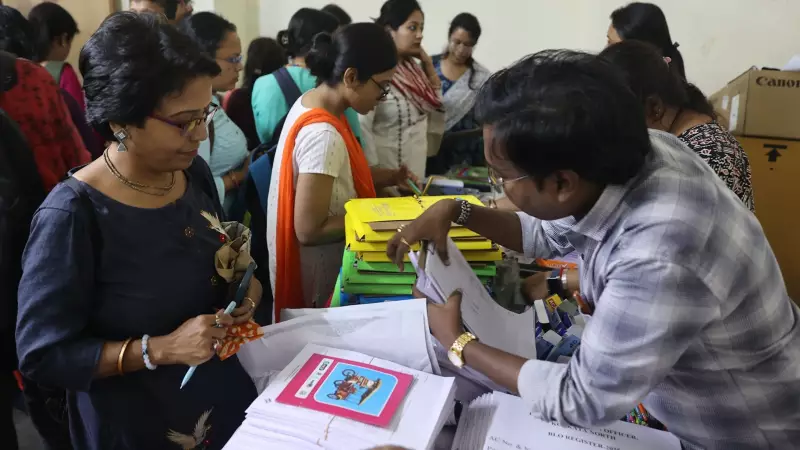
The Special Intensive Revision (SIR) of electoral rolls is currently progressing rapidly across West Bengal, with state authorities undertaking massive distribution efforts to reach every eligible voter. As of recent reports, election officials have distributed an impressive more than 5.15 crore enumeration forms throughout the state, marking one of the largest voter registration drives in the region.
With millions of citizens preparing to submit their forms, numerous questions have emerged regarding the proper procedure for completion. The process has gained additional significance due to the implementation of unique QR codes on each form, a technological advancement that makes duplicate issuance virtually impossible, emphasizing the critical need for accurate completion on the first attempt.
Photograph Specifications and Requirements
One of the most common queries among applicants concerns the type of photograph required for the SIR form. Election authorities have clarified that voters must attach a color photograph with a white background to ensure optimal clarity and prevent potential rejection. Officials have explicitly stated that black-and-white photographs are no longer acceptable under the current guidelines.

Language Preferences and Ink Recommendations
According to provisions outlined in the Representation of the People Act, electoral rolls in West Bengal are maintained in three official languages: Bengali, English, and Hindi in specific regions. Voters have the flexibility to complete their forms in any of these languages without facing complications.
However, election officials suggest that using Bengali or English might be preferable for most applicants, as these languages facilitate easier cross-referencing when the final electoral rolls are published. This becomes particularly important in areas where the voter list is not published in Devanagari script used for Hindi.
While there are no rigid regulations concerning ink color, the Chief Electoral Office recommends using blue or black ink for completing the forms. These colors provide superior clarity and legibility, ensuring that the information remains easily readable throughout the processing period.
Correcting Errors and Understanding the QR System
A significant concern for many applicants involves handling mistakes made during form completion. Election authorities have established a clear protocol for such situations: voters should correct errors directly beside the mistake and provide their signature adjacent to the correction.
The unique QR code system presents both security benefits and practical limitations. Since each form contains a distinct QR code assigned to individual voters, obtaining replacement forms becomes exceptionally challenging. Chief Electoral Office officials explained that each voter receives two copies of the form; if one becomes spoiled or contains multiple errors, applicants should submit the cleaner copy to their Booth Level Officer (BLO) while retaining the other for their records.
This system has been implemented considering West Bengal's massive electorate exceeding seven crore voters, making duplicate form distribution practically unfeasible on such a large scale.
Establishing Family Linkage for Voter Registration
Another crucial aspect of the SIR form involves establishing family connections within the voter list. For linkage purposes, the regulations recognize specific blood relations as valid references. These include paternal relatives such as father, mother, and paternal grandfather, along with maternal relatives including the maternal grandfather.
When any of these relatives appear in the existing voter list, applicants can utilize this information to establish their family linkage, supplementing it with appropriate age and address verification documents. The guidelines do not require establishing connections beyond these immediate family members, simplifying the process for most applicants.

The ongoing Special Intensive Revision represents a significant effort to update and refine West Bengal's electoral database, with election authorities working diligently to ensure every eligible citizen can participate in the democratic process. Proper form completion remains essential for seamless inclusion in the revised voter lists expected to be published in the coming months.