As Maharashtra's political parties ramp up their campaigns for crucial municipal corporation elections, a major annual commemoration at Bhima Koregaon near Pune is set to become a significant political stage. The event on January 1 marks the 208th anniversary of the 1818 battle, viewed by lakhs of Dalits as a historic stand against caste oppression. This year, its timing within the election season adds a charged political dimension, with parties strategically aligning or distancing themselves from its powerful symbolism.
The Political Chessboard Around a Dalit Commemoration
The gathering at Bhima Koregaon village on Thursday is expected to be one of the state's largest and most politically sensitive assemblies. With campaigning for the January 15 civic polls intensifying, some political groups are keen to be visibly present. They view the event as a potent symbol of Dalit pride, constitutional values, and social justice. Conversely, other parties plan to maintain their distance, wary that the narrative of Bhima Koregaon clashes with their own ideological positions.
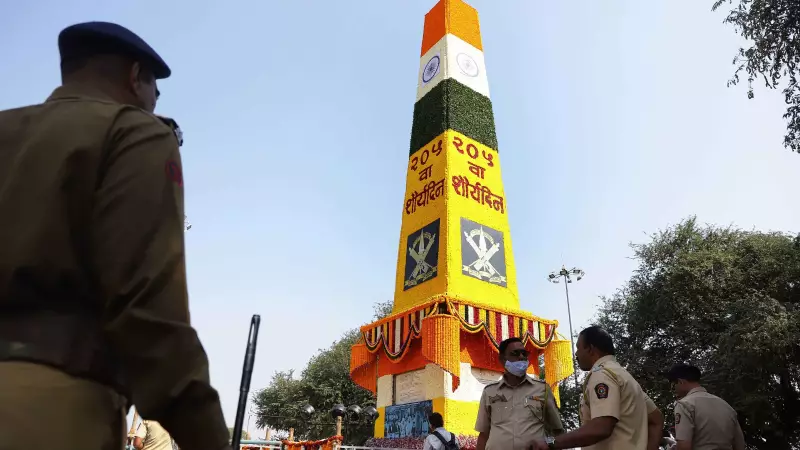
Authorities are taking no chances, deploying nearly 7,500 police personnel in and around the area to manage the tens of thousands of Ambedkarite supporters and Dalits anticipated. While no new programs are officially announced, the election context lends the anniversary heightened significance. Historically, the gathering has served as an informal platform for leaders to make statements and mobilize support, even without being formally designated a political rally.

Revisiting the Historic Battle of 1818
The Battle of Koregaon was fought on January 1, 1818, near the Bhima river, about 25 km from Pune. According to British records, approximately 800 troops of the East India Company faced a formidable force of an estimated 25,000 to 30,000 Maratha soldiers led by Peshwa Baji Rao II.
The conflict was part of the larger Third Anglo-Maratha War. Earlier, in June 1817, the Peshwa had been compelled to sign a treaty ceding vast territories to the British. After a rebellion and defeat at the Battle of Khadki, Baji Rao II moved towards Satara. Colonel Charles Barton Burr, in charge of Pune, received intelligence of the Peshwa's advance.
Captain Francis Staunton led a detachment of about 500 soldiers from the Bombay Native Infantry, along with 300 cavalry and two artillery guns, on a night march from Sirur. They encountered the massive Maratha army near Koregaon village the next morning. Captain Staunton positioned his troops within the village, where they were besieged, cut off from food and water, and faced repeated assaults.
The British Gazette records that the Company forces, despite being overwhelmed, held their ground. After a day-long battle, the Maratha forces withdrew at night. British casualties stood at 275 killed, wounded, or missing from the 834 engaged. Maratha losses were estimated between 500 and 600.
Symbolism, Memory, and Contemporary Volatility
In 1822, the British erected a 65-foot obelisk at the site, listing the names of the fallen. For the Dalit community, particularly Mahars, the battle holds profound meaning. Later accounts suggest Mahar soldiers formed a significant part of Staunton's unit. The Peshwa regime is historically associated with enforcing a rigid and oppressive caste order.
Dr. B.R. Ambedkar's visit to the site on January 1, 1927, to pay homage to the Mahar soldiers cemented its place in Dalit political memory. Activists now refer to the village as Shaurya Bhoomi (Land of Valour), seeing the battle as a symbolic victory over caste hierarchy.
The site's political volatility was starkly highlighted in 2018, when violence during the anniversary commemoration led to one death and multiple injuries. Initial police cases pointed to speeches by Hindutva leaders. However, the then BJP-led state government contended the violence was linked to the Elgar Parishad conclave held a day earlier, on December 31, 2017.

Police alleged the Elgar Parishad event had connections to the banned CPI (Maoist) and was part of a conspiracy to incite unrest. This led to a series of arrests under the UAPA, targeting activists, lawyers, and intellectuals like Sudha Bharadwaj, Varavara Rao, and Father Stan Swamy. The legal proceedings in this case continue in various courts.
As Maharashtra heads to the polls, the journey to Bhima Koregaon is more than a pilgrimage; it is a political statement, a remembrance of history, and a flashpoint that continues to shape the state's complex social and electoral landscape.