

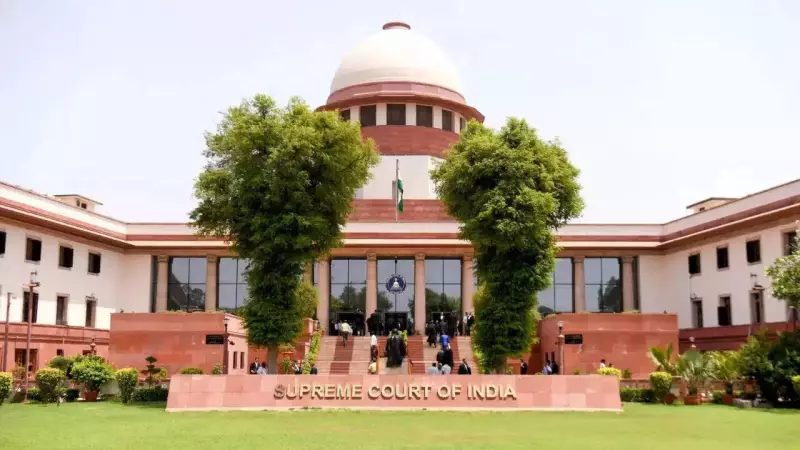
The Election Commission of India (ECI) firmly asserted its constitutional authority to assess an individual's citizenship before including them in the electoral roll. This statement was made before the Supreme Court on Tuesday, with the EC arguing that this power is essential to prevent foreigners from voting in Indian elections.
Constitutional Mandate from the Framers
Representing the Commission, senior advocate Rakesh Dwivedi presented arguments before a bench led by Chief Justice of India Surya Kant and Justice Joymalya Bagchi. He countered petitions that claimed citizenship determination was outside the EC's remit and that Aadhaar details alone were sufficient for voter registration during the ongoing Special Summary Revision (SIR) of rolls.
Dwivedi traced this authority back to the debates of the Constituent Assembly. He emphasized that the framers of the Constitution had clearly intended for the electoral roll authorities to inquire into citizenship and exclude non-citizens. This power was later vested in the Election Commission under Article 324, read with Article 326, granting it plenary powers over the superintendence, direction, and control of elections, including verifying citizenship status.

Ensuring Free and Fair Elections
The EC's counsel stressed that the Constitution is citizen-centric, requiring that every elected representative and head of governing organs must be an Indian citizen. He stated that the effort is to ensure no foreigner is included in the electoral rolls, regardless of whether the SIR process detects one or hundreds of such cases.
On the validity of the SIR exercise, Dwivedi argued that elections cannot be free and fair unless electoral rolls are intensively revised periodically. Article 324 includes the mandate to revise voters' lists, especially before general elections. The nature of this revision is left to the EC's discretion based on prevalent circumstances and involves accounting for deaths, migration, and the inclusion of new eligible voters.
Distinction Between EC and Central Government Powers
Addressing the petitioners' claim that only the Central Government can inquire into citizenship, Dwivedi delineated the separate roles. He clarified that the EC's power to assess citizenship for voter registration flows from Articles 324 and 326 of the Constitution, along with Section 16 of the Representation of the People Act, 1950.
However, he noted a critical distinction: only the Union government has the power to terminate citizenship or officially declare someone a foreigner. The EC, based on its assessment, can exclude a person found to be a non-citizen from the voters' list. Importantly, being held ineligible for the electoral roll during SIR does not terminate a person's citizenship under the Citizenship Act, 1955.
The Commission also placed the burden of proof on the individual. It stated that the necessary documents to establish citizenship are within the special knowledge of the person claiming to be an Indian citizen. Therefore, the onus lies on the individual seeking inclusion in the electoral roll to prove their citizenship. The arguments in this significant case are scheduled to continue before the Supreme Court on Thursday.






