

Election Commission's 'No Outsiders' Directive Creates Widespread Confusion in Kolkata Housing Complexes
A fresh wave of confusion and uncertainty swept through multiple housing complexes across Kolkata on Tuesday following the Election Commission's announcement barring "outsiders" from staying on premises that will host polling booths during the mandatory silence period. The restriction, which has left residents grappling with numerous practical concerns, will be enforced from 6 pm on April 27 until the conclusion of polling activities.
Official Directive and Legal Basis
West Bengal Chief Electoral Officer Manoj Agarwal announced the restriction, citing Section 126 of the Representation of the People Act, 1951. According to the directive, individuals who are not registered electors of the specific constituency cannot stay as guests in residential complexes where polling booths are located during this critical period.
"No outsiders who are not electors of that constituency can stay as guests in residential complexes where booths are located," Agarwal stated clearly, emphasizing the legal basis for the decision.

Practical Implementation Challenges Emerge
The directive has created significant confusion among residents, as a substantial portion of occupants in these complexes fall into categories that may be affected. Many are non-voters, voters registered in other constituencies, temporary residents, or family members with different voting locations.
At Rail Vihar near Ruby Hospital, residents expressed concerns about the ambiguity surrounding implementation. One resident highlighted a common scenario: "I am a voter of the booth located inside our complex, but my wife and her sister are registered voters in another constituency. Will they have to leave our home for two days?" This question reflects the practical dilemmas facing numerous families across affected complexes.
Residents Voice Concerns at Silver Spring Complex
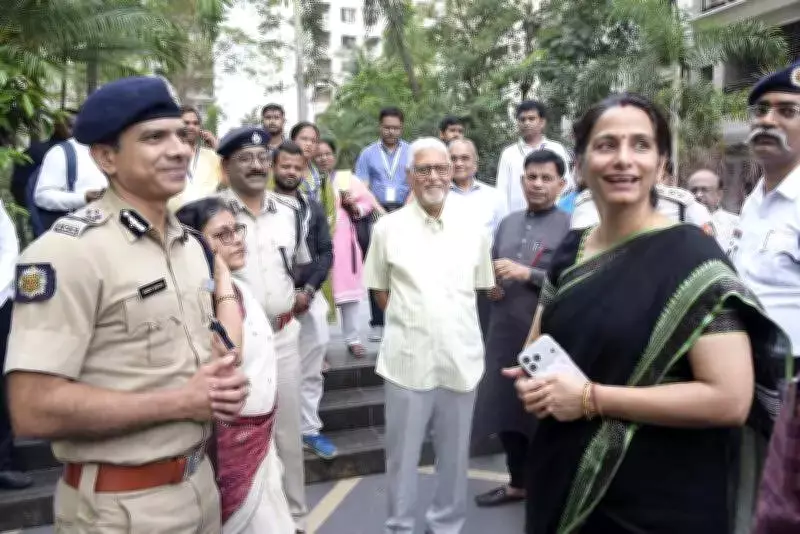
Similar concerns were echoed at Silver Spring, where election officials and police personnel visited earlier in the day as part of a voter awareness program. Residents reported that even the officials present during the interaction appeared uncertain about how the rule would be practically enforced.
Resident Ashok Baid raised a critical question about the demographic reality of his complex: "With nearly 2,000 residents here and barely 600 registered voters, the rest include children, domestic helps, tenants and visiting relatives. Where are they supposed to go during this period?" This statement underscores the scale of potential displacement and logistical challenges.
Broader Implications and Unanswered Questions
The directive has raised numerous unanswered questions about its practical implementation. Residents are seeking clarification on several key points, including how authorities will verify voter status, what documentation will be required, whether exceptions exist for essential service providers, and how temporary arrangements should be made for affected individuals.
The confusion extends beyond individual households to entire communities, with residents questioning how the rule applies to domestic workers, maintenance staff, delivery personnel, and other regular visitors who are not registered voters in the constituency but provide essential services to the complexes.
As the silence period approaches, residents remain in a state of uncertainty, hoping for clearer guidelines and practical solutions that balance election security concerns with the realities of urban living in multi-family residential complexes.






