

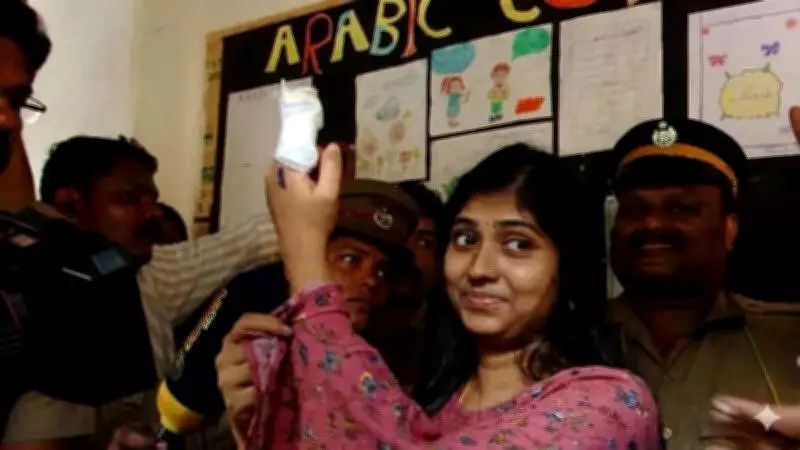
Woman in Kerala Denied Voting Over Bandaged Finger, Sparks Protests and Delay
In a distressing incident during the elections in Kerala, a woman from Koorkenchery in Thrissur was denied permission to vote because her left index finger was bandaged. The voter, Akshaya, arrived at the Koorkenchery Bodhananda School polling station with her father and two-year-old child, only to face a prolonged ordeal that lasted approximately six hours.
Presiding Officer's Stance and Voter's Plight
The presiding officer at the booth refused to allow Akshaya to cast her vote, asserting that it was her discretion to permit voting and insisting that the indelible ink must be applied solely on the left index finger. She stated that Akshaya could only vote if she removed the bandage to prove she had not voted elsewhere and that no ink was present on the finger. The officer maintained that her decision was based on election rules and could only be overturned with a written instruction from higher authorities.
Akshaya attempted to explain that her finger was bandaged following surgery after she injured it in a mixer grinder at home. To support her claim, she produced medical records, which her father had to retrieve from their residence. Despite this evidence and endorsement from the medical officer present at the polling station, the presiding officer remained adamant in her refusal.

Protests and Political Intervention
Meanwhile, workers from the Left Democratic Front (LDF), led by former minister V S Sunil Kumar, staged a protest at the booth. The protesters demanded that Akshaya be allowed to vote and called for strict action against the presiding officer for denying a genuine voter her right. They vowed not to disperse until Akshaya received permission to exercise her franchise.
Official Intervention and Resolution
In response to the escalating situation, Additional District Magistrate (ADM) R Manoj visited the booth as per instructions from Collector Sikha Surendran to assess the matter. Ultimately, the presiding officer permitted Akshaya to vote after receiving directions from the Chief Electoral Officer's (CEO) office. The instruction clarified that the voter should be allowed to vote, provided the presiding officer verified her eligibility as a registered voter.
Following the directive, Akshaya submitted a written declaration affirming that she had not cast her vote elsewhere. However, throughout this lengthy process, her father and young child were forced to wait without food for about five hours, adding to the family's hardship.
This incident highlights significant concerns regarding the implementation of election rules and the treatment of voters with medical conditions, raising questions about procedural flexibility and voter rights in India's democratic process.






