In a significant political development ahead of the crucial Pune Municipal Corporation (PMC) elections, the much-speculated alliance between the two factions of the Nationalist Congress Party has officially collapsed. The Sharad Pawar-led NCP (SP) has now rushed back to the opposition Maha Vikas Aghadi (MVA) coalition, with the three constituent parties agreeing on an equal seat-sharing formula.
Alliance Talks Break Down Over Symbol and Seats
The discussions between the NCP, led by Deputy Chief Minister Ajit Pawar, and the NCP (SP) fell through primarily over two contentious issues. The NCP insisted that NCP (SP) candidates contest on the party's original 'clock' symbol, a demand flatly refused by the Sharad Pawar camp. The NCP (SP) maintained that it is a separate party with a distinct identity and could not surrender its symbol.
Further complicating the talks was the issue of seat distribution. An NCP (SP) delegation that met NCP chief Ajit Pawar was reportedly offered a number of seats deemed "very less" and unacceptable. NCP (SP) spokesperson Ankush Kakade clarified that his party had never declared plans to contest the PMC polls with the NCP, stating they had always intended to fight alongside MVA partners—the Congress and Shiv Sena (UBT).
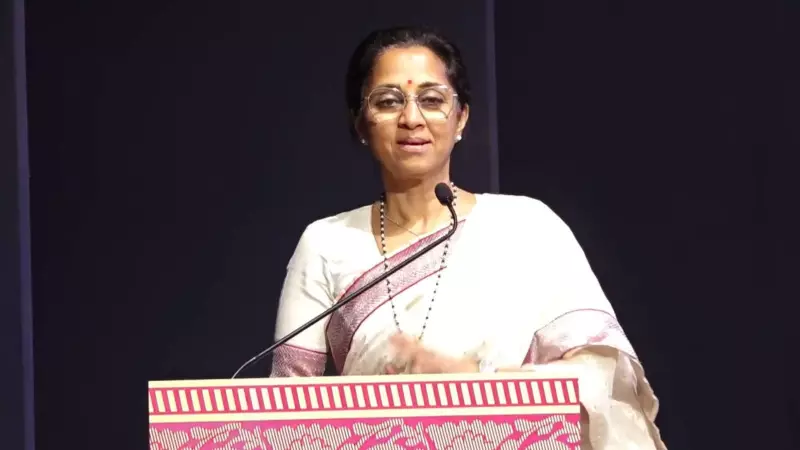
MP Supriya Sule, working president of the NCP (SP), confirmed the breakdown to The Indian Express on Saturday, December 27, 2025. "Yes, our alliance discussion with the NCP has broken down. There will be no alliance," Sule stated unequivocally.
MVA Steps In: Three-Way Equal Seat Sharing Finalized
Following the collapse of NCP negotiations, leaders from the Congress, NCP (SP), and Shiv Sena (UBT) hastily convened for seat-sharing discussions at a Pune hotel on Friday evening. Pune city Congress president Arvind Shinde confirmed that the MVA talks are now underway.
The coalition has decided on a formula of equal representation for the three parties. Out of the 165 seats in the PMC, each party—Congress, NCP (SP), and Shiv Sena (UBT)—will receive between 50 to 55 seats. "All the three parties are equally strong. Each one will get the same number of seats," Shinde explained.
However, the seat-sharing is not without its internal disputes. The NCP (SP) has staked claim to all the seats its candidates won in the 2017 elections, including those held by former mayor Prashant Jagtap and his mother. This demand clashes with the Congress's stance, as Jagtap recently switched allegiance from the NCP (SP) to the Congress. Congress leaders have asserted they will not cede the seats held by Jagtap and his mother, with the issue likely to be escalated to the state leadership for resolution.
Contradictory Claims and Parallel Negotiations
While the NCP (SP) has declared the alliance talks dead, NCP state president Sunil Tatkare presented a contradictory picture. Tatkare claimed that discussions with the NCP (SP) are still ongoing, handled directly by party president Ajit Pawar, who has managed Pune city affairs since 1999.
The political maneuvering extends beyond Pune city to the neighboring Pimpri-Chinchwad Municipal Corporation (PCMC). In Pimpri-Chinchwad, talks between the two NCP factions have reportedly reached a standstill. The Sharad Pawar-led party initially demanded 27 seats, later revising it to 23—a figure the local NCP unit finds unacceptable given the party's limited base of only two former corporators in the area.
The MVA has also drawn a line regarding the entry of other parties. When questioned about the possible inclusion of Raj Thackeray's Maharashtra Navnirman Sena (MNS), Congress chief Shinde clarified, "MNS is not part of the Maha Vikas Aghadi…We have told the Sena as well about it."
As the political chessboard in Maharashtra's crucial urban centers takes shape, the swift return of the NCP (SP) to the MVA fold and the establishment of a tripartite equal-seat agreement sets the stage for a fiercely contested civic election in Pune.