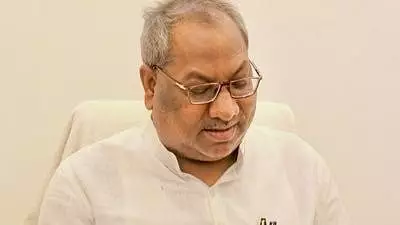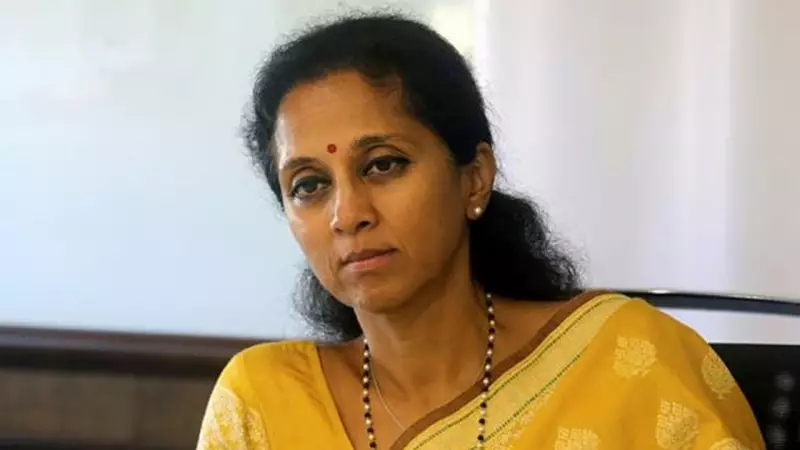
The recent municipal council elections in Pune district have delivered a stark political message, revealing a clear disconnect between the stature of sitting Members of Parliament and their influence at the hyper-local level. Three incumbent Lok Sabha MPs, representing key constituencies, were unable to translate their parliamentary clout into success for their parties in the civic body polls.
A Stunning Setback in Traditional Strongholds
In a significant development, the performance of the Nationalist Congress Party (Sharadchandra Pawar) or NCP (SP) has raised eyebrows. The party faced a series of unexpected reverses across its traditional bastions. This was most pronounced in the Baramati Lok Sabha constituency, represented by four-time MP Supriya Sule.
Despite Sule's long-standing representation, the party drew a blank in local civic body elections across several key towns. The list of areas where the NCP (SP) failed to make a mark includes Bhor, Saswad, Jejuri, Baramati, Morgaon, Indapur, and Daund. This widespread underperformance points to a noticeable erosion of the party's influence in its own strongholds.

Local party leaders attributed this poor showing to Sule's limited focus on the civic elections, which reportedly affected the morale among traditional supporters and dampened grassroots mobilization efforts.
Campaign Efforts Fail to Yield Results in Shirur
The trend of parliamentary influence failing to trickle down continued in the Shirur Lok Sabha constituency. Here, the actor-turned-politician and two-time MP, Amol Kolhe, could not secure a single municipal council president's post for his party across major towns.
Kolhe had actively campaigned, conducting meetings, rallies, and intensive outreach across the constituency. The areas where the party faced defeat include Junnar, Manchar, Rajgurunagar, Chakan, Alandi, Shirur, and Phursungi. Despite his concerted efforts on the ground, the electoral outcome did not favor his party. Following the results, Kolhe was unavailable for comment, not responding to phone calls or text messages seeking his reaction.
Broader Implications of the Electoral Verdict
The phenomenon was not limited to the NCP (SP). Shiv Sena MP from Maval, Shrirang Barne, also found himself in a similar situation. He was unable to leverage his parliamentary position to secure electoral success at the local council level.
This collective failure of three sitting MPs from Pune district underscores a perceptible shift in the voters' mood across crucial rural and semi-urban pockets. The results suggest that voters are increasingly distinguishing between national/state-level politics and local governance issues. The electoral mandate indicates that parliamentary stature and performance are becoming less of a factor when citizens cast their votes for municipal council representatives, who are directly responsible for day-to-day civic amenities and local development.
The outcomes serve as a crucial feedback mechanism for these political leaders, highlighting the need for sustained engagement and effective delivery at the grassroots level, irrespective of the electoral tier. It signals that voters are making independent, issue-based choices in local polls, which could have significant ramifications for future political strategies in the region.