

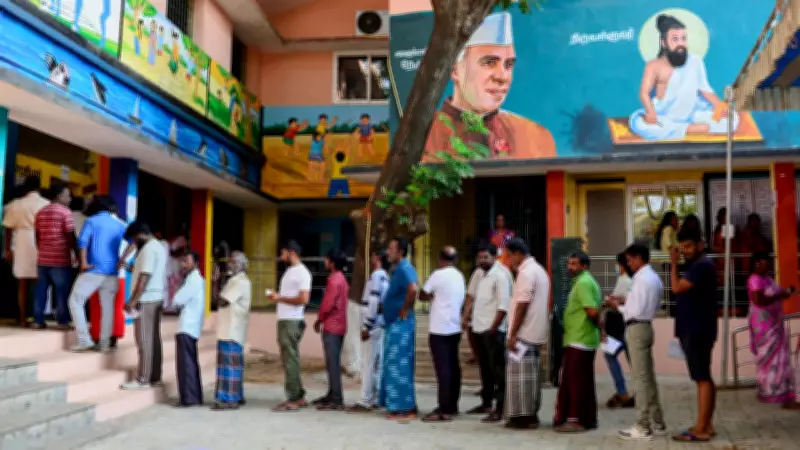
Polling for the first phase of the 2026 Assembly elections in Tamil Nadu and West Bengal concluded on April 23, witnessing unprecedented voter turnout and setting the stage for a closely watched electoral contest. According to the Election Commission of India, West Bengal recorded a turnout of 91.91%, while Tamil Nadu registered 84.80%, both significantly higher than their 2021 figures of 85.2% and 76.6% respectively.
Record-Breaking Participation
Chief Election Commissioner Gyanesh Kumar described the turnout as the highest since Independence in both states and praised voters for their enthusiastic participation, calling it a celebration of democracy. The polling process concluded at 6 pm under tight security arrangements, with large voter participation reported across urban and rural constituencies alike.
District-wise data reflected strong engagement. In West Bengal, Dakshin Dinajpur led with 94.85%, followed by Cooch Behar at 94.54%, Birbhum at 93.70%, Jalpaiguri at 93.23%, and Murshidabad at 92.93%. Tamil Nadu also saw high participation, with Karur, Salem, Dharmapuri, Erode, and Namakkal among the top-performing districts.

Political Reactions Diverge
Despite the high turnout, political parties have offered contrasting interpretations. The AIADMK termed the voter surge in Tamil Nadu as evidence of strong anti-incumbency against the DMK government, claiming it reflects public dissatisfaction and signals a possible political shift. The party also credited the Election Commission for ensuring a largely peaceful polling process.
On the other hand, the DMK rejected the anti-incumbency narrative, arguing that the rise in turnout is part of a long-term trend driven by increasing voter numbers and changes in electoral rolls, including the Special Intensive Revision (SIR). Party leaders maintained that the turnout figures are not unusual and should not be overinterpreted politically.
In West Bengal, BJP leaders expressed confidence in securing a decisive mandate, linking the high turnout to voter support for change. Assam Chief Minister Himanta Biswa Sarma said the party expects to win up to 200 seats in the state, alleging that those who attacked BJP workers would be held accountable after the party comes to power.
By-Elections and Next Steps
Meanwhile, by-elections in Gujarat and Maharashtra recorded comparatively lower turnout levels, indicating varying degrees of voter engagement across regions. With Phase 1 now complete, attention turns to the remaining phases in West Bengal and the counting of votes scheduled for May 4.
The high turnout has intensified political rhetoric across parties, with each camp interpreting the numbers to its advantage. As campaigning continues in pending constituencies, the focus will remain on voter sentiment, alliances, and ground-level mobilisation, all of which will play a crucial role in determining the final outcome of Election 2026.






