

Chhatrapati Sambhajinagar Water Project Achieves Breakthrough with Ancient Siphon Technology
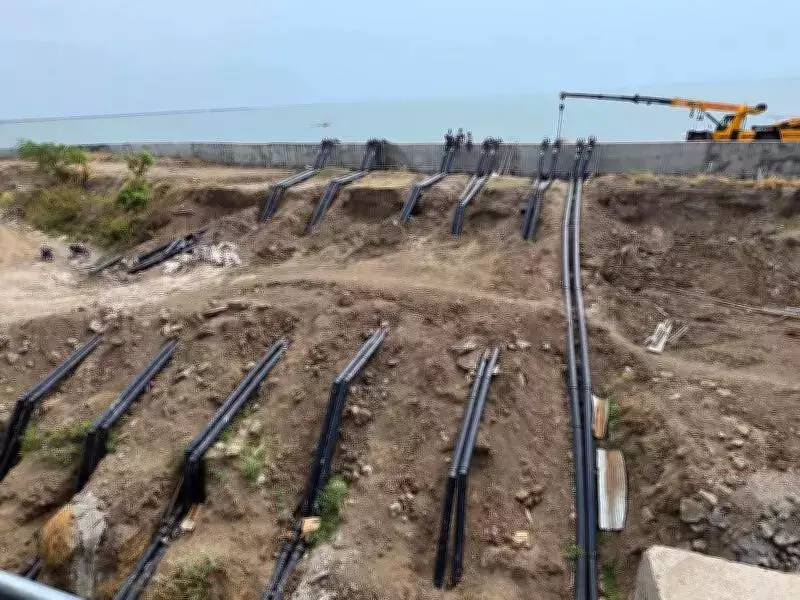
Authorities in Chhatrapati Sambhajinagar have claimed a significant breakthrough in the city's ambitious water supply project, successfully commissioning a sophisticated siphon system that draws inspiration from a 17th-century Mughal-era engineering marvel.
Heritage Engineering Meets Modern Hydraulics
The newly operational siphon system is directly inspired by the Nahar-e-Ambari, an underground water supply network originally laid down in 1612 by Mughal ruler Malik Ambar. This historical system has served as a blueprint for addressing contemporary engineering challenges in the ongoing water project.
"Since the pump house works are still pending, removal of the cofferdam is not feasible at the current stage. To address this challenge, siphon technology practised in Nahar-e-Ambari was adopted as an effective and reliable solution," stated Manisha Palande, chief engineer of Maharashtra Jeevan Pradhikaran (MJP).

How the Siphon System Works
The siphon arrangement operates entirely under gravity, requiring no electrical power, making it both energy-efficient and reliable. This technique is one of the oldest in water engineering, with documented references tracing back to ancient Egypt.
- Enables water lifting without removing the temporary cofferdam at Jayakwadi dam
- Accelerates project timeline by potentially preventing a one-year delay
- Represents one of the largest-scale applications of siphon technology in Maharashtra
"The present siphon system adds a new chapter to that legacy by combining heritage with modern hydraulic engineering. This intervention has now opened the path for water availability and is expected to accelerate the remaining works of the scheme," Palande emphasized.
Project Status and Future Timeline
The Rs2,740 crore water supply project has already missed its original March 2024 deadline, but MJP authorities report that multiple fronts are being pushed to expedite completion. Regarding water availability for the no-network area of Satara-Deolai, home to a substantial portion of the city's population, Palande provided specific updates.
"Out of a total 55 km of internal pipeline, 45 km has been laid so far. The remaining work will be expedited and water will be made available once different components of the water supply project get over," she confirmed.
Proven Technology with Historical Precedents
This siphon technology isn't experimental—it has demonstrated field-tested reliability in previous applications. Authorities noted successful implementations at the Tata Bhilai Plant and in the Mahabaleshwar water supply scheme, providing confidence in its performance for Chhatrapati Sambhajinagar.
The sophisticated water supply system developed during the Mughal era remains a proud symbol of the city's historic engineering excellence, now being revitalized to address 21st-century water infrastructure needs.






