

APERC Approves No Tariff Hike for FY 2026-27, Cuts Commercial Rates
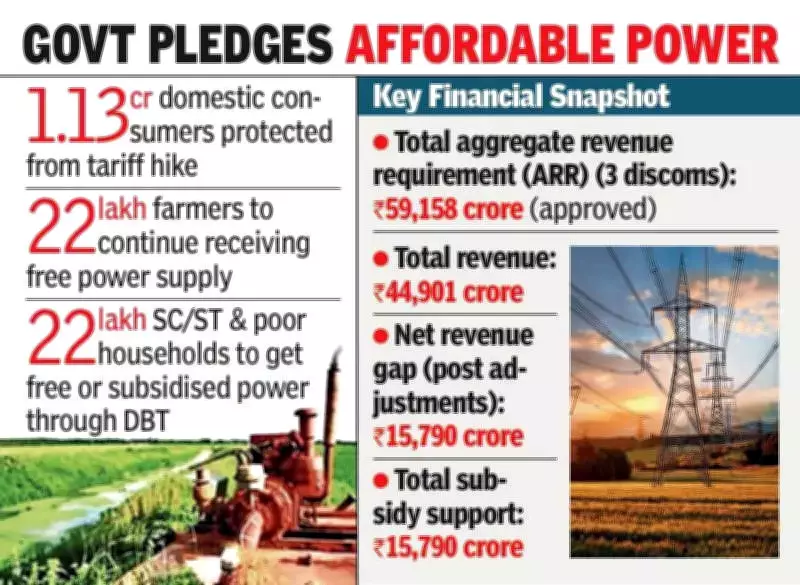
In a significant move providing relief to consumers, the Andhra Pradesh Electricity Regulatory Commission (APERC) has officially approved no increase in electricity tariffs for the financial year 2026-27. This decision comes after the state government assured to offset the financial burden on distribution companies (discoms), allowing APERC to green-light the new tariff order without revising existing rates.
Government Commitment to Consumer Protection
Energy Minister Gottipati Ravi Kumar emphasized that this decision reaffirms Chief Minister Chandrababu Naidu's commitment to shielding households, farmers, and small businesses from rising power costs. The move is part of a broader strategy to balance fiscal responsibility with social protection, ensuring affordable electricity access across the state.
Key Benefits and Reductions
APERC has implemented several key changes to support economic activity:

- Reduced commercial tariffs from ₹12.25 per unit to ₹9.95 per unit, benefiting nearly two lakh consumers.
- Doubled the load limit for cottage industries from 10 HP to 20 HP, aiding over 18,000 small enterprises.
- Introduced structural changes to boost industrial growth, including a new tariff subcategory for solar module manufacturing.
Financial Adjustments and Public Consultations
The commission's order includes the true-up/down and performance review of discoms for FY 2024-25, following extensive public consultations. Initially, discoms projected a revenue gap of ₹17,508 crore and sought tariff revisions with new slabs. However, APERC lowered this gap to ₹15,790 crore. With the government stepping in to absorb the burden, no tariff revision was deemed necessary, preventing additional costs for consumers.
Industrial and Sectoral Reforms
To align with emerging sectors and stimulate industrial activity, APERC introduced several reforms:
- Reclassification of water purification plants and printing presses as industrial units.
- Rationalisation of tariffs for utilities such as national highway street lighting.
- Special provisions granted for poultry and seasonal processing industries.
Rejection of Burden-Increasing Proposals
APERC rejected several proposals that would have increased the consumer burden, including changes in the time-of-day tariff structure, non-telescopic billing, and removal of the green power category. This decision underscores the commission's focus on protecting consumer interests while promoting sustainable energy practices.
Operational Efficiency Directives
The commission directed discoms to improve operational efficiency by clearing subsidy dues and arrears, enhancing electrical safety measures, and ensuring compliance with national standards and RDSS targets. These measures aim to strengthen the financial health of discoms while maintaining service quality.
Vision for Balanced Growth
Special Chief Secretary (Energy) K Vijayanand stated, "This tariff order reflects Chief Minister Chandrababu Naidu's vision of balancing fiscal responsibility with social protection. It ensures affordable electricity for households, continued support to agriculture, incentives for industry, and clean energy, while strengthening the financial health of discoms." This comprehensive approach highlights the state's efforts to foster economic resilience and consumer welfare in the energy sector.






