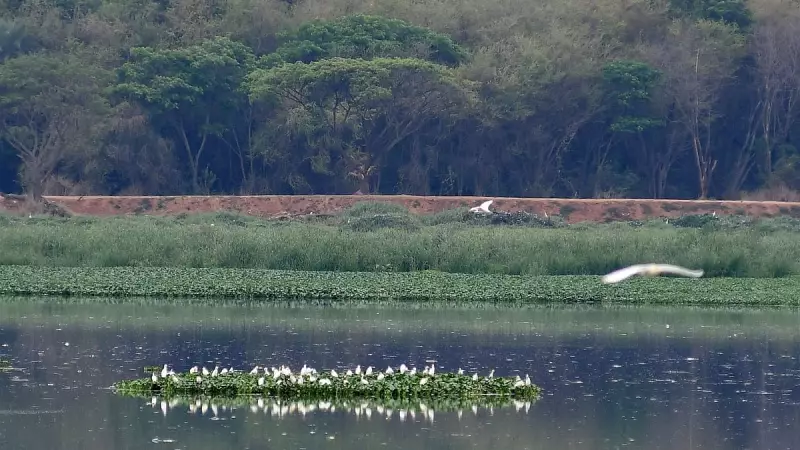
A recent incident at Vidyaranyapura Lake in Bengaluru has left local citizens bewildered and questioning which government authority is truly responsible for the supervision and protection of the city's vital water bodies. The confusion arose when heavy machinery entered the lake area, with workers citing a specific agency's mandate.
JCB Entry Sparks Immediate Concerns
The situation unfolded when a JCB earthmover recently entered the precincts of Vidyaranyapura Lake. Onlookers and concerned residents reported that workers associated with the operation announced that the Bangalore Water Supply and Sewerage Board (BWSSB) was initiating a construction project. The workers stated that the area needed to be cleared to facilitate this work, according to details available as of 25 December 2025.
This sudden development triggered alarm among citizens and activists who are vigilant about the conservation of Bengaluru's rapidly diminishing lakes. The entry of heavy machinery into ecologically sensitive zones without clear, prior public communication is often a red flag, leading to fears of encroachment or unsanctioned development.

The Core Issue: A Tangled Web of Governance
The heart of the problem lies in the complex and often overlapping jurisdictions governing Bengaluru's lakes. Multiple agencies, including the Bruhat Bengaluru Mahanagara Palike (BBMP), the Bangalore Development Authority (BDA), the Karnataka Lake Conservation and Development Authority (KLCDA), and the BWSSB, have varying degrees of responsibility.
This multi-agency control frequently results in a lack of clear accountability. Citizens are left unsure about which body to approach for permissions, complaints, or information regarding lake work. The Vidyaranyapura Lake incident is a classic example, where the BWSSB's claimed involvement raised questions: Was this a sanctioned water supply or sewerage project? Did it have the necessary environmental clearances? Which other departments were consulted?
The announcement made by the workers on-site did little to clarify these procedural doubts, instead highlighting the communication gap between civic authorities and the public.
Broader Implications for Lake Conservation
This event is not an isolated one but part of a persistent pattern in Bengaluru. Confusion over administrative control can lead to:
- Unauthorized Projects: Gaps in supervision can allow unauthorized construction or dumping to occur.
- Delayed Action: When an issue arises, citizens and activists often waste crucial time figuring out the correct agency to report to.
- Erosion of Trust: Repeated incidents undermine public confidence in the system meant to protect these crucial urban ecosystems.
The incident at Vidyaranyapura Lake underscores the urgent need for a unified, transparent, and publicly accessible framework for lake governance. Until a single-window system or a clearly defined lead agency is established for each water body, such conflicts and confusion are likely to recur, posing a continued threat to Bengaluru's lake conservation efforts.
Ultimately, the citizens' confusion is a symptom of a larger administrative problem. Resolving it requires not just clarity on who sent the JCB, but a systemic overhaul to ensure the city's lakes are managed with clear responsibility and proactive public engagement.