

Brand Bengaluru, once a shining emblem of India's tech prowess, is showing significant signs of strain. The city's global image is being tested by years of delayed municipal elections, crumbling infrastructure, and a pervasive sense of civic neglect. While recent administrative reforms offer a glimmer of hope, the persistent lack of sustained political will poses a serious threat. The promise of decentralisation remains largely theoretical without elected local bodies for over five years, risking damage that could become irreversible. In such critical times, the city's clearest path forward may not lie in untested novelty, but in the lessons of its own long and complex history.
The Twin-Town Origins: A City Divided
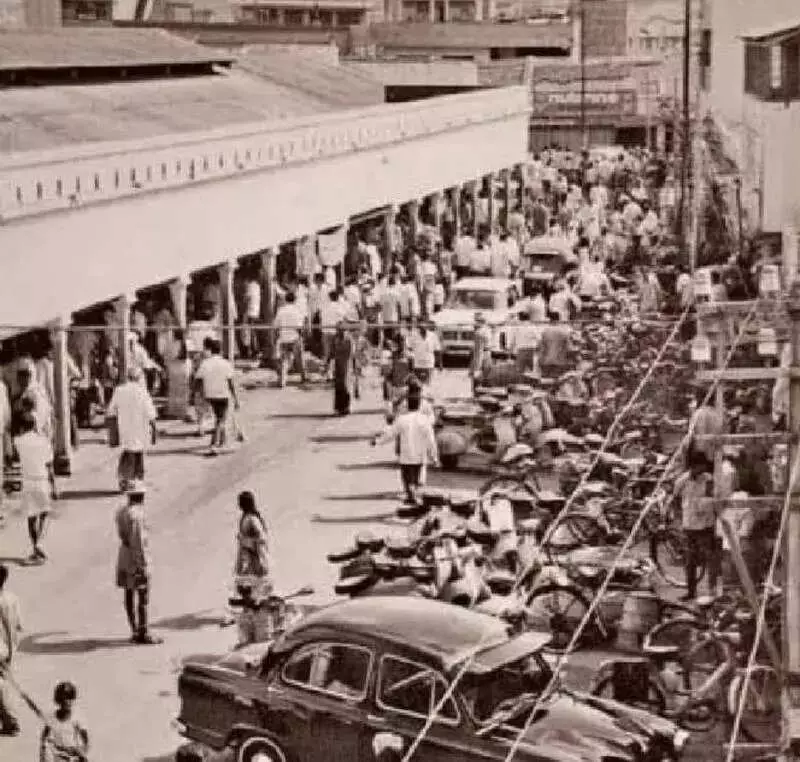
The story of Bengaluru's civic administration began not as one city, but two. In the mid-19th century, a clear divide existed between the old pete (native town) to the west and the British cantonment to the east. Each developed with distinct rhythms, languages, and priorities.
This division led to the creation of Bengaluru's first municipal bodies. On March 27, 1862, nine citizens formed the Bangalore City Municipality to manage the bustling pete with its crowded bazaars and weaving clusters. A year later, the Civil and Military Station Municipality was established to administer the cantonment area with military precision. These twin boards laid the foundational stones of urban governance, introducing property taxes, street lighting, sanitation, and systematic drainage to a growing urban space.

Unification, Expansion, and the Birth of a Behemoth
By the 1940s, the lines between the pete and cantonment had blurred. With a population soaring past four lakh, the city's needs outstripped the capabilities of two separate boards. In a landmark move soon after Independence in 1949, the two municipalities merged to form the Bangalore City Corporation (BCC). This unification, spanning just over 69 sq km under Mayor R Subbanna, symbolized the new nation's spirit.
Decades of rapid industrial growth, with giants like HAL and BHEL setting up base, pushed Bengaluru's boundaries outward. The BCC expanded repeatedly until 1981, covering 226 sq km. However, by the new millennium, the city had transformed into an urban region, swallowing villages and blurring all traditional limits. The creation of the Bruhat Bengaluru Mahanagara Palike (BBMP) in 2007 was an admission of this reality. By merging eight surrounding municipal councils and 110 villages, the BBMP's jurisdiction exploded to 741 sq km, serving a population nearing one crore. It became a sprawling, often paralysed, administrative giant.
The 2025 Reset: A Return to Smaller Units
By 2025, the challenges of unmanageable scale—chronic issues like garbage, traffic, and flooding—made decentralisation an urgent necessity. The solution, debated for years, finally materialised with the split of the monolithic BBMP into five new city corporations: Central, East, West, South, and North.
This radical restructuring marks a full circle in Bengaluru's 163-year civic journey. For the first time since 1949, the city will be governed by multiple corporations. The move promises smaller jurisdictions, greater local accountability, and elected mayors with longer terms. It echoes the city's earliest municipal instinct, where governance was closer to the people. This step acknowledges a fundamental truth: the Bengaluru of today cannot be effectively ruled from a single, distant office.
Viewed across a century and a half, the narrative of Bengaluru's municipal corporations is more than a bureaucratic chronicle. It is a direct reflection of the city's own metamorphosis—its expanding geography, layered histories, and the constant tension between unified control and local autonomy. From 1862 to 2025, the core challenge has remained: balancing massive scale with human intimacy. As the city embarks on this new chapter in 2026, one can only hope it applies the hard-won wisdom from its many previous reincarnations to build a more resilient and responsive future.






