

Bhopal Confronts Escalating Water Crisis as Summer Temperatures Soar
The city of Bhopal is preparing for a challenging summer season, with municipal authorities projecting a significant increase in water consumption. According to estimates from the Bhopal Municipal Corporation (BMC), daily water demand is expected to surge by 3% to 5% this year compared to previous levels. This rise comes as temperatures climb across the region, placing additional pressure on already strained water resources.
Current Demand and Supply Challenges
BMC projections indicate that peak water consumption will reach approximately 470 million litres per day (MLD), up from the current average of 440 MLD. While officials state that this demand can technically be met, the reality on the ground tells a different story. Water supply has been disrupted in numerous areas due to a combination of factors including pipeline leakages, ongoing public infrastructure projects, and unscheduled power outages.
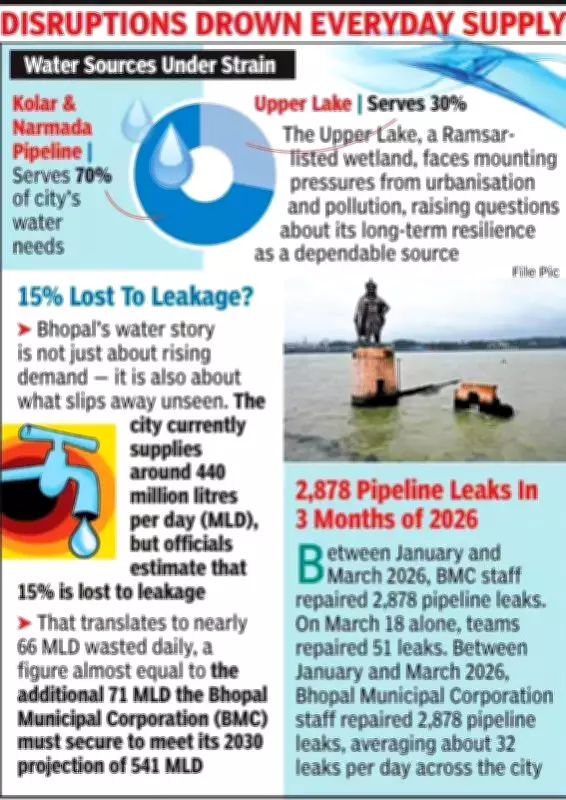
The city's water supply system relies heavily on two primary sources: the Narmada and Kolar pipelines, which together provide roughly 70% of daily water needs, and the Upper Lake, which contributes the remaining 30%. This dependence creates vulnerabilities that become particularly apparent during peak demand periods.

Infrastructure Under Strain
The Kolar water treatment plant, with a designed capacity of 153 MLD, is already operating near its maximum limit. Current data shows the plant processing raw inflows of around 162 MLD from the Kolar dam, exceeding its intended capacity. This leaves minimal margin for error should any disruptions occur, whether from routine pipeline maintenance or unexpected spikes in demand during heatwaves.
Meanwhile, the Upper Lake—a Ramsar-listed wetland of international importance—faces mounting environmental pressures. Urbanization and pollution threaten the lake's water quality and long-term viability as a reliable water source for Bhopal's growing population.
Future Projections and the Growing Gap
Bhopal is already pressing against its water supply limits. BMC projections indicate that by 2030, the city will require approximately 541 million litres per day to sustain its population and accommodate expected growth. Today, in 2026, peak demand has already reached 470 MLD, creating a significant gap of 71 MLD that must be addressed within just four years.
The situation represents a critical timeline challenge: Bhopal has already consumed 86% of its projected 2030 water demand, and municipal authorities have begun the urgent search for solutions to bridge the remaining 71 MLD deficit. This includes exploring additional water sources, improving distribution efficiency, and addressing infrastructure vulnerabilities that currently disrupt regular supply to residents.
As summer approaches, Bhopal's water management system faces a crucial test. The combination of rising demand, aging infrastructure, and environmental pressures on key water sources creates a complex challenge that requires immediate attention and long-term planning to ensure sustainable water security for the city's residents.






