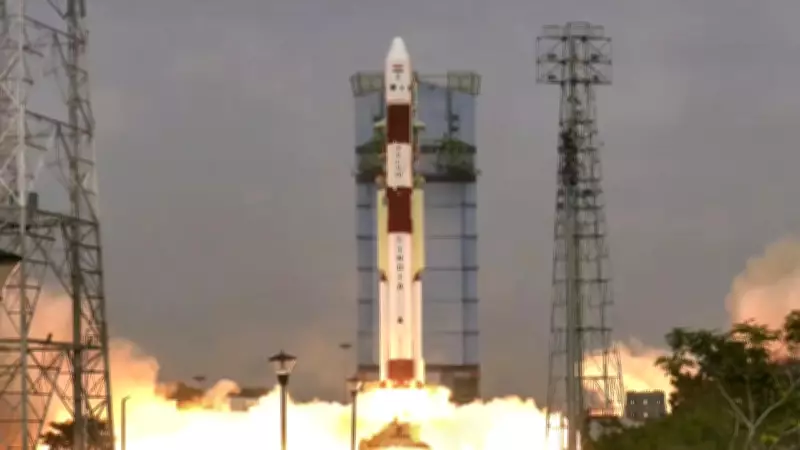
NEW DELHI: The Department of Space (DoS) has been allocated Rs 13,705.6 crore in the Union Budget for the fiscal year 2026-27, reflecting a steady increase from the revised estimate of Rs 12,448.6 crore in the current financial period. This budgetary hike is strategically designed to accelerate the development of advanced space technologies and empower the Indian Space Research Organisation (ISRO) to sustain its array of ongoing and upcoming space missions.
Budgetary Growth and Strategic Priorities
While the Budget proposal indicates a modest growth of 2.1% compared to the 2025-26 Budget allocation of Rs 13,416.2 crore, it represents a significant 10% surge over the revised spending figure of Rs 12,448.6 crore in the present fiscal year. This upward trajectory underscores the government's commitment to fortifying India's position in the global space arena.
Allocation Breakdown and Key Focus Areas
The largest portion of the Budget, amounting to Rs 10,397.1 crore, is earmarked under the Space Technology head. This segment encompasses the activities of major ISRO centres, including the Vikram Sarabhai Space Centre (VSSC), Liquid Propulsion Systems Centre (LPSC), U R Rao Satellite Centre (URSC), Satish Dhawan Space Centre (SDSC), and the Human Spaceflight Centre. This allocation marks an increase from the revised estimate of Rs 9,602 crore, with funds directed toward:

- Launch vehicle and satellite projects
- Ground infrastructure development
- Schemes facilitated through the space promoter IN-SPACe to encourage private sector participation
The spending structure highlights three core priorities:
- Readiness for human spaceflight initiatives, particularly the Gaganyaan mission
- Expansion of earth observation services to address climate monitoring and security needs
- Deeper engagement with industry through IN-SPACe and the commercial wing, NewSpace India Limited (NSIL)
Capital Investment and Astrophysics Focus
Capital investment constitutes Rs 6,375.92 crore, accounting for 46% of the total space outlay. This substantial investment covers the costs associated with building new satellites, launch vehicles, and critical infrastructure. Officials interpret this as a clear signal that the space programme is transitioning from preparatory phases to the hardware realisation stage for projects aligned with the Gaganyaan roadmap, next-generation launch vehicles, and high-throughput satellites.
Furthermore, the Budget emphasises astrophysics by targeting the development or upgrade of four major telescope facilities:
- National Large Solar Telescope
- National Large Optical Infrared Telescope
- Himalayan Chandra Telescope
- COSMOS 2 Planetarium
These initiatives aim to enhance observational capabilities and advance solar research, positioning India as a key player in astronomical studies.
Industry Reactions and Indirect Benefits
Reacting to the space outlay, Anil Prakash, Director General of the Satcom Industry Association of India, noted that while industry expectations for targeted incentives, GST rationalisation, and clearer classifications were not addressed, the Budget introduces several enablers that indirectly strengthen the space ecosystem. He stated, "The Budget introduces several enablers — from trade facilitation and electronics manufacturing to startup financing and digital infrastructure — that indirectly strengthen the space ecosystem."
Dr. Subba Rao Pavuluri, President of SIA-India, added, "The Union Budget reflects a strong push toward technology-led growth, manufacturing scale-up, and supply-chain resilience — all important for India’s emerging space economy."
In summary, the 2026-27 Budget allocation for the Department of Space not only provides a financial boost for ISRO's missions but also lays the groundwork for enhanced private sector collaboration and technological advancements in India's burgeoning space sector.