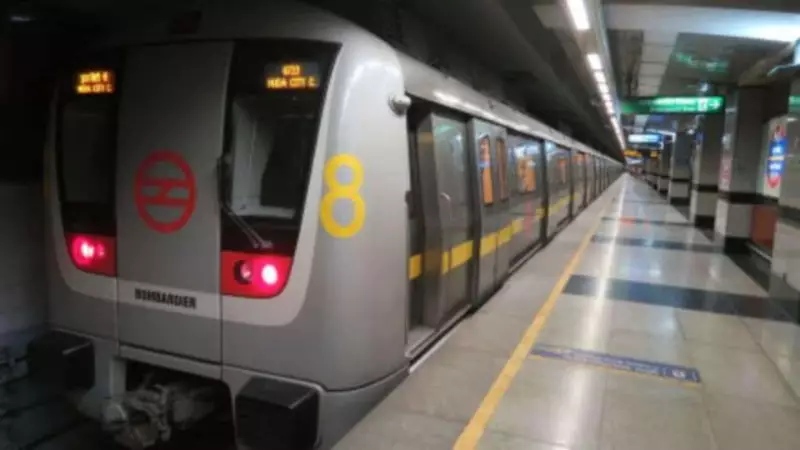
In a significant push to enhance public transport and decongest the national capital, the Union Cabinet, chaired by Prime Minister Narendra Modi, has given its nod for the construction of three new corridors for the Delhi Metro. The approval, granted on Wednesday, marks a crucial step in expanding the network's reach to key government and heritage zones, including the iconic India Gate.
Project Details and Financial Outlay
The three corridors will form a vital part of Delhi Metro's Phase IV-A, spanning a total of 16 kilometres with 13 new stations. The entire project is estimated to cost Rs 12,014.91 crore. As explained by Union Minister Ashwini Vaishnaw, the funding model involves contributions of Rs 1,759 crore each from the Union Government and the Delhi Government. The remaining substantial amount will be arranged as loans, to be repaid by the Delhi Metro Rail Corporation (DMRC), which is jointly owned by both governments.
Key Corridors and Their Impact
The most prominent among the approved lines is the RK Ashram Marg to Indraprastha corridor, stretching 9.91 kilometres. Primarily underground, this line is strategically designed to serve the heart of India's administrative power. It will feature new stations at Kartavya Bhawan, India Gate, War Memorial-High Court, and Baroda House.

Minister Vaishnaw highlighted that this corridor will directly benefit approximately 60,000 employees working in the central secretariat complex and cater to an estimated 2 lakh daily visitors to the Central Vista area. An added environmental benefit, he noted, would be a reduction of 33,000 tonnes of CO2 emissions annually by shifting commuters to metro rail.
The other two corridors focus on improving airport connectivity and linking southern parts of the city. The Aerocity to Indira Gandhi Domestic Airport (Terminal 1) corridor will cover 2.26 km, providing a seamless transit option for air travellers. The Tughlakabad to Kalindi Kunj corridor, measuring 3.9 km, will enhance connectivity in South Delhi and also aid commuters from Noida and Faridabad heading towards Gurugram.
Construction Timeline and Future Plans
The government has set an ambitious construction timeline of three years for these projects. Advanced construction techniques, including tunnel boring machines (TBMs), will be deployed. When asked about the much-anticipated Faridabad-Gurugram metro link, Minister Vaishnaw stated that a feasibility study is currently underway.
This expansion comes at a time when the Delhi Metro network already handles an impressive average of 65 lakh passenger journeys daily across its 12 lines covering 395 km. The new corridors are expected to significantly ease traffic pressure, reduce travel time, and provide a modern transport backbone to Delhi's evolving urban landscape.