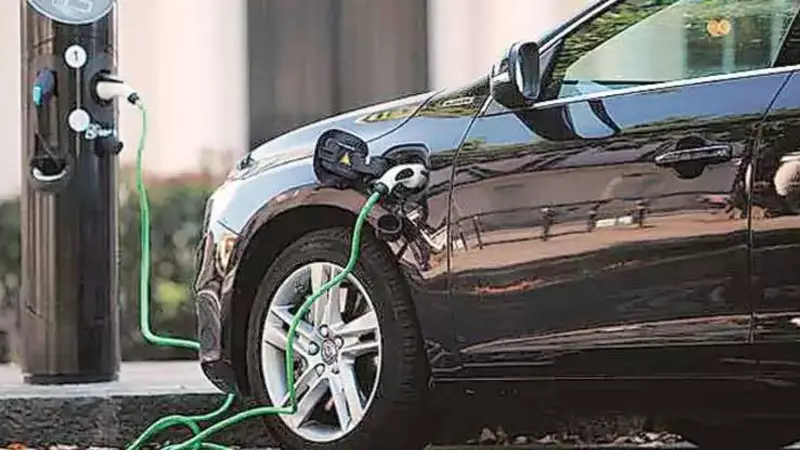
In a significant push for green mobility, the Delhi government has granted in-principle approval to allow privately-owned electric vehicles (EVs) to function as shared taxis on the capital's roads. The decision, taken on Friday, January 3, 2026, aims to promote shared transportation and accelerate EV adoption to combat air pollution.
Government Pledges Regulatory Support
Chief Minister Rekha Gupta stated that to realize this objective, the administration will amend existing rules and develop an effective mechanism to resolve the operational concerns raised by cab aggregator companies. The decision emerged from a high-level meeting attended by CM Gupta, Transport Minister Pankaj Singh, and senior transport department officials.
The meeting also saw participation from major automobile manufacturers, including Tata Motors, Mahindra, Maruti Suzuki, Toyota, and Honda, alongside representatives from leading cab aggregators Ola, Uber, and Rapido. According to a statement from the Chief Minister's Office (CMO), Gupta emphasized the government's willingness to facilitate companies, resolve issues, and introduce regulatory flexibility to encourage people to buy EVs and use aggregator services for daily commute.
Aggregators Commit to Swift Rollout
The cab aggregators have responded positively to the proposal. They have committed to launching services for shared taxis and taxis driven by women drivers within one month. Furthermore, they expressed readiness to onboard private EVs and BS-VI compliant vehicles as taxis, a move that is currently restricted under existing regulations.
The Chief Minister assured the companies that the necessary regulatory changes would be made in the coming days. However, she stressed that passenger safety measures must be strictly ensured by the aggregators, a condition to which the companies agreed.
The government has asked the aggregators to submit a detailed plan outlining a timeline for ensuring demand-based supply of electric vehicles across all parts of Delhi.
Broader Vision for Sustainable Transport
During the discussions, CM Gupta proposed several additional measures to build a comprehensive eco-friendly transport ecosystem. She urged aggregators to explore integrating e-rickshaws into their digital platforms. The Chief Minister also suggested that companies consider operating shuttle services on busy routes like the Ring Road and to and from the Indira Gandhi International Airport.
To make services more attractive, Gupta advised aggregators to provide concessions and structure vehicle pricing in a consumer-friendly manner to increase public inclination towards shared and electric mobility.
On infrastructure, the government offered to provide land for setting up charging stations. Simultaneously, companies were asked to explore the possibility of using solar energy for charging vehicles. Gupta also laid emphasis on proper management of battery waste, stating that companies themselves would have to manage it to prevent the emergence of a new source of pollution.
Concluding the meeting, the Chief Minister linked the initiative to a larger mission. "Effective and sustainable control of pollution in Delhi is possible only by reducing the number of vehicles on the roads. Transport-related companies must actively support the government’s mission, as only then can the capital quickly transform into a Viksit Delhi," Gupta added.