

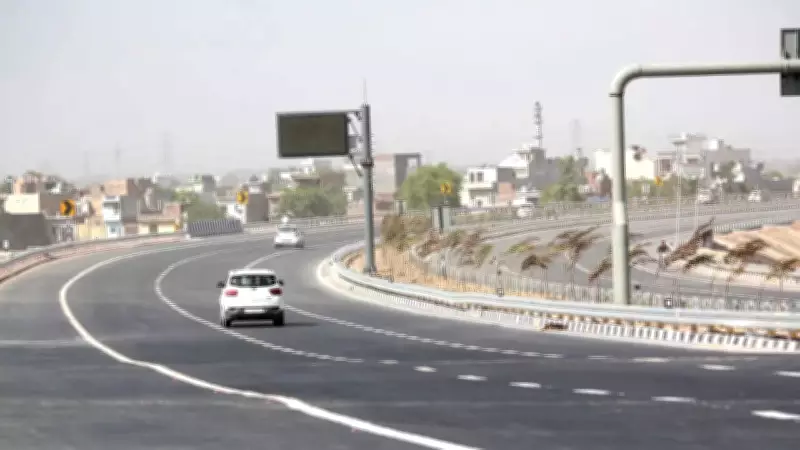
Delhi-Meerut Expressway Toll Rates Set to Rise from April 1, 2026
The National Highways Authority of India (NHAI) has officially proposed a toll rate increase for the 2026-27 fiscal year on the crucial Delhi-Meerut Expressway corridor. This adjustment, averaging approximately 5% across vehicle categories, is scheduled to take effect from the midnight of April 1, 2026. The hike marks a significant update for one of the region's busiest transportation arteries.
Phased Development and Multi-Entry Access Points
The expressway, which spans 82 kilometers, was developed in four distinct packages, with various sections opening to the public between 2018 and 2021. This strategic phased approach allowed for gradual integration into the existing road network. The corridor features seven key entry and exit points, providing multi-entry access control. Commuters can access the expressway at Sarai Kale Khan, Indirapuram, Dundahera, Dasna, Rasoolpur Sikrod, Bhojpur, and the Kashi toll plaza, enhancing connectivity across the National Capital Region (NCR).
Revised Toll Rates for Light and Commercial Vehicles
For light vehicles, including cars, jeeps, vans, and light motor vehicles (LMVs), the one-way toll from Sarai Kale Khan to Meerut will increase from Rs 170 to Rs 175. The return journey cost has been revised upward by Rs 10, now standing at Rs 265. On the Indirapuram to Meerut stretch, light vehicle tolls have been adjusted to Rs 120 from Rs 115, with the return journey now costing Rs 189, up from Rs 175.

Commercial vehicles face similar adjustments. Light commercial vehicles (LCVs), goods vehicles, and minibuses will now pay Rs 285 for a one-way trip, an increase from Rs 275, while the return journey cost rises to Rs 425 from Rs 415. Additionally, toll rates have been increased for buses, two-axle trucks, multi-axle vehicles (MAVs) such as three-axle and four–six axle trucks, and oversized vehicles with seven or more axles, reflecting a comprehensive update across all transport categories.
Traffic Volume and Digital Payment Mandate
The Delhi-Meerut Expressway, in conjunction with National Highway 9, handles an impressive daily traffic volume of approximately 398,000 passenger car units (PCU). Of this total, around 50,000 PCU are attributed solely to the expressway stretch, underscoring its vital role in regional mobility. To streamline operations, NHAI has implemented a closed tolling system on the corridor. This system charges commuters based on the actual distance traveled, utilizing FASTag readers at entry and exit points for accurate billing.
In a move towards full digitalization, cash payments have been discontinued on the expressway. Toll transactions can now only be conducted through FASTag or Unified Payments Interface (UPI), ensuring seamless and efficient digital transactions. This shift aligns with broader national initiatives to promote cashless economies and reduce congestion at toll plazas.
Impact and Future Implications
The toll hike, while modest in percentage terms, is expected to generate additional revenue for maintenance and potential future expansions of the expressway infrastructure. Commuters and logistics operators are advised to plan accordingly, considering the increased costs for frequent travel. The emphasis on digital payments further highlights NHAI's commitment to leveraging technology for improved user experience and operational efficiency. As the April 1 implementation date approaches, stakeholders are encouraged to ensure their FASTag accounts are adequately funded to avoid disruptions.






