

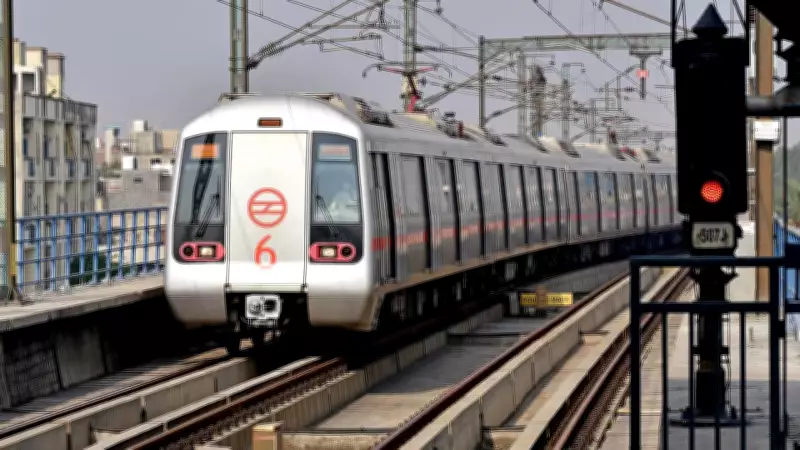
Delhi Metro's Magenta Line Set to Transform as Longest Corridor with Unprecedented Connectivity
In a landmark development for urban transit in the National Capital Region, the Delhi Metro Rail Corporation (DMRC) has announced that the Magenta Line (Line-8) is poised to become the longest corridor within the Delhi Metro network. This expansion will feature the highest number of interchange stations and extensive underground sections, fundamentally strengthening cross-city connectivity and easing commuter travel across Delhi and its surrounding areas.
Phase-V (A) and Phase-IV Extensions Drive Major Expansion
The transformation follows the recent sanction of Phase-V (A), which will extend the Magenta Line from Ramakrishna Ashram Marg to Indraprastha via the Central Vista. Additionally, the Indraprastha–Inderlok corridor under Phase-IV will be implemented as an extension of the Magenta Line, integrating these segments into a cohesive, high-capacity route.
According to DMRC officials, the total length of the corridor from Botanical Garden to Inderlok will be approximately 89 kilometres, making it the longest corridor in the Delhi Metro network. Once fully operational, this corridor will run entirely driverless, showcasing advanced automation and technological prowess in public transportation.

Unparalleled Interchange Connectivity with 21 Stations
A key highlight of this expansion is the dramatic increase in interchange connectivity. Upon completion, the Magenta Line will boast 21 interchange stations, a significant leap from the current four operational interchanges at Kalkaji Mandir, Botanical Garden, Janakpuri West, and Hauz Khas.
The additional 17 interchange stations to be added under Phase-IV and Phase V-(A) include:
- Kalindi Kunj
- Chirag Delhi
- Terminal-1 IGI Airport
- Peeragarhi
- Pitampura (Madhuban Chowk)
- Haiderpur Badli Mor
- Majlis Park
- Azadpur
- Pulbangash
- Nabi Karim
- Ramakrishna Ashram Marg
- Shivaji Stadium
- Central Secretariat
- Indraprastha
- Delhi Gate
- New Delhi
- Inderlok
Notably, Central Secretariat, Azadpur, New Delhi, and Inderlok will function as triple interchange stations, further enhancing multi-line connectivity and providing commuters with seamless transfer options across the metro network.
Extensive Underground Network and Station Count
Once fully operational, the corridor will encompass 65 stations between Botanical Garden and Inderlok, with an impressive 40 of these stations located underground. DMRC emphasizes that this extensive interchange and underground network is expected to significantly reduce travel times, alleviate congestion on key arterial routes, and deliver seamless end-to-end connectivity across the capital region.
Engineering Milestones: Highest and Deepest Stations
The Magenta Line also features two major engineering milestones within the Delhi Metro network. Haiderpur Badli Mor station on the corridor holds the distinction of being the highest elevated metro station in the system, with a rail level height of approximately 28.362 metres. Conversely, Hauz Khas station is the deepest underground metro station in the network, situated around 29 metres below ground level.
DMRC officials stated that these features underscore the corridor's advanced engineering complexity and technological capability, reflecting the metro network's commitment to innovation and expansion. The integration of such feats into daily commuter infrastructure highlights the evolving landscape of urban mobility in India.
This expansion is set to redefine public transportation in Delhi, offering a robust, efficient, and interconnected metro system that caters to the growing needs of the National Capital Region's populace.






